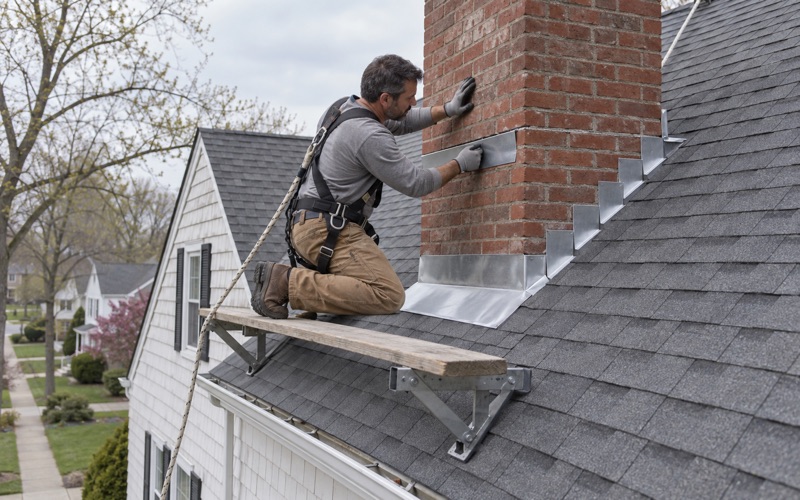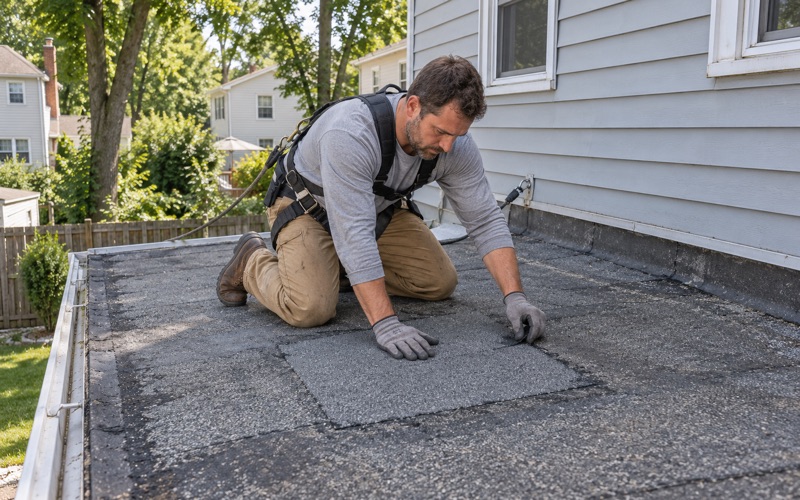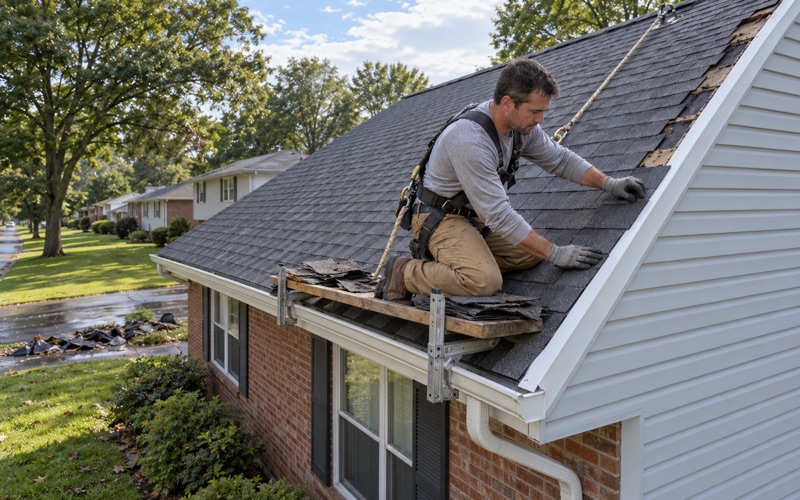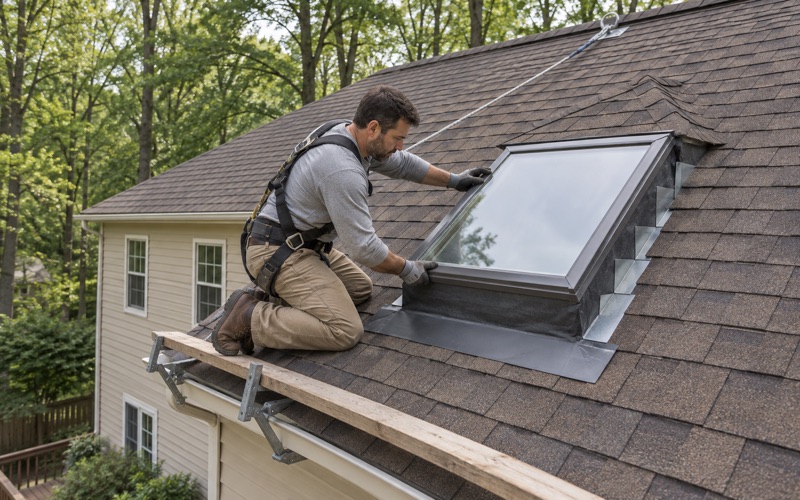
Wayne Quality Roofing has spent more than 20 years on roofing in Cedar Grove and the rest of our part of north Jersey, and the first thing we want to know about a house here is when it was built. That date decides more than the shingle choice. It decides whether pulling off a strip of old fascia stays simple carpentry or becomes work that federal lead-safe rules govern.
Our estimates are built to make that visible. Tear-off, decking, underlayment, flashing, ventilation and gutters each get their own line, so you can set our number beside anyone else’s and see exactly where the two differ. Where painted trim sits in the way of new drip edge or flashing, the scope says so in writing, along with how much of it the job would disturb.
We also start with the honest question of whether the roof needs replacing at all. A leak gets traced from the attic side as well as the shingle side before anything is priced, and if a repair will hold, you hear that first. The sections below cover what changes about a roof job on an older house here, and what does not.
Roof Replacement on Cedar Grove’s 1950s Houses
A Township Built Mostly Before 1980
Census figures put Cedar Grove’s housing stock at 5,147 units, and 3,720 of them were built before 1980. The single biggest decade is the 1950s, with 1,889 homes, followed by the 1960s with 766. Most of these are owner-occupied detached houses, which means most roof decisions in the township are made by the people who live under them.
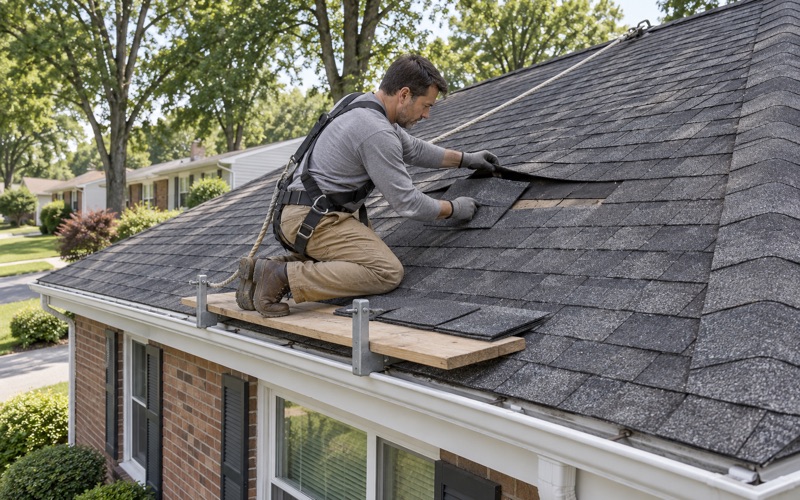
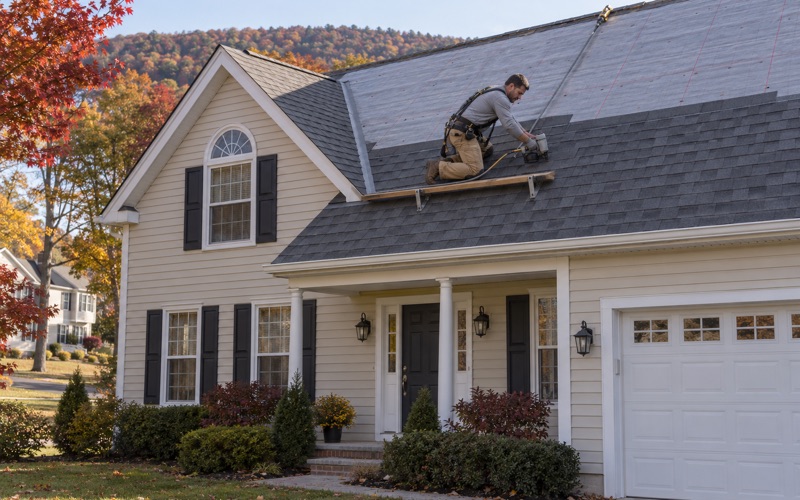
Many of these houses are now on their second or third roof. A layered or worn-out roof on a house this age usually means a full tear-off down to the decking, and that is where the age of the house starts to matter beyond the shingles. The edges of the roof, where shingles meet fascia, rake boards and soffits, are where old paint and new materials meet.
What We Look For Before Writing a Scope
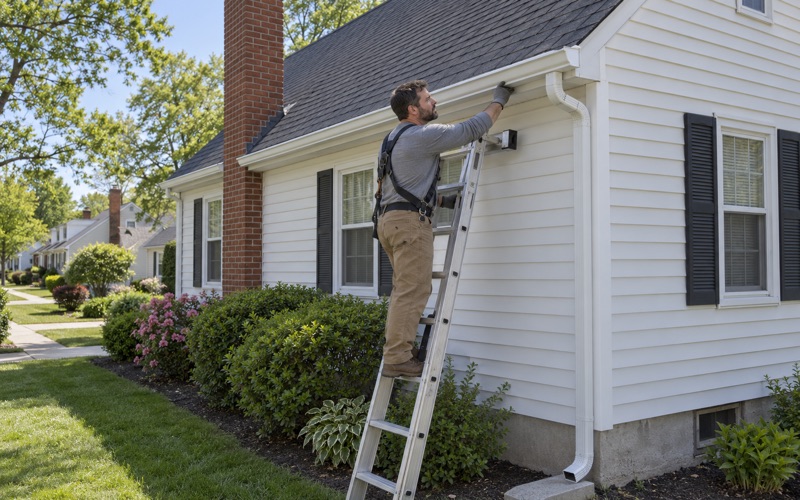
On a 1950s house, we walk the eaves and rakes as carefully as the roof field. We note whether the fascia and rake boards are painted wood or already wrapped in aluminum, whether the soffits are painted, and how much of that trim new drip edge, gutters or flashing would require removing. Those measurements go into the estimate instead of a guess made on install day.
We also check attic ventilation on every replacement. Houses from this era were often built with little soffit intake, and a roof that cannot breathe ages from underneath no matter how good the shingle is. If soffit vents need to be added, that is another point where painted wood may be cut, so it gets counted with the rest of the trim.
Eaves, Ice and Shaded Slopes
Low-slope ranches and capes from the postwar years are prone to ice dams along the eaves. On those houses we install a self-adhering eave membrane meeting ASTM D1970 and check the ventilation, rather than simply laying new shingles over the same problem. The membrane starts at the drip edge, which is one more reason the condition of the fascia behind it gets a close look.
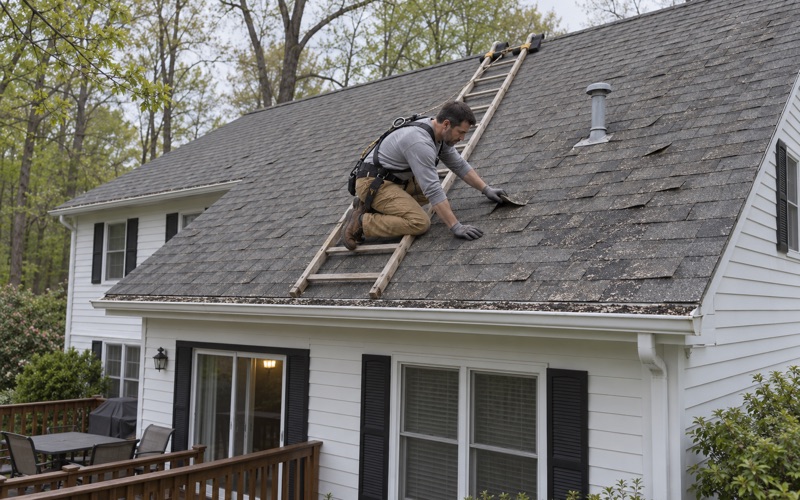
Valleys and slopes under mature trees also get called out in the estimate. Leaf-packed valleys hold water against the shingles and shaded slopes grow moss, so we note overhanging limbs and plan around them instead of discovering them on the roof. A wooded lot also changes how debris is staged and how long the daily cleanup takes, and the estimate says that up front.
Looking for roofing closer to Glen Rock? See Roofing in Glen Rock.
Older Homes and Newer Townhomes: Which Side of 1978
Why 1978 Is the Line
Federal lead-safe rules treat housing built before 1978 as target housing. That date, not the style or condition of the house, decides whether the EPA Renovation, Repair and Painting Rule can reach painted surfaces disturbed during a roof job. A 1952 colonial and a 1977 split-level fall on the same side of the line, while a house built after it does not.
The census does not split the 1970s at 1978, so the pre-1978 stock here falls somewhere between the 3,547 homes built before 1970 and the 3,720 built before 1980. Either way, it is the large majority of the township. If you are not sure when your house was built, confirm the year before any work is scheduled, because the rest of the plan depends on it.
The Newer Side of Cedar Grove
Some 542 homes in the township have been built since 2010. Among the newer construction are the Hilltop townhomes on Fairview Avenue, where K. Hovnanian unveiled its model units in 2019. Housing of that age is not target housing, so the lead-safe rule does not attach to their trim, whether it is painted or not.
Townhomes bring a different first question, which is who holds the roof. Before we write any estimate in a townhouse or condominium community, we check the association’s documents to see whether the roof belongs to the owner or to the association. Settling that first keeps an owner from paying for work that someone else is responsible for, or the reverse.
Attached and Multi-Unit Buildings
The township also has 628 attached single-family homes and roughly 400 units in two- to four-family buildings. The age test applies to each building on its own terms: an attached home built before 1978 is target housing just as a detached one is, and one built later is not. Shared rooflines also mean a scope has to say exactly where one owner’s roof ends and the next begins.
Painted Fascia, Rakes and Soffits and the 20-Square-Foot Line
How the Rule Measures Disturbance
On target housing, the rule exempts minor repair and maintenance that disturbs 20 square feet or less of painted surface on the exterior. Go past that amount and the work becomes a renovation under the rule. The detail that surprises owners is how removed parts are counted: when a painted component comes off, its entire surface area counts as disturbed, not just the strip that was scraped.
So a run of painted fascia board pulled off to replace rotted wood counts in full, front face and all. A few lengths of fascia, a section of rake board and a stretch of soffit can pass 20 square feet faster than most people expect. We measure those pieces before the job and put the total in writing.
Where a Re-Roof Touches Trim
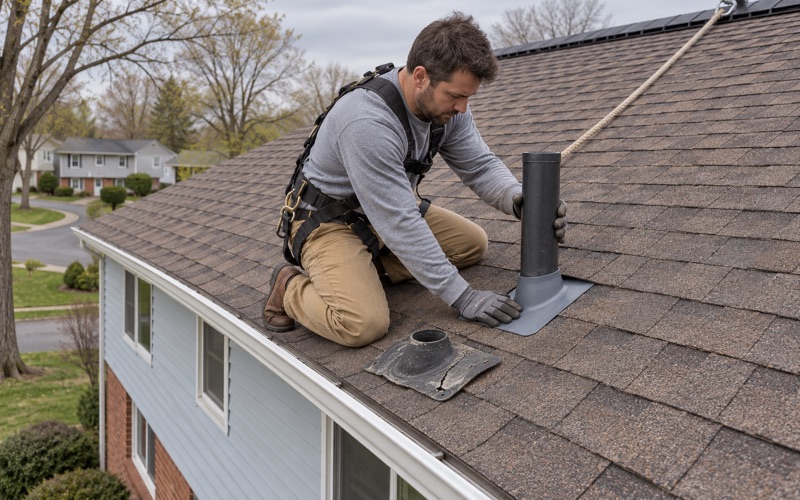
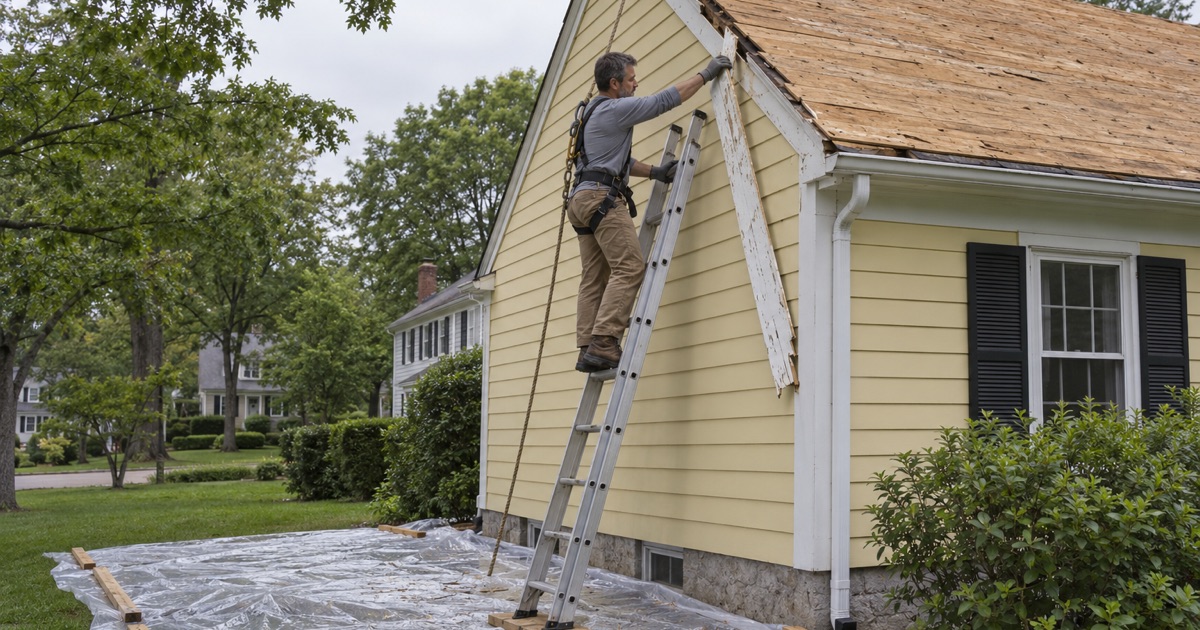
The tear-off itself happens above the trim, but several routine steps reach into it. New drip edge at the eaves and rakes sits against the fascia, gutter replacement often exposes rotted boards behind the old gutters, and adding soffit intake vents means cutting into painted soffit. Each of those is a place where the scope can either avoid painted wood or knowingly remove it.
When rotted fascia has to come out, that is a decision with a cost and a rule attached, and you should make it with numbers in front of you. We photograph the damaged trim, show it to you, and list the square footage beside the price. Damaged decking found after tear-off is handled the same way, photographed and shown before it is replaced at the per-sheet price set in the contract.
What Falls to a Certified Firm
We are a roofing contractor, and we do not hold an EPA firm certification under the lead-safe rule. Under that rule, no firm may perform or offer renovations in target housing without certification from EPA, and the work must be directed by a certified renovator. Where painted trim work on a pre-1978 house would cross the 20-square-foot line, that portion belongs with a firm that holds the certification.
Our part is to plan the roof so the line is clear before anyone climbs a ladder. Often the roof can be scoped to leave sound painted trim in place, with drip edge and gutters fitted to it. Where it cannot, we tell you plainly and sequence our tear-off around the trim work, rather than leaving the question to surface halfway through the job.
The Renovate Right Pamphlet and Unpainted Tear-Offs
The Pamphlet and the 60-Day Window
Before a covered renovation in target housing, the firm doing it must give the owner EPA’s Renovate Right pamphlet no more than 60 days before work begins. The firm then needs either the owner’s written acknowledgment of receipt or a certificate of mailing at least 7 days before the renovation. Those dates are fixed by federal rule, so they shape the calendar for the whole project.
In practice, a pre-1978 house with painted trim coming off should have that paperwork sorted before the roof is scheduled, not on the morning of the job. If the roof and the trim work are on separate contracts, the timing of both has to line up. We build that into our own schedule so the tear-off date never runs ahead of the pamphlet.
When the Rule Does Not Reach the Job
Not every re-roof on an old house is regulated. EPA’s own guidance says that where there is no paint to disturb, the rule does not apply. Removing an unpainted roof covering, by itself, sits outside it, so a tear-off that stays on the roof and leaves painted trim alone is not a lead-safe renovation just because the house dates from the 1950s.
The practical test we apply on each house is simple: will any painted surface come off, and how much? If the answer is none, the job runs like any other re-roof, with the driveway, yard and gutters cleaned at the end of each day and a magnet sweep for nails. If the answer is some, the estimate shows how much and which side of 20 square feet it lands on.
Selling an Older House
When a house is going on the market, we can write a roof condition report the seller can hand to the buyer’s inspector. On a pre-1978 house, that report notes the condition of the painted fascia and rake boards alongside the shingles. A buyer planning a re-roof then knows early whether trim work is likely to be part of it.
Help With the Cost
A pre-2021 Essex County flyer listed Cedar Grove among the towns in its Home Improvement Program, which offered deferred loans to low- and moderate-income owners living in one- to three-family homes, with roofing among the eligible improvements. We could not confirm the program’s current status, so call the county at 973-655-0200 to ask before counting on it.
- 20+ Years in Roofing
- Line-Item Written Estimates
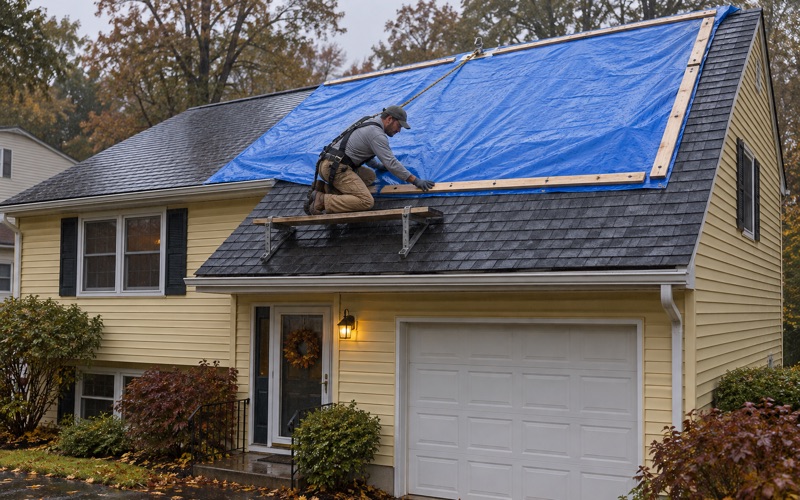
- Same-Day Storm Tarping