Wayne Quality Roofing handles emergency roof repair in Wayne, NJ, serving surrounding cities including Totowa, Pequannock, Lincoln Park, Franklin Lakes and Woodland Park. When wind strips shingles, a limb comes through the roof or an ice dam sends water down an inside wall, the first job is stopping more water from getting in. After a wind storm, our tarps and temporary repairs go on the same day.
Before anything is moved or covered, we photograph the damage from the ground, the roof and the attic. Those photos are yours, and they become the start of your file if you decide to make a claim. Once the house is protected, we come back for the permanent repair when the roof is dry.
Our crews have been working on roofs for more than 20 years, and emergency work rewards that experience. A tarp that is fastened badly can tear loose in the next gust, and a roof that looks intact from the street can hide cracked decking under a fallen limb.
Emergency Situations We Handle
Wind-Torn and Missing Shingles
Strong gusts get under shingle edges, break the sealant bond and peel shingles away, sometimes taking whole sections of a slope. Once the underlayment is exposed, rain gets through quickly, especially on an older roof where the underlayment has dried out.
We secure the exposed area with a tarp or temporary shingles the same day, then assess how much of the roof the wind actually affected. Creased shingles that stayed in place can fail in the next storm, so we look beyond the obvious gaps.
Fallen Trees and Limbs
On wooded lots, a falling limb can puncture the roof, crack rafters and crush decking. The impact may look small from outside while the damage underneath is much larger. A limb resting on the roof can also be holding broken framing in place.
We work with a tree crew to remove the weight safely, then inspect the framing and deck before covering the opening. Structural damage is documented with photos, and the temporary cover is built to shed water until the permanent repair.
Active Leaks Into the House
Water running down walls, dripping from light fixtures or bulging a ceiling needs immediate attention. If a ceiling is sagging with water, piercing it at the lowest point and catching the water in a bucket can prevent a larger collapse.
We find where water is entering from the attic and the roof and stop it with a temporary repair. Once the leak is controlled, we check insulation and decking around the area and plan the permanent fix.
Ice Dam Leaks in Winter
After snowfall and a thaw, ice dams at the eaves can back meltwater under the shingles and into walls and ceilings. These leaks often appear suddenly and can continue as long as the ice remains.
We can create channels through the ice to let water drain and stop the immediate leak, without chopping at the shingles. Once the weather allows, we repair the eave properly with an ice and water barrier and check the attic ventilation that caused the dam.
How Emergency Tarping Works
Documenting Before Covering
Photos taken before anything is moved show the damage as the storm left it. Once a tarp is on, much of that evidence is hidden, so we photograph the roof, any debris and the attic first.
We give you those photos along with a written description of the damage. It is the record your insurer will want to see, and it is yours to use for your own claim.
Securing the Tarp Properly
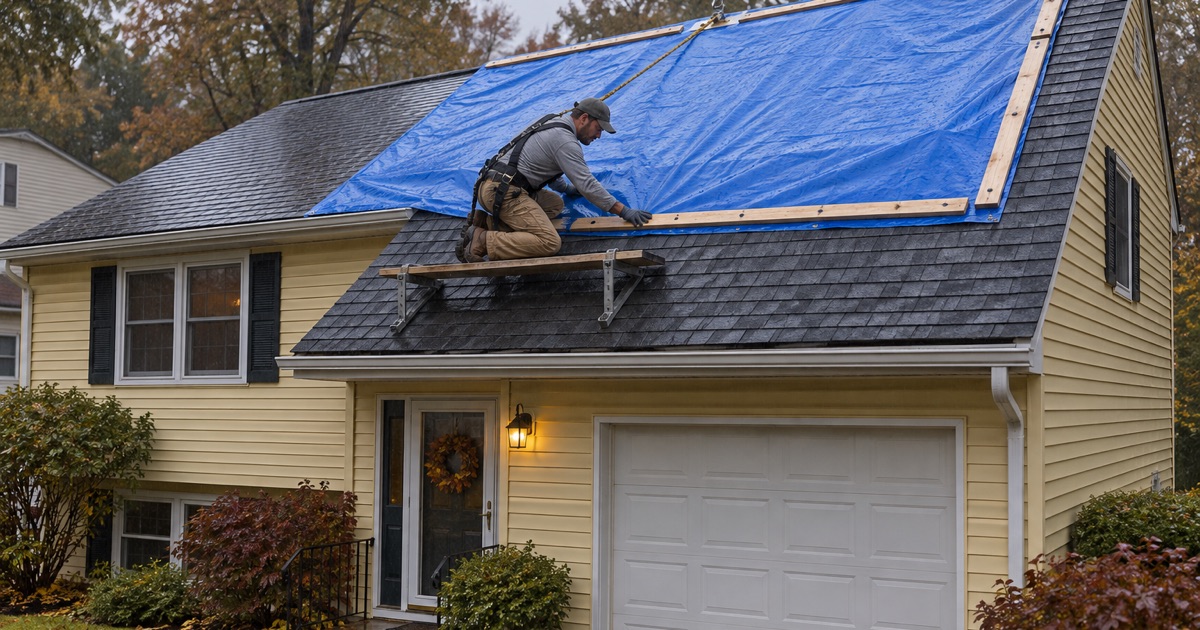
A tarp held down with bricks or loose boards can blow off or let water run underneath. We extend the tarp over the ridge where possible, so water cannot get in from above, and fasten it through wood battens along its edges.
The goal is a cover that stays put through wind and rain until the permanent repair. We check that water drains off the tarp rather than pooling in it.
Temporary Repairs Beyond Tarps
Not every emergency needs a full tarp. A few missing shingles may be covered with temporary shingles or a sealed patch, and a failed flashing may be temporarily sealed until it can be rebuilt.
We choose the temporary repair that will hold best for the time it needs to last. Every temporary repair is clearly identified as temporary, so it is never mistaken for the finished job.
After the Emergency
Permanent Repairs
Once the house is protected and the weather clears, we return for the permanent repair. That may be replacing shingles and underlayment, rebuilding flashing, repairing decking or, after a tree impact, replacing rafters as well.
You get a written scope listing what will be done and what it costs. Any damaged decking is shown to you before it is replaced.
Insurance Claims and the Adjuster
If you make a claim, our photos and write-up support it, and we can meet the insurance adjuster on site when you ask. Under New Jersey’s Public Adjusters’ Licensing Act, only a licensed public adjuster may negotiate a claim for pay on your behalf, so the claim itself stays with you.
We explain the difference between storm damage and age-related wear in our write-up. That distinction often decides how a roof claim is handled.
Deciding on Repair or Replacement
Some storm damage is a contained repair. In other cases, the damage is widespread or the roof was already near the end of its life, and replacement makes more sense.
We give you a straight answer on which applies to your roof. When replacement is the right call, the estimate lists every part of the job separately so you can compare it with any other quote.
- 20+ Years in Roofing
- Line-Item Written Estimates
- Same-Day Storm Tarping