Wayne Quality Roofing has handled roofing in Franklin Lakes and across this corner of New Jersey for more than 20 years, and much of what a homeowner here needs from a roofer comes down to one question: what happens when a tree comes down on the house. Our answer is a tarp the same day, then a careful look at everything under the impact point.
A falling trunk does not behave like wind. Shingles may look scuffed while a rafter below has cracked, or a sheet of decking has split along a nail line. We trace every leak from the attic side as well as from the roof, so the repair is priced on where water actually enters rather than on what is visible from the driveway.
This page covers the storm that shaped how we think about local roofs, what a tree strike does to the structure, how we stabilize and repair it, and what to gather for your insurance carrier. You will get a straight answer on whether the roof can be repaired before anyone mentions replacement, and most tree strikes do end in a repair.
August 25, 2020: About 40 Trees Down and a Storm Nobody Rated
What the Mayor Counted
On the evening of Tuesday, August 25, 2020, a fast-moving storm crossed northern New Jersey, and CBS New York reported that Franklin Lakes was one of the hardest-hit areas. Mayor Frank Bovina put the toll at about 40 trees down, many roads blocked, and about six homes that were hit by trees. Fires from live wires and gas leaks followed, and roughly 1,400 to 1,500 homes lost power.
The timing made it worse. Only weeks earlier, Tropical Storm Isaias had left most of the borough without power for about five days, according to the mayor. One resident told reporters the neighborhood runs on well water pumped by electricity, so an outage meant no water either. Those are the conditions a roof crew walks into after a storm here: blocked roads, dead lines and households already worn down.
A Microburst Suspected, Never Surveyed
Mayor Bovina said he believed the storm was a microburst, and that he would not be surprised if it turned out to be a tornado. That classification was never confirmed. The National Weather Service office at Upton issued public information statements over the following days announcing damage surveys elsewhere, including Orange County, New York, but none of them mentions Franklin Lakes.
The Storm Prediction Center’s report log for that evening tells the same story. It lists a large tree limb across a road in neighboring Oakland and trees and power lines down in Wyckoff, yet it carries no Franklin Lakes row at all. On paper, one of the hardest-hit towns in the area barely registered, and that gap matters to homeowners more than it first appears.
Why the Next Storm Will Look the Same
Damage here tends to arrive as a trunk or a limb on the roof, not as a rated weather event with a named cause and a survey behind it. That shapes how a claim is built. Without an official storm record to point to, your own photos, dates and a written description of the damage carry most of the weight.
Looking for roofing closer to Woodland Park? See Roofing Services in Woodland Park.
When a Tree Lands on a Large-Lot Roof
Mature Trees Close to the Roofline
Large lots usually mean large trees, and many of them were left standing when the houses went up around them. A tall oak or maple a short distance from the eaves can reach the ridge when it fails at the base, and a heavy limb only has to fall a few feet to land on the roof. We note overhanging limbs in every estimate so the risk is written down.
Shade brings its own wear between storms. Valleys under a canopy pack with leaves, and slopes that rarely see sun grow moss that holds moisture against the shingles. When we quote a roof on a wooded property, those conditions appear as their own items, so you can see what the trees are costing the roof long before one of them comes down.
The Damage You Cannot See From the Lawn
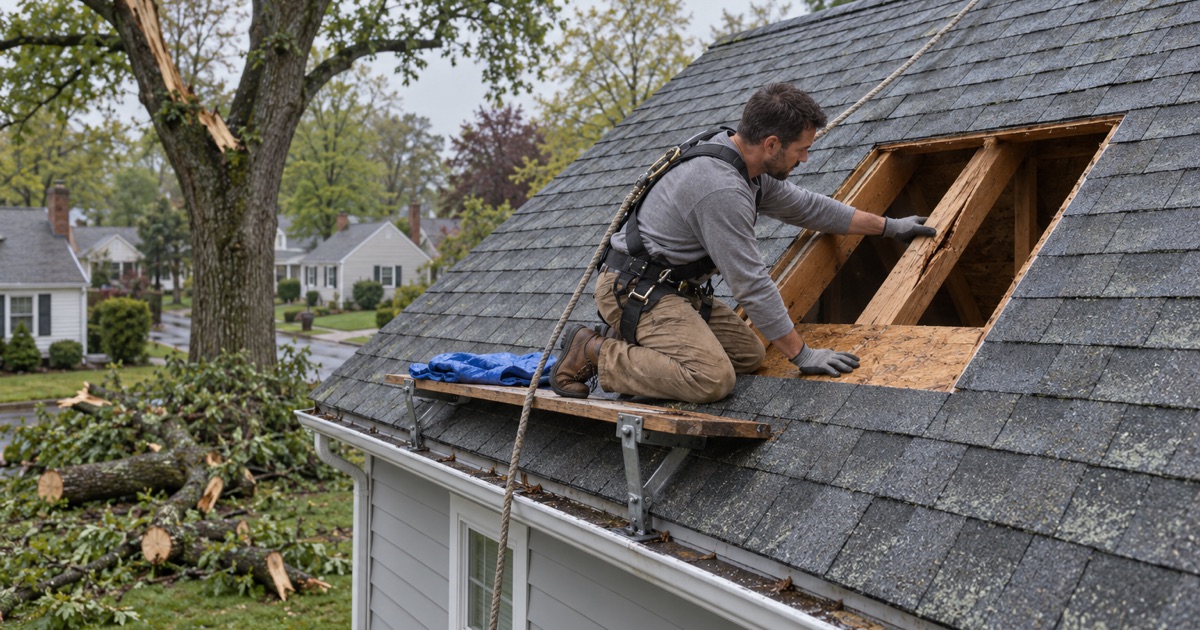
A tree strike is an impact load, and it travels. The shingles take the scrape, but the force goes into the decking, then the rafters or trusses, and sometimes into the ceiling joists or wall plates below. A roof that looks dented from the yard can hide a cracked rafter, a split top plate or decking pushed off its nails.
That is why we go into the attic after any strike. From inside, a cracked member, daylight through a seam or wet insulation tells us how far the damage runs. A roof surface patched over a broken rafter will sag at that spot, and the next heavy snow load will find the weakness.
Lines, Gas and Safety Before the Ladder
The August 2020 storm brought fires from live wires and gas leaks along with the fallen trees. A tree resting on a roof can also be tangled in a service drop, and branches still on the roof can shift once someone puts weight on them. We do not climb until downed lines are cleared by the utility and the load of the tree is understood.
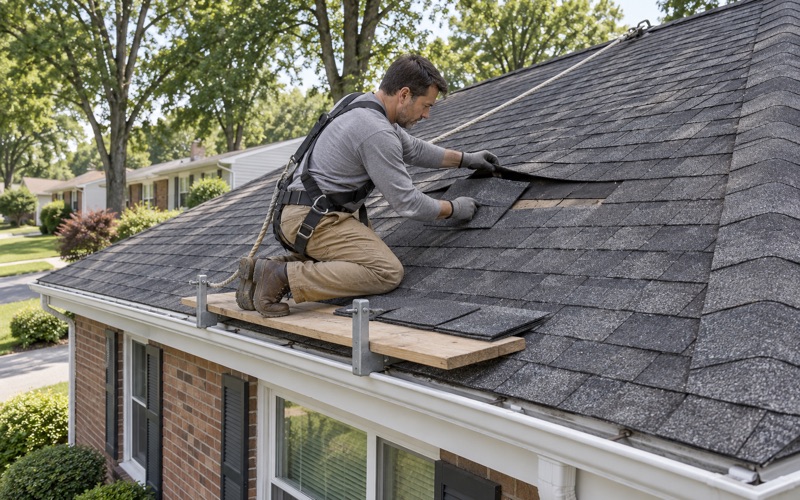
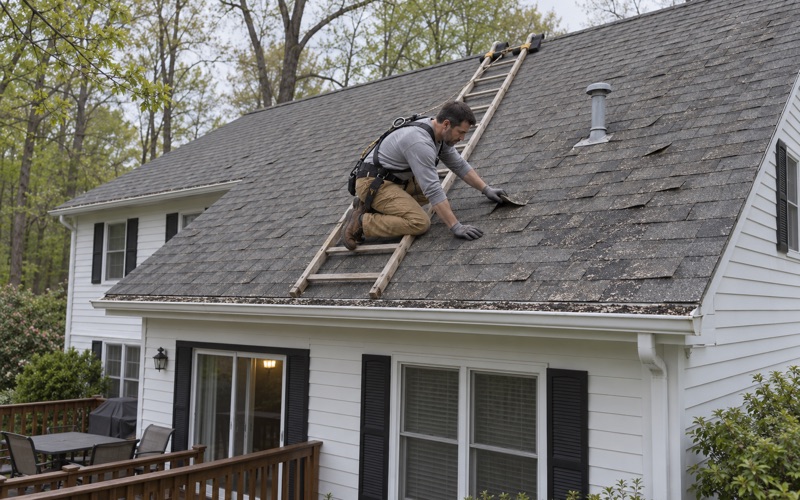
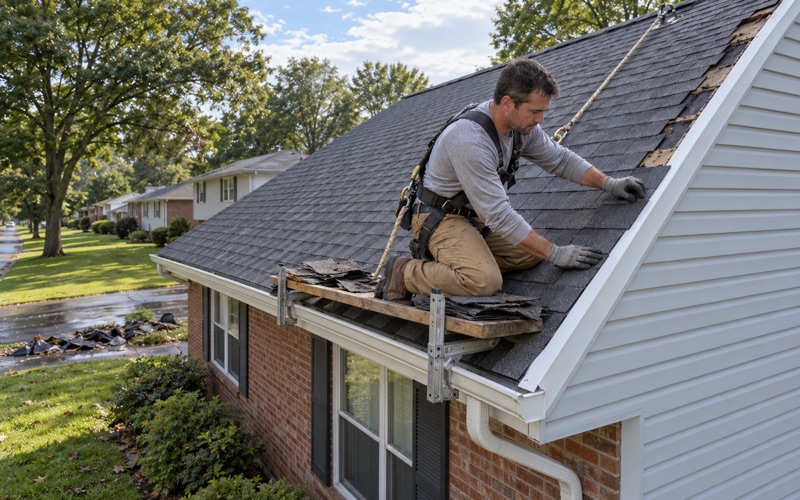
Our crews work to OSHA fall protection rules for residential roofing, which apply from six feet up, and a storm-damaged roof calls for extra care. Removing the tree itself is work for a tree service with the right rigging, and we coordinate around that crew so the roof is covered the moment the trunk is lifted off.
Tarping, Framing and Deck Checks After a Tree Strike
Tarp the Same Day, Photograph First
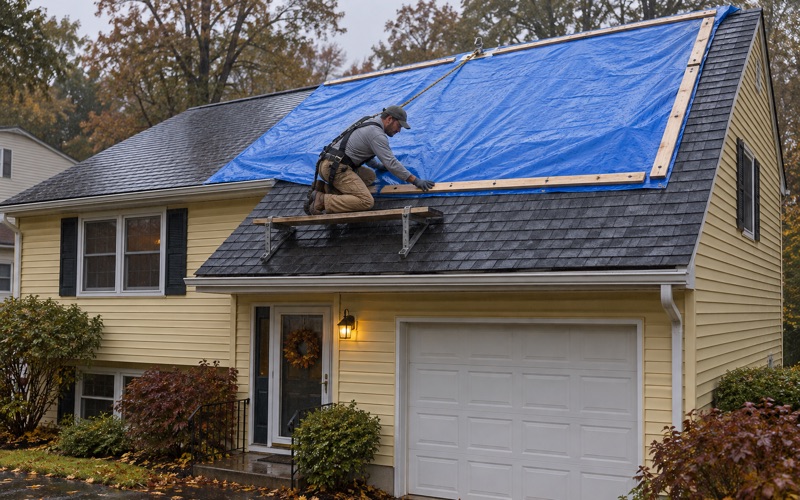
After a wind storm we get tarps and temporary repairs on the same day, but the camera comes out before anything is moved. Photos of the tree in place, the impact point, the interior ceiling and any water on the floors are the record your carrier will want later, and they cannot be taken again once the trunk is gone.
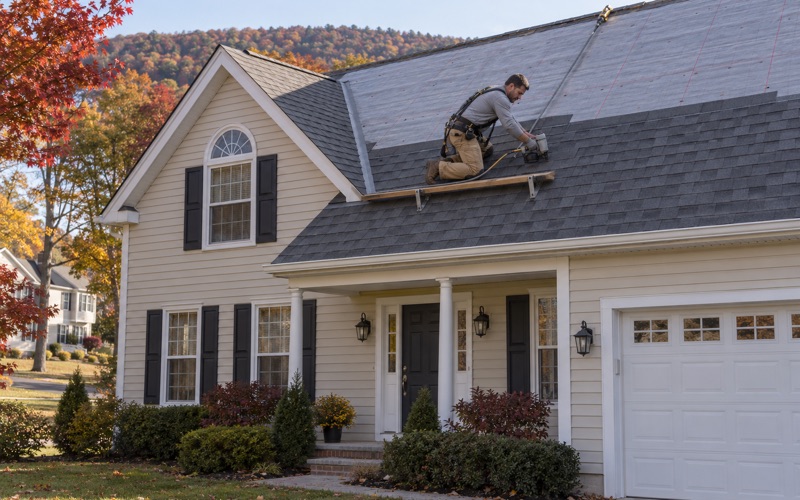
A proper tarp runs over the ridge and is fastened to battens rather than nailed through its face, so wind cannot get underneath and water cannot run behind it. On a punctured section we may screw down temporary sheathing first, then tarp over it. The goal is a dry house until the structure has been checked and the permanent repair is scheduled.
Framing Before Shingles
Once the tree is off, we check the framing under the impact before we price anything on the surface. Cracked rafters are typically sistered with new lumber alongside the damaged member, and a broken truss may need an engineered repair. Structural work is a different category from re-shingling, so we confirm with the Borough of Franklin Lakes Construction Department what the framing repair needs before it is closed in.
This order matters. New shingles laid over a cracked rafter will show the damage again within a season as a dip in the roof plane, and any warranty on the material assumes a sound structure beneath it. Fixing the bones first is slower by a day or two, and it is the only way the repair lasts.
Decking at a Price You Already Know
Decking is where tree strikes surprise owners most. Sheets near the impact can be cracked, delaminated or pulled loose even where the shingles above look intact. Every damaged sheet we find is photographed and shown to you before it is replaced, and the per-sheet price is set in the contract ahead of time, so an open roof never becomes an open-ended bill.
Flashing, Underlayment and Ventilation
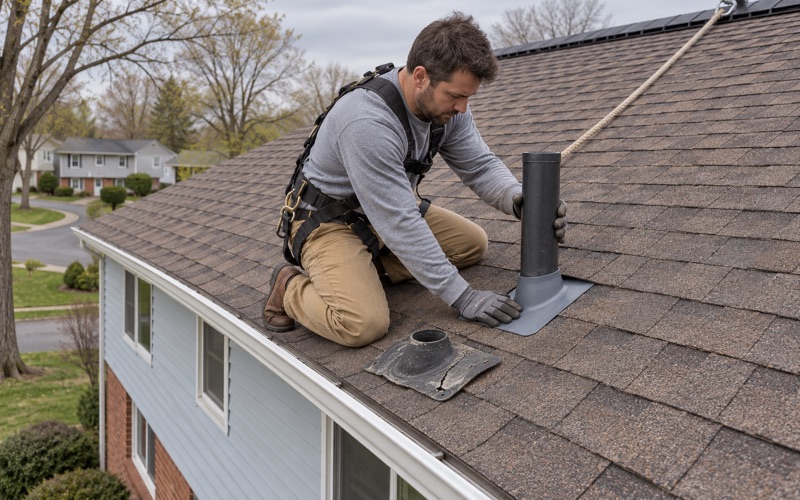
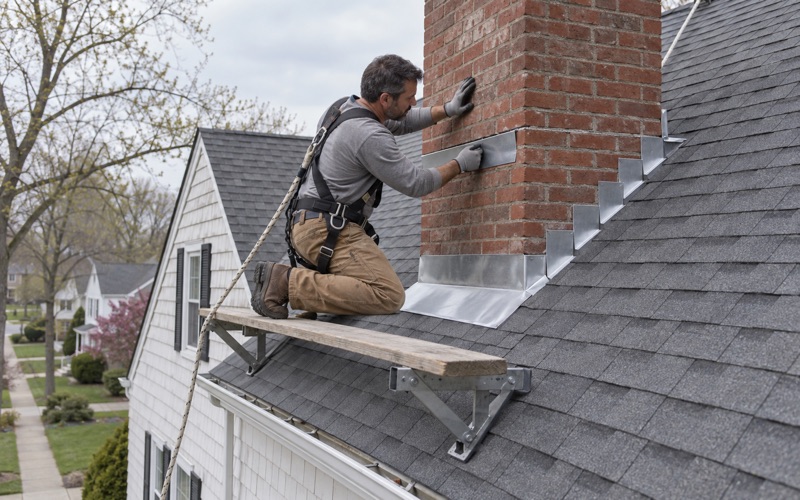
When a section is rebuilt, we treat it as new roof, not a patch. Step and counter flashing in the area is replaced rather than reused, drip edge is restored along the eave and rake, and fresh underlayment goes down before the shingles. Where the repair reaches the eaves, a self-adhering ice and water barrier goes back in to protect against ice dams.
We also check attic ventilation while the roof is open. A tree can crush a ridge vent or a box vent along with the decking around it, and a roof that cannot breathe ages from underneath. Matching the exhaust to the soffit intake costs little during a repair and much more if it is left for later.
Repair or Replace
We tell you plainly whether a section rebuild will do before a new roof comes up, and if the rest of the roof is near the end of its life we say so with photos rather than pushing it. Our written scope breaks out tear-off, decking, underlayment, flashing, ventilation and gutters as separate lines. That format lets you hold our estimate against any other one, item by item.
Documenting Tree Damage for Your Carrier
What to Gather in the First Hours
Because storms here often go unrated, the paper trail starts with you. Note the date and time the tree came down, photograph it from several angles before removal, and keep receipts for the tree service, tarping and any emergency cleanup. Interior photos of stained ceilings or wet insulation belong in the same folder.
We add to that record with a written report of what we found on the roof and in the attic, including the photos we took before the tarp went on. That report is yours to file with your own claim. It describes the damage in roofing terms, so an adjuster reading it can see exactly which rafters, sheets and flashing were affected.
Meeting the Adjuster on Site
If you ask, our crew will meet the insurance adjuster at the house and walk the roof with them. We can point out the cracked framing, the damaged decking and the extent of the impact, which is often easier to show than to describe. Coverage decisions belong to your carrier and your policy, and the claim itself stays in your name.
The New Jersey Department of Banking and Insurance publishes storm claims guidance that is worth reading before you file. Any repair contract we write follows New Jersey’s home improvement rules, including the three-business-day cancellation notice, so you have time to review the paperwork after a stressful night without feeling rushed into signing.
Getting Ahead of the Next Storm
The cheapest tree strike is the one that never happens. When we inspect a roof in Franklin Lakes, we call out limbs hanging over the ridge, trees leaning toward the house and valleys packed with leaves, and we put those notes in writing. A tree service can then decide what to prune before the next summer storm moves across Bergen County.
At the end of every work day, whether the job is a tarp or a full section rebuild, we clean the driveway, yard and gutters and run a magnet sweep for roofing nails. After a storm that has already filled the yard with branches, the last thing a household needs is a nail in a tire or a bare foot.
- 20+ Years in Roofing
- Line-Item Written Estimates
- Same-Day Storm Tarping