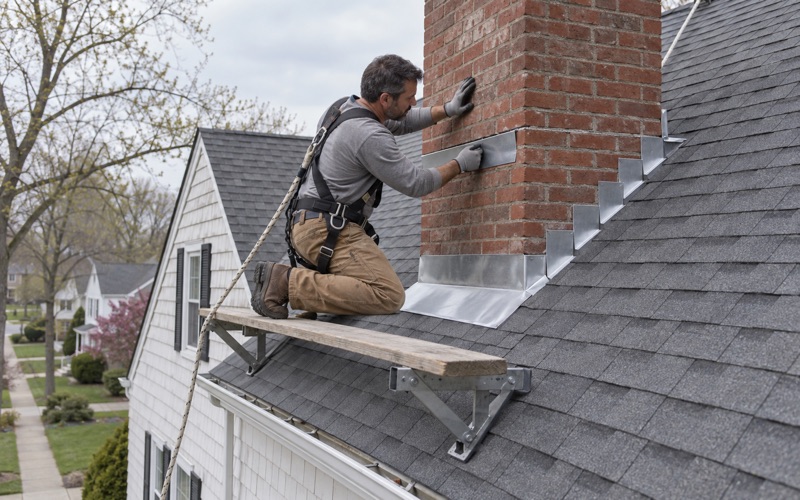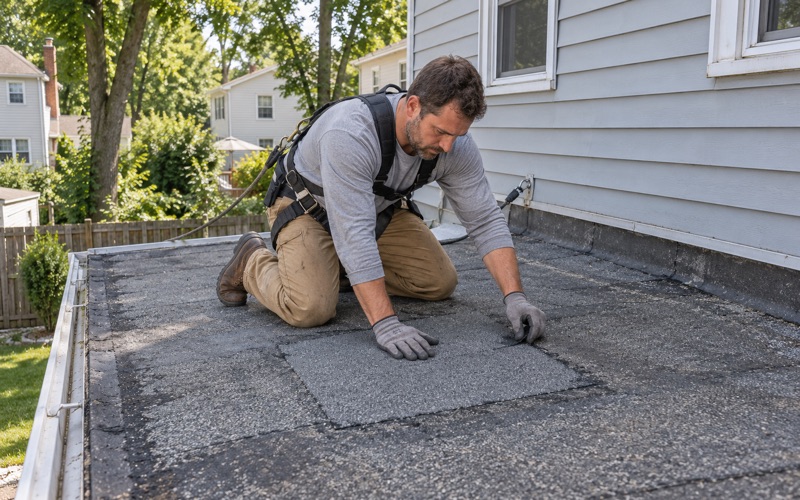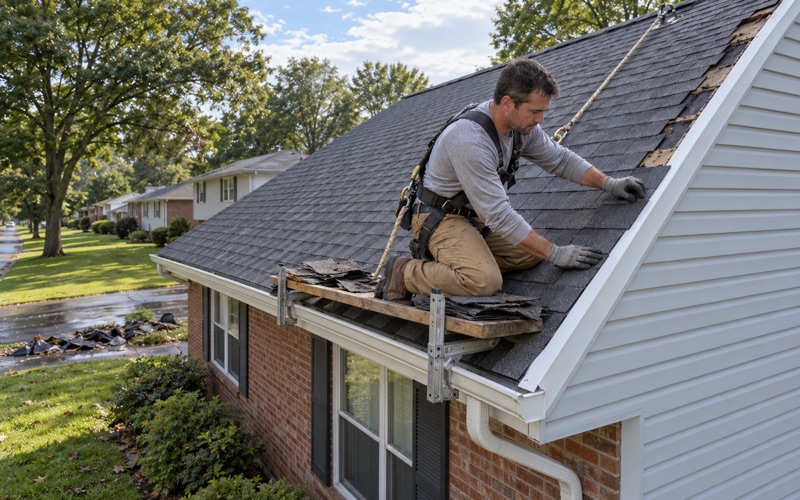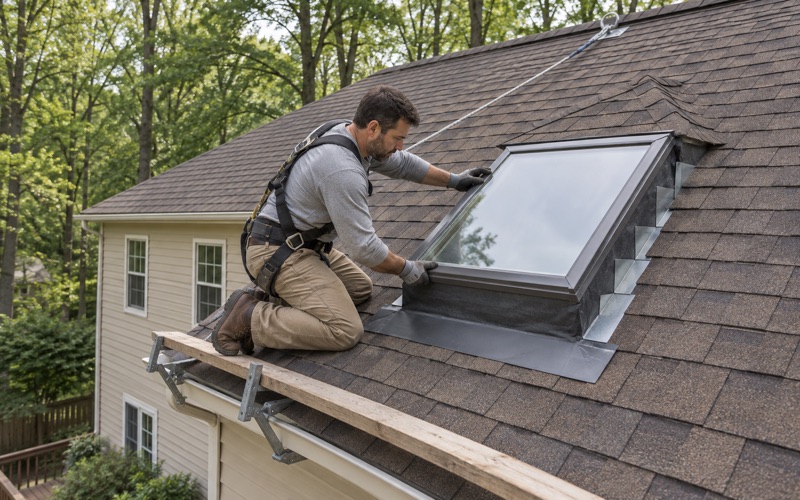
Wayne Quality Roofing has handled roofing in Glen Rock for more than 20 years, and the questions homeowners bring us have changed. More of them now start with a tree: a limb resting on the shingles, a trunk leaning toward the house, a canopy that keeps the back slope wet and green. In this borough, what happens to that tree is a permit question before it is a roofing question.
That shift traces to Section 208-10, the borough’s private-property tree ordinance. Any tree with a trunk 6 inches or more across, measured 4.5 feet above the ground, needs a Building Department permit before it comes down. For an owner planning a new roof, that means the tree work and the roof work belong on one schedule, with the tree decided first.
We do not take trees down, and we do not file the permit for you. What we do is point out every limb that touches or shades the roof in a written estimate, explain what it is doing to the shingles, and help you sequence the removal so a crew is never waiting on a permit with your old roof already stripped.
Glen Rock’s Tree Permit and the 6-Inch Trunk
What Section 208-10 covers
The Borough Council adopted Section 208-10 on October 23, 2024, and it applies to private property throughout Glen Rock. The rule is simple to state: anyone planning to remove a tree with a 6 inch or larger trunk at 4.5 feet must secure a permit from the Building Department before the removal can be performed. Development, demolition and construction projects fall under a separate section, 208-9.
The borough ties the ordinance to its stormwater obligations, the Global Warming Response Act and its Community Forestry Management Plan, which is why the rule reaches ordinary backyards. One question the published material does not answer is whether a removal connected to a re-roof falls under the construction section instead, so we tell owners to ask the Building Department directly before assuming either.
Measuring the trunk before you plan
Diameter at breast height, or DBH, is the measurement the borough uses, taken 4.5 feet above the ground. A 6-inch trunk is not a large tree: it is about the size of a young maple or a volunteer that sprouted along the foundation a decade ago. Most trees tall enough to shade a roof are well past that size.
Measure before you call anyone. Wrap a tape around the trunk at chest height and divide the circumference by about 3.14 to get the diameter. That number decides two things: whether a permit is needed at all, and which line of the replacement schedule applies if the tree is alive. A tape and a minute of arithmetic save a wasted phone call.
Dead or diseased trees
A dead tree still needs the permit. When the reason for removal is that a tree is dead or diseased, the 2026 application asks for written documentation from a NJ Licensed Tree Expert, so an arborist’s letter belongs in the file before anything is cut. The form names two kinds of removers: the property owner, or a state-licensed tree care company.
Dead limbs over a roof are the ones that worry us most, because they break without warning and rarely fall gently. If we see one during a roof inspection, we photograph it, mark it in the estimate and suggest you get the expert’s letter started then, rather than after the limb has already come through the shingles.
Looking for roofing closer to Wanaque? See Roofing Services in Wanaque.
Planned Removals and Storm Emergencies
Fifteen working days on the calendar
For non-emergency work, the borough’s 2026 application must be received at least fifteen working days before the proposed removal date, and the form says plainly not to schedule the removal until the permit is approved. Fifteen working days is three weeks of calendar time, longer if a holiday falls inside it. An approved permit is valid for one year and has to be posted on site.
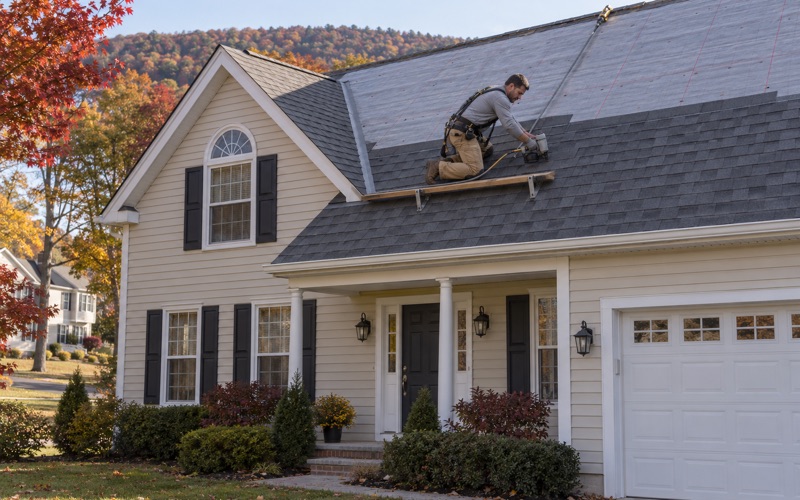
For a re-roof, that lead time sets the order. The tree comes down first, the debris is cleared, and only then does tear-off begin. File the application when you sign a roofing contract and the tree work can finish before our crew arrives; file later, and the roof waits on the tree. The form also asks whether the property is the subject of a construction or renovation application, so answer it plainly.
Imminently dangerous trees: photos first, permit after
Storms do not wait three weeks. The application allows emergency work on imminently dangerous trees to be submitted retroactively, but the filing must include clear photo documentation and the tree’s DBH. That means the photographs have to be taken before the tree is cut up and hauled away, and they need to show the whole tree and the defect that made it dangerous.
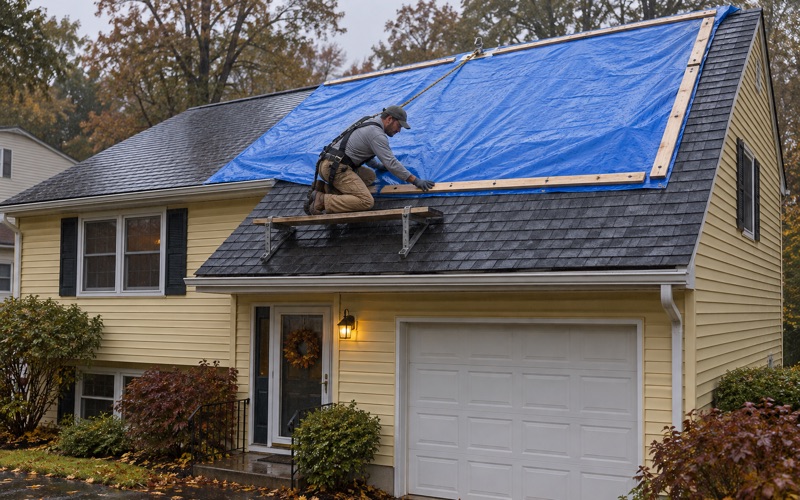
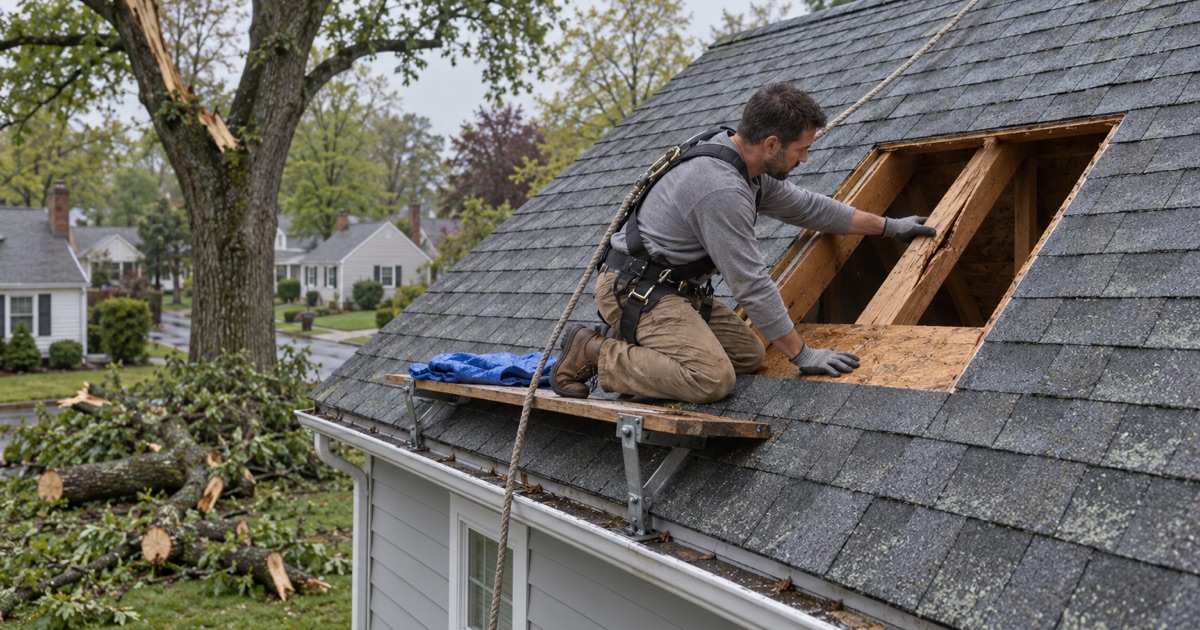
This is where our own storm routine helps. After a wind storm we photograph the damage before anything is moved, then tarp or patch the roof the same day. Those roof photos are taken for your own insurance claim, but take your own pictures of the tree, the split and a tape around the trunk too, so the borough filing has what it asks for.
What happened on Roxbury Place
On September 6, 2025, a severe thunderstorm brought a tree down onto two homes on Roxbury Place, and the family inside said they heard the impact and felt the house shake. How much roof damage followed was not reported. The point for other owners is that the risk is not hypothetical here, and the retroactive filing exists for exactly that kind of night.
If a tree lands on your roof, get everyone out of the rooms beneath it, then call. We will document the damage, cover what can be covered, and write up the roof for your claim, and we will meet the adjuster on site if you ask. The tree itself goes to the owner or a licensed tree company, with the borough paperwork filed after.
Replacement Trees or the Glen Rock Tree Trust
The replacement schedule
Removing a live tree carries an obligation to replace it or pay into the Glen Rock Tree Trust. The 2026 schedule runs by trunk size: 6 to 11.99 inches takes one replacement tree or $750; 12 to 23.9 inches takes two trees or $1,500; 24 to 31.99 inches takes three or $2,250; and anything greater than 32 inches takes four trees or $3,000.
Those figures belong in the budget of a re-roof that starts with a tree. A large tree over the house can carry a $3,000 obligation on top of the removal itself, and it is better to know that number while you compare roofing estimates than to discover it afterward. The replacement requirement is written for live trees, which is one more reason the tree expert’s letter matters for a dead one.
Smaller lots and planting rules
Lots smaller than 11,200 square feet never owe more than two replacements per tree removed, which caps the obligation on a modest parcel. Replacement trees must be at least 2.5-inch caliper, planted within 12 months and kept for two years. Arborvitae do not count, and the borough’s prohibited list includes Norway maple, Callery (Bradford) pear and tree of heaven.
Norway maple deserves a second look before you replace one. It is a tree many owners would plant back out of habit, and a homeowner who pulls one out cannot put the same species in its place. Ask whoever plants the replacement for a species that suits your yard’s light and soil, and that will not outgrow its spot.
Where the new tree goes
From the roof’s side, placement matters more than species. A replacement planted a few feet from the gutter line will reach the shingles long before the new roof wears out, starting the same cycle again. We suggest keeping new trees far enough from the house that their mature canopy clears the eaves, and away from the side where valleys collect leaves.
If your lot cannot fit a replacement safely away from the house, the Tree Trust payment is the alternative the ordinance offers, and it keeps a new tree off your roof entirely. On a tight lot where every open spot sits close to the walls, that is a reasonable choice rather than a penalty.
Clearing Limbs Before a Re-Roof
Why the tree goes first
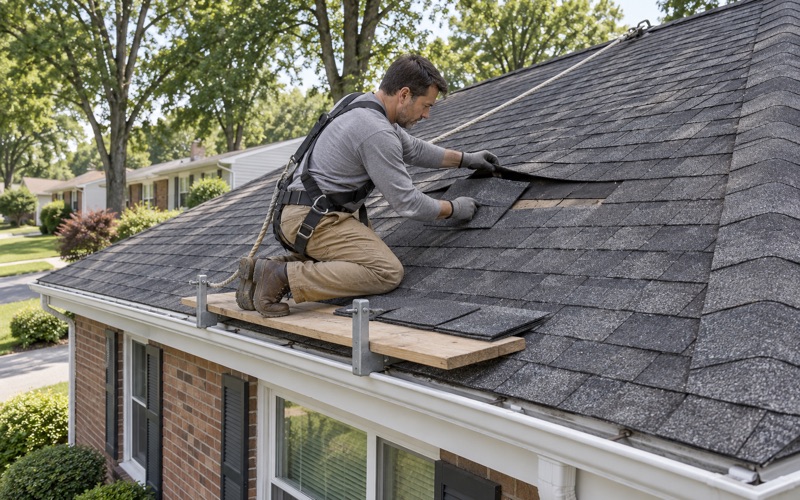
Tear-off leaves a house exposed, and nobody wants a crew cutting limbs over an open deck. Branch drop can puncture new underlayment, and a felled section can crack fresh shingles that have not yet sealed. That is why we ask about every overhanging tree during the first visit and write the removal, or the trimming, into the timeline ahead of our start date.
Trimming is not always a removal. A limb cut back from the roof may leave the trunk in place, and whether that work falls under the permit is a question for the Building Department, not for us. We describe what the roof needs cleared; you or your tree company confirm what the borough requires before the saws come out.
What overhanging limbs cost a roof
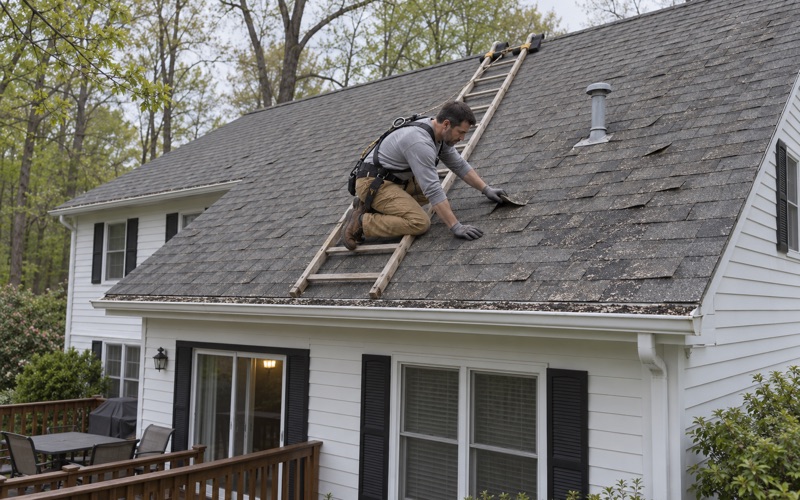
Shade keeps a slope damp, and damp shingles grow moss that lifts tabs and holds water against the mat. Leaves pack the valleys and the gutters, so water backs up under the edge of the roof during heavy rain. Limbs that brush the surface in the wind scrub granules off the shingles the same way sandpaper would.
On wooded lots we call out each of those in the estimate rather than lumping them under general wear. If a valley has been holding leaves for years, we check it from the attic as well, because a stain on the sheathing tells us how long water has been getting in and where it actually enters.
What the written scope shows
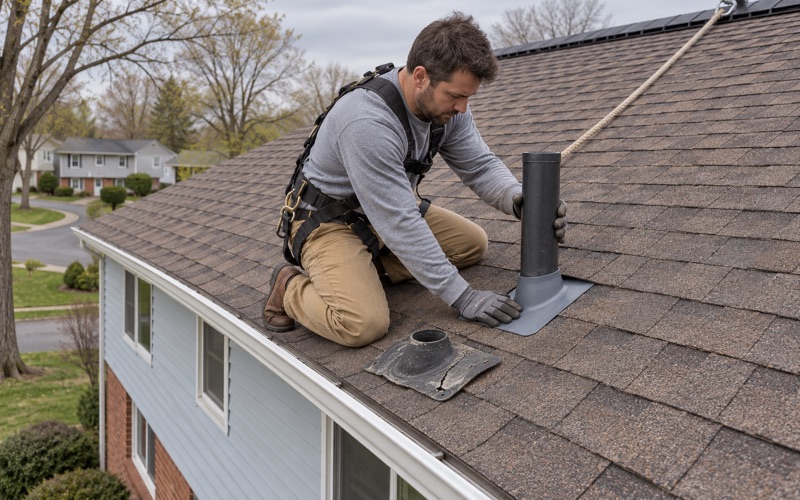
Our estimates break the job into separate lines for tear-off, decking, underlayment, flashing, ventilation and gutters, so you can line two bids up item by item. Before anyone talks about replacement, we tell you honestly whether a repair will do. Step, counter and chimney flashing are replaced with the roof, not reused under new shingles.
When the old roof comes off, any damaged decking is photographed and shown to you before it is replaced, at the per-sheet price written into the contract. Attic ventilation is checked on every replacement, and at the end of each day the driveway, yard and gutters are cleaned, with a magnet sweep for nails. The contract follows New Jersey’s home improvement rules, three-day cancellation notice included.
- 20+ Years in Roofing
- Line-Item Written Estimates
- Same-Day Storm Tarping