
Wayne Quality Roofing handles gutter installation in Wayne, NJ, serving surrounding cities including Totowa, Pequannock, Lincoln Park, Franklin Lakes and Woodland Park. We install seamless aluminum gutters and leaders on houses and small commercial buildings, sized to each roof and hung so water lands in the gutter rather than behind it. With more than 20 years of roofing behind us, we treat the gutter as the last part of the roof, not a separate trade.
That matters because most gutter problems start at the roof edge. A missing drip edge, a gutter hung too low or a fascia already soft with rot will defeat even the best new gutter. We check all three before we quote, and the estimate lists gutter work as its own line so you can see exactly what it costs.
On a roof replacement, we can install new gutters in the same job or rehang sound ones under the new drip edge. On their own, gutters are a quicker project, usually completed in a day on a typical house.
Seamless Aluminum Gutters
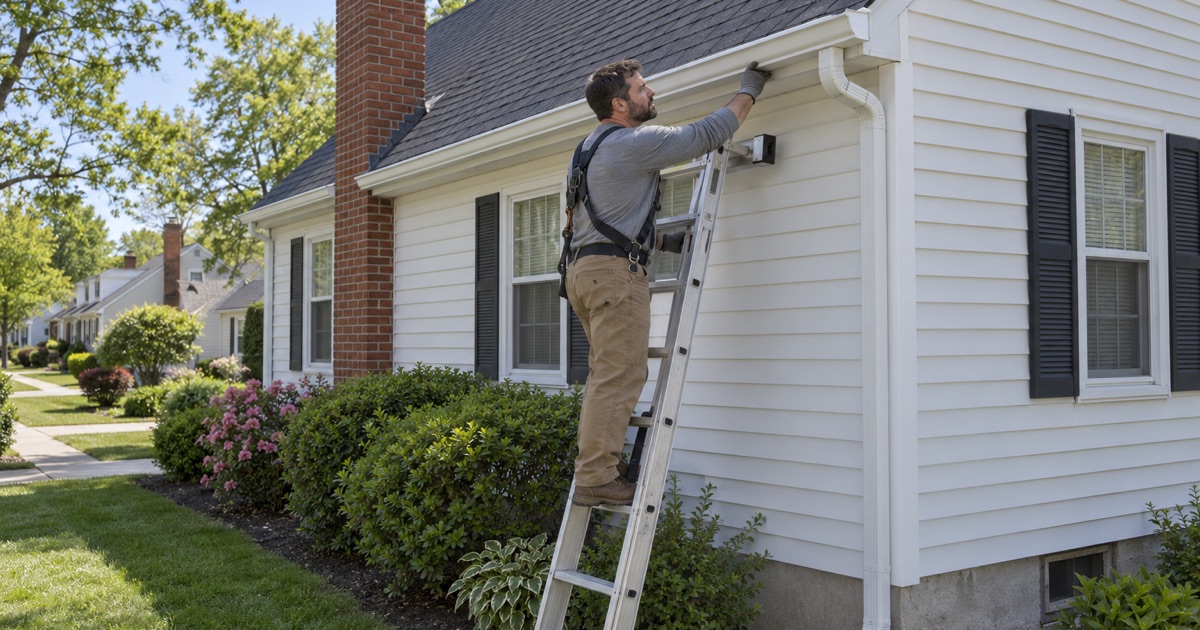
Formed On Site for Each Run
Seamless gutters are rolled from a coil of aluminum on a machine at the house, cut to the exact length of each run. With no joints along the length, there are no seams to separate and leak, only the corners and end caps. The result looks cleaner and holds up better than gutters assembled from short sections.
Aluminum is light, does not rust and comes in a range of colors to match trim and siding. We match the color to your house and fasten the gutter with hidden hangers spaced close enough to carry snow and ice without sagging.
Sizing Gutters to the Roof
A gutter has to carry all the water from the roof area above it in a heavy downpour. The size you need depends on that area, the pitch of the roof and how many leaders drain the run. Steep roofs shed water faster, and long runs collect more of it before it reaches a leader.
We measure each section of the roof and size the gutters and leaders accordingly. Where a valley dumps a concentrated flow into one spot, we may add a diverter or a larger gutter at that corner to stop overflow.
Leaders, Downspouts and Drainage
Leaders carry water from the gutter to the ground, and where they discharge matters as much as the gutter itself. Water dumped at the foundation soaks the soil against the basement wall and is a common cause of wet basements. We place leaders where they drain away from the house and add extensions or splash blocks where needed.
On long runs, a second leader keeps the gutter from overflowing in a heavy rain. We also make sure leaders on upper roofs empty into lower gutters properly, without eroding the shingles below.
The Roof Edge Behind the Gutter
Drip Edge and Gutter Height
Drip edge is the metal strip at the roof edge that directs water off the shingles and into the gutter. Without it, water clings to the underside of the shingles and runs down the fascia, rotting the wood and staining the soffit. Many older roofs either lack drip edge or have it installed so it does not reach the gutter.
We set the gutter at the correct height so the drip edge laps into it, with the gutter pitched slightly toward each leader. That combination puts the water where it belongs, even in a hard rain.
Fascia and Soffit Repair
If water has been running behind the old gutter, the fascia board may be soft or rotted. A new gutter fastened to rotten wood will pull loose, so we check the fascia along every run before hanging anything. Damaged sections are replaced and wrapped where appropriate.
On homes built before 1978, painted fascia and trim may contain lead paint. Disturbing it falls under the EPA’s lead-safe work rule for renovation, so we plan containment and cleanup accordingly when that work is involved.
Gutters During a Roof Replacement
A roof replacement is often the best time to replace gutters, because the drip edge comes off and goes back on anyway. Installing both together lets us coordinate the roof edge, the eave ice barrier and the gutter position as one system.
If your gutters are fairly new and in good shape, we can remove and rehang them under the new drip edge. Either way, the estimate shows the gutter work separately, so you can decide.
Repairing Versus Replacing Existing Gutters
Not every gutter problem calls for new gutters. A sagging run can often be rehung with new hangers, a leaking corner resealed and a loose leader refastened. Those repairs make sense when the gutter itself is straight, sound and correctly sized for the roof above it.
Replacement makes more sense when the gutters are sectional with many failing seams, badly dented, undersized for the roof or pitched the wrong way along their whole length. We look at each run separately and tell you which ones are worth keeping. That way you only pay for new gutters where the old ones cannot be made to work.
Gutters Under Trees and in Winter
Leaves, Seed Pods and Clogs
Houses on wooded lots fill their gutters with leaves, twigs and seed pods several times a year, and clogged gutters overflow at the corners and behind the fascia. Standing water in a clogged gutter also adds weight that pulls hangers loose.
We point out overhanging limbs in the estimate and recommend trimming them back from the roof. Gutters on wooded lots benefit most from guards and from leaders large enough to pass the debris that does get through.
Gutter Guards
Gutter guards cover the gutter so leaves slide off while water still enters. They come in several designs, from perforated covers to fine mesh, and each handles different debris better or worse. No guard eliminates maintenance entirely, but a good one sharply cuts how often a ladder is needed.
We recommend a guard based on the trees around your house and the pitch of the roof. Guards are installed so they do not lift the shingles or void the shingle warranty.
Ice Dams and Gutter Damage
In winter, ice can build up in gutters and at the eaves, and the weight bends gutters and pulls them off their hangers. Gutters themselves do not cause ice dams, which come from heat escaping into the attic, but a gutter full of ice makes the problem worse at the edge.
We fasten gutters with hangers spaced for snow and ice loads. On houses with a history of ice dams, we recommend looking at the attic insulation and ventilation, and on a re-roof we add an eave membrane under the shingles.
Commercial and Specialty Gutters
Gutters on Commercial and Low-Slope Buildings
Low-slope roofs on commercial buildings often drain to gutters along one edge or through scuppers in a parapet. Those gutters handle large volumes of water from big roof areas, so sizing and leader placement are critical. We install seamless gutters and leaders sized for the roof area and tie them into scuppers where they exist.
We also check that the roof edge metal and membrane terminate properly into the gutter. A gutter installation on a commercial building is part of how the whole roof drains, not an afterthought.
Matching Older and Historic Homes
Some older houses have half-round gutters or built-in gutters that are part of the cornice. Replacing those with standard modern profiles can change the look of the house. Where it suits the home, we discuss half-round seamless options and how to keep the original appearance.
Built-in gutters that have failed need their linings repaired or replaced, which is closer to flat-roof work than to a standard gutter job. We inspect them before recommending a fix.
- 20+ Years in Roofing
- Line-Item Written Estimates
- Same-Day Storm Tarping