Wayne Quality Roofing has spent more than 20 years on roofing in Hillsdale and the surrounding part of North Jersey, and a good share of the calls we take here begin with a house about to change hands. The seller wants to know whether the roof will hold up under a buyer’s scrutiny, and the buyer wants to know what they are actually getting. Both questions deserve an answer from someone who has been on the roof and in the attic.
That answer matters more than people expect, because the borough’s own resale paperwork leaves the roof out entirely. A house can clear every item the borough looks at and still have worn shingles, tired flashing or a soft spot in the decking that nobody in the transaction has examined yet.
This page walks through what the Hillsdale resale certificate does and does not cover, which roof questions a buyer’s inspector should be pressed on, and how a seller can get ahead of them with a written report. It also explains why a straightforward re-roof leaves nothing open on the application. Whenever we look at a roof for a sale, we start with an honest read on whether it can be repaired before replacement ever comes up.
What Hillsdale’s Continuing Certificate of Inspection Covers
Ordinance 18-18 and the Fire Prevention Bureau
Every sale, transfer or lease of a Hillsdale home runs through a Continuing Certificate of Inspection, issued under Hillsdale Borough Ordinance 18-18. The application form covers single-family houses, multifamily buildings and rental units alike, so almost every owner who sells or rents will see it at some point.
The inspection is run by the Hillsdale Fire Prevention Bureau, under Fire Official Darren Blankenbush, rather than by the construction office. That detail tells you a lot about the certificate’s purpose before you ever read the checklist. It is a fire and life-safety review, organized around what keeps occupants safe on the day they move in.
Fee, Notice and the 60-Day Window
The inspection fee is $100.00, and a re-inspection costs $50.00. The application is blunt about timing, telling applicants they must allow 10 business days for the inspection, and a missed appointment counts as a failed initial inspection. CCI inspections are held on Tuesday afternoons from 4:00 to 6:00 p.m., booked through the borough at 201-722-2612.
Once issued, the certificate is valid for 60 days from its issuance date. That window is why sellers tend to book the CCI late in the process, close to the contract, and why it is a poor moment to discover anything else about the house. If a roof question surfaces in that same stretch, there is very little room left to deal with it calmly.
The Homeowner Check List, Item by Item
The Homeowner Check List attached to the application, dated June 2021, reads like a fire inspector’s priorities. It asks for working smoke and carbon monoxide alarms, sump pumps and dryer vents discharging to the exterior, a garage door opener on a dedicated outlet, keyless dead bolts, bedroom egress and a visible house number.
It also covers general property maintenance and asks that boiler, furnace and water heater flue connections be secure at the chimney. A Fire Prevention Bureau memo dated March 1, 2025 updated the alarm items and dropped the portable extinguisher as a requirement. Read top to bottom, the list contains no line for the roof, the flashing or the gutters.
Looking for roofing closer to Rutherford? See Roofing in Rutherford.
Why the Roof Is Not on the Checklist
A Life-Safety Review, Not a Condition Survey
The roof is not on the checklist because the CCI is not trying to grade the house. Its items share one theme: getting people out safely, warning them of smoke and carbon monoxide, and sending water and exhaust outside rather than into living space. A roof that is ten years past its prime does not endanger anyone on closing day, so it falls outside that frame.
We have no quarrel with that design, and it is not our place to say what Ordinance 18-18 should require. The practical point is narrower. A passed certificate tells a buyer the alarms work and the bedrooms have a way out, but it tells them nothing about shingles, underlayment, decking or the attic beneath them.
What the Certificate Says About Itself
The borough is candid about this on the certificate itself. It states that the CCI is not intended as a representation of the condition of the property and should not be relied upon as evidence that the property is safe or structurally sound. That language is there for a reason, and both sides of a sale should take it at its word.
In a borough where 92.8 percent of homes are owner-occupied and 86.6 percent are detached houses, nearly every roof that changes hands is one owner’s roof, kept up on that owner’s schedule. Some were replaced recently and carefully, while others have been patched for years. The certificate cannot tell those apart, and it does not claim to.
Where the Chimney Item Stops
The closest the checklist comes to the roof is the flue item, and its limits are worth spelling out. Asking that flue connections be secure at the chimney concerns the venting path inside the house. It does not reach up through the roof to the chimney’s crown, cap, mortar joints or the flashing where masonry meets shingles.
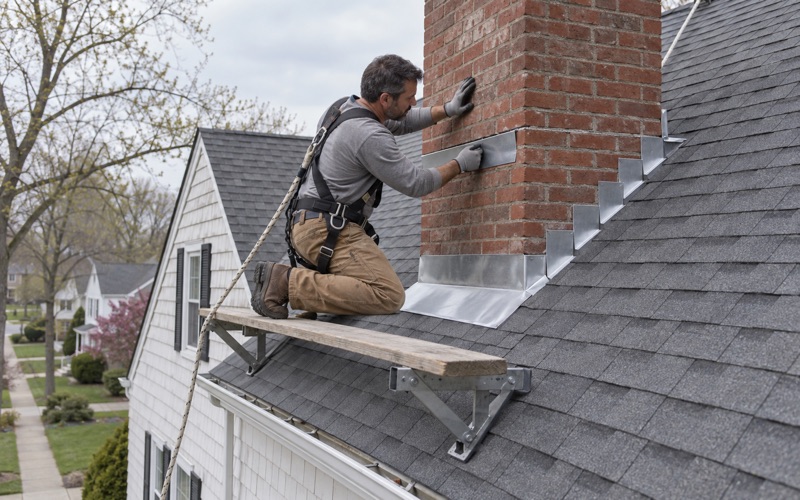
That outside junction is one of the most common places a roof leak starts. Step flashing, counter flashing set into a reglet, and a cricket on the uphill side of a wide chimney all wear on their own timeline. None of them is part of a CCI, so a chimney that passes inside can still be letting water in at the roofline.
Roof Questions for Buyers and Sellers
What a Buyer’s Home Inspection Should Answer
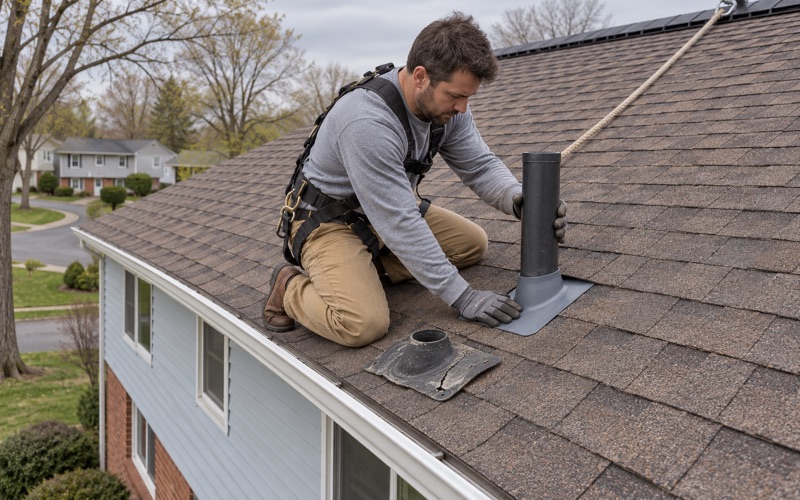
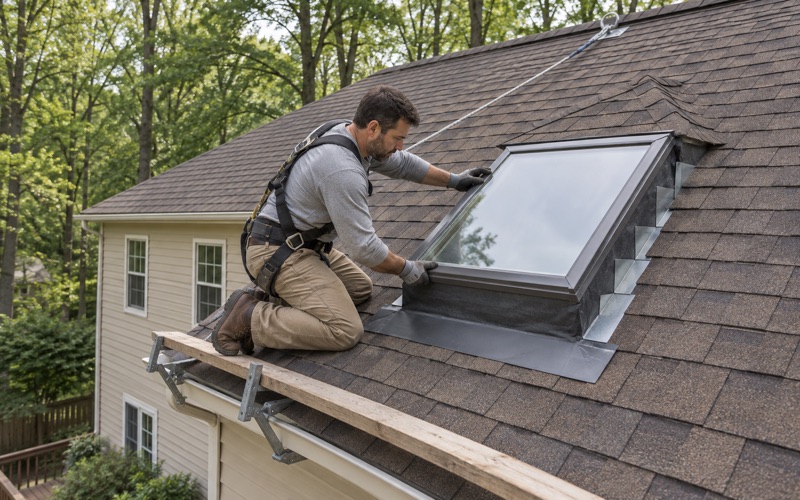
Because the borough certificate leaves the roof out, the buyer’s own home inspection is where the roof question gets settled. A buyer should expect the inspector to estimate the covering’s remaining life, note how many layers are on the house, and look closely at flashing around chimneys, walls, skylights and plumbing vents.
Just as important is what happens under the roof. Staining on the attic sheathing, rusted nail tips, damp insulation and blocked soffit vents often say more than the shingles do. If the inspector could not get into the attic or onto the roof safely, that gap belongs in the report, and a buyer can reasonably ask for a closer look before the deal firms up.
A Roof Check Before the Listing Goes Up
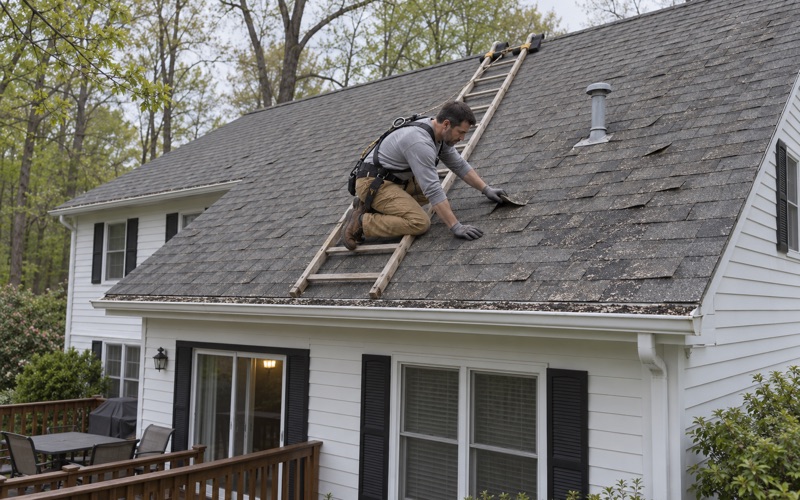
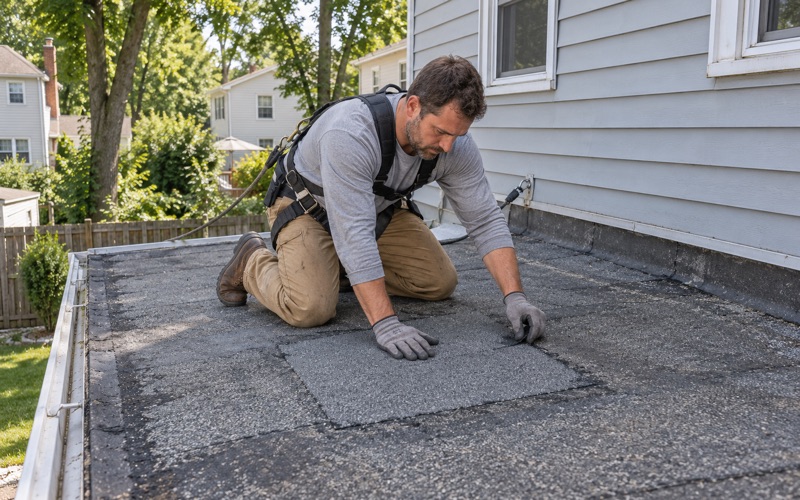
Sellers who would rather not learn about the roof from the buyer’s inspector can have it looked at before the house is listed. For a home being sold, we put together a written roof condition report the seller can hand straight to the buyer’s inspector, covering the shingles, the flashing, the gutters and what we found in the attic.
The value of doing this early is time. A seller who knows in advance that a pipe boot is cracked or a valley is worn can fix it on their own schedule and price it with more than one contractor. Finding the same problem while the CCI clock and a closing date are both running leaves far fewer good choices.
Repair First, Replacement Only When It Is Earned
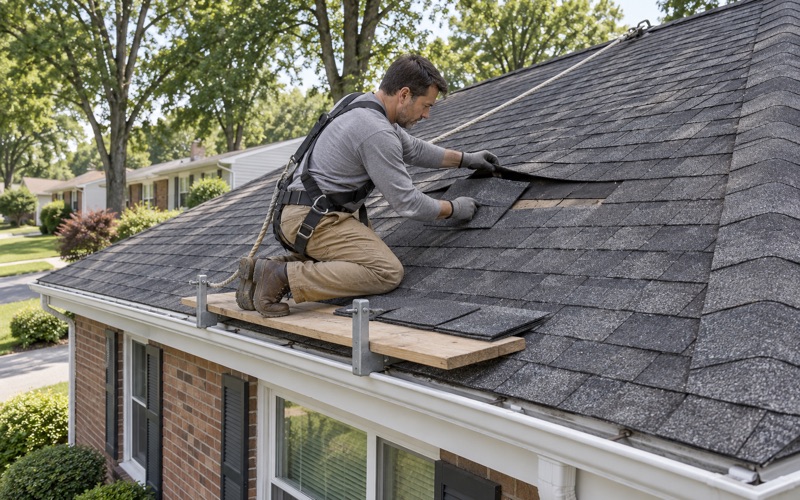
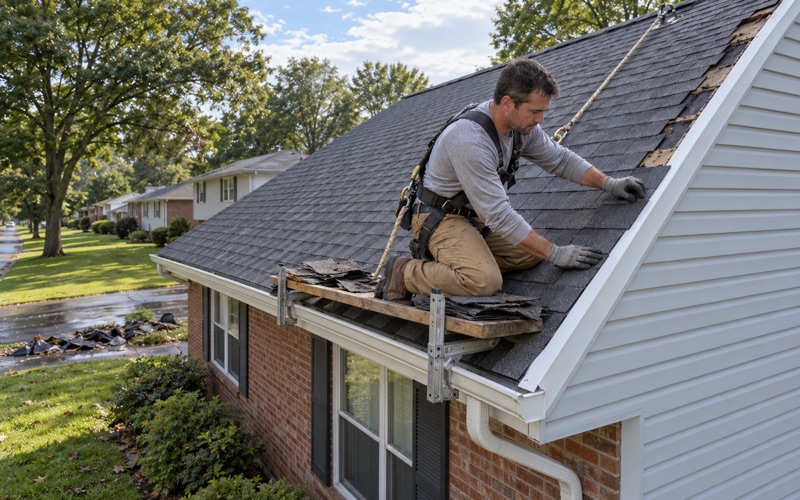
A sale is not a reason to sell someone a roof. When we inspect for a seller or a buyer, the first thing we tell them is whether the roof can be repaired, and replacement only enters the conversation if the answer is no. Plenty of Hillsdale roofs need a flashing repair, new pipe boots or a few courses of shingles rather than a tear-off.
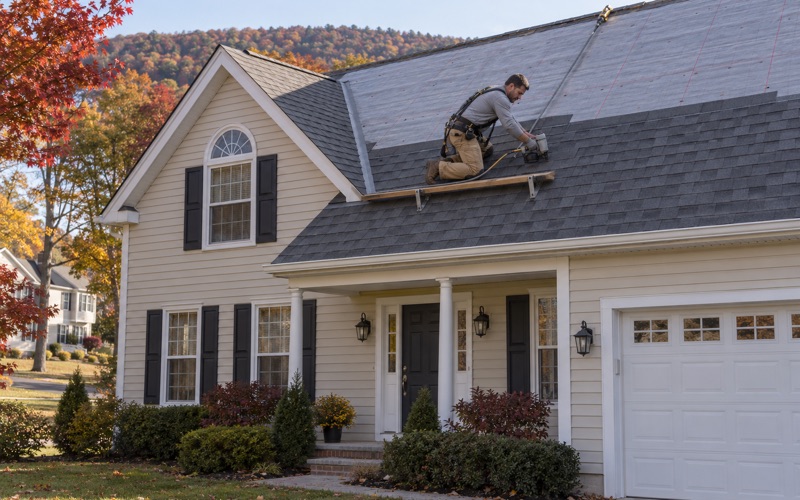
When replacement is the honest answer, our written scope breaks tear-off, decking, underlayment, flashing, ventilation and gutters into separate lines. That gives buyer and seller something concrete to negotiate around, and it lets either one compare our estimate against another contractor’s item by item instead of trading a single lump-sum number.
Open Permits on the CCI Application, and the Re-Roof That Opens None
The Open Building Permits Question
The CCI application asks a direct question: Open Building Permits, yes or no. An open permit is work that was started through the construction office and never closed out with a final inspection, and it is the kind of loose end that can slow a sale while someone tracks down the paperwork.
Hillsdale’s construction office sits at 380 Hillsdale Avenue, with Keith Dalton listed as Construction Official and Building Inspector. If a past project on the house, such as a deck or an addition, was permitted, that office is the place to ask about its status well before the application goes in.
Why an Ordinary Re-Roof Opens Nothing
Replacing the roof covering on a detached one- or two-family house is treated as ordinary maintenance under N.J.A.C. 5:23-2.7, which means no permit, no inspection and no notice to the construction office. A straightforward re-roof on a typical Hillsdale house therefore adds nothing to the open permits line, whether it was done years ago or finished just before listing.
That does not mean the work goes unwatched. We replace step, counter and chimney flashing with the new roof rather than reusing the old metal, and we check attic ventilation on every replacement. Decking that turns out to be rotten once the old shingles are off is photographed and shown to the owner before it is replaced, at the per-sheet price written into the contract.
When the Work Goes Further
Some jobs step outside ordinary maintenance. The rehabilitation subcode at N.J.A.C. 5:23-6 sets the re-roofing rule that calls for a tear-off where two or more layers are already in place, or where the existing roof is slate, wood shake or tile. Structural repairs and new skylight openings raise their own questions, and the construction office is the one to answer them.
Whatever the scope, our contracts are written to New Jersey’s home improvement rules, including the three-day cancellation notice. For a seller working against a closing date, that is worth knowing at the start. Building the cancellation window into the schedule keeps the roof work and the sale moving together rather than colliding in the last week.
- 20+ Years in Roofing
- Line-Item Written Estimates
- Same-Day Storm Tarping