Wayne Quality Roofing has handled roofing in Lincoln Park for more than 20 years, and a good share of that work sits on buildings that shelter more than one household. Garden apartments, condominium buildings and cooperative roofs carry obligations a single house does not, so we plan every one of those jobs with the state’s standard in view from the first walk-through.
For a board, a property manager or a building owner, the practical questions are rarely about shingle color. They are about what the state expects a roof to do, who checks it, and how to get the work scoped, permitted and finished without leaving residents under a wet ceiling. This page works through those points as they apply to multifamily roofs in the borough.
Single-family owners will find most of it useful too, because leaks, drainage and clear paperwork matter on any roof. Every leak call we take starts with a look in the attic as well as on the roof, so the price is built around the actual point of entry rather than the stain. You also get a plain answer on whether a repair will hold before anyone talks about replacement.
Lincoln Park’s Apartment and Condominium Roofs
More multifamily stock than the reputation suggests
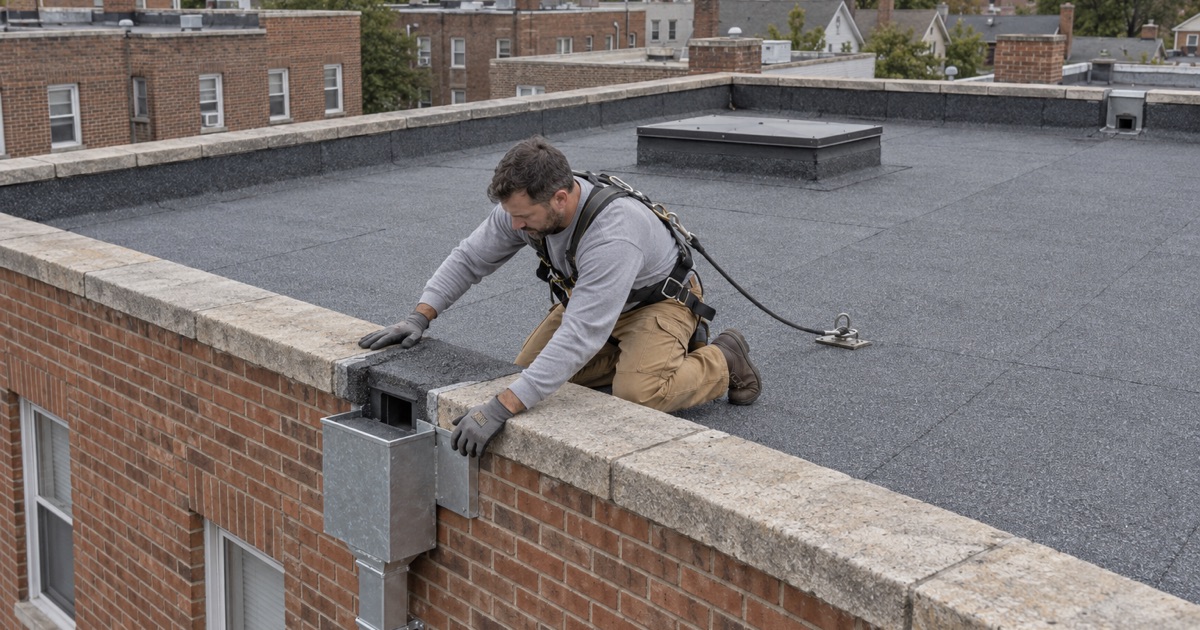
Lincoln Park is often pictured as a borough of detached houses, and most of its homes are. Even so, the Census Bureau’s 2024 five-year American Community Survey counts 881 units in buildings of three or more units, which is 21.8 percent of the borough’s 4,050 homes. Those units sit under a comparatively small number of large roofs, so one roof decision touches many households at once.
The 20 to 49 unit buildings
The largest single block of that stock is the mid-sized building. The survey places 457 units within buildings of 20 to 49 units, and 374 renter households live in buildings of that size. Another 255 units are in buildings of 10 to 19 units. For an owner or a managing agent, a leak over a top-floor apartment is rarely one tenant’s problem for long, because water travels along decking and down through shared chases before it shows.
Condominiums and co-ops follow the same roof logic
The form of ownership does not change how water moves. Whether the building is a rental, a condominium or a cooperative, the roof is usually a common element held by an owner, an association or a corporation, and the decision to repair or replace rests with that body. Before we write an estimate in an association setting, we read the governing documents to confirm who actually holds the roof and who signs for the work.
That check saves time on both sides. A unit owner who calls about a ceiling stain may not be the person who can approve a repair, and a board may not know which parts of the roof assembly its documents assign to it. Settling that first means the estimate goes to the right desk and nobody is surprised by who is billed.
Working over occupied units
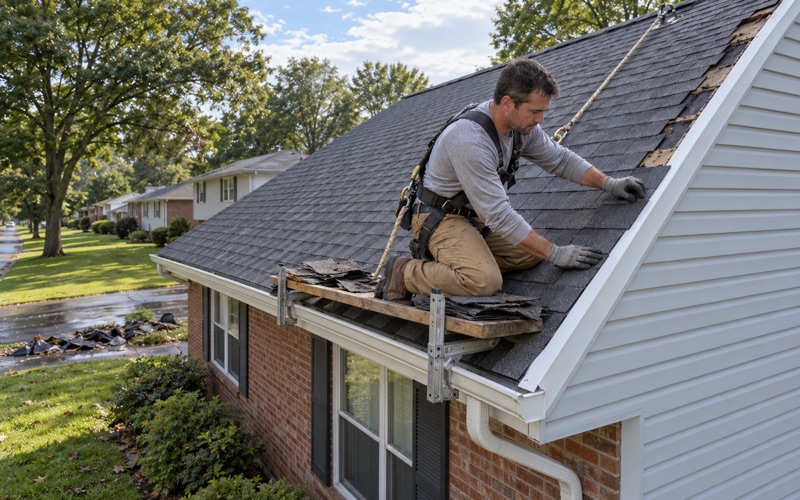
A multifamily re-roof happens over people who are home, sleeping after a night shift or raising children inside. We sequence tear-off so only the section that can be dried in the same day is opened. The parking areas, walks and gutters are cleaned at the end of each work day, including a magnet sweep for roofing nails, so residents walk out to a safe lot the next morning.
Looking for roofing closer to Franklin Lakes? See Roofing in Franklin Lakes.
What New Jersey’s Maintenance Code Asks of a Roof
The Hotel and Multiple Dwelling Law
New Jersey’s Hotel and Multiple Dwelling Law covers hotels and multiple-family buildings of three or more dwelling units. The Department of Community Affairs states that condominiums, cooperatives and mutual housing corporations fall within the definition of a multiple dwelling, while some buildings with no more than four owner-occupied, structurally separate units are exempt. For most apartment and condominium buildings in the borough, this law sets the standard the roof is held to.
The law works through maintenance regulations rather than a list of approved products. It does not tell an owner which shingle or membrane to buy. It tells the owner what condition the building has to stay in, and a roof that lets water through fails that test regardless of its age, its brand or how recently it was installed.
Roofs under N.J.A.C. 5:10-7.4
The maintenance rules require exterior walls, roofs, windows, skylights and foundations to be kept so they exclude water and limit drafts and heat loss. The wording on wear is direct: “Damaged or badly worn material shall be repaired or replaced.” Areas showing rot, leakage, deterioration or corrosion are to be treated or restored, which reaches the decking and fascia as well as the visible surface.
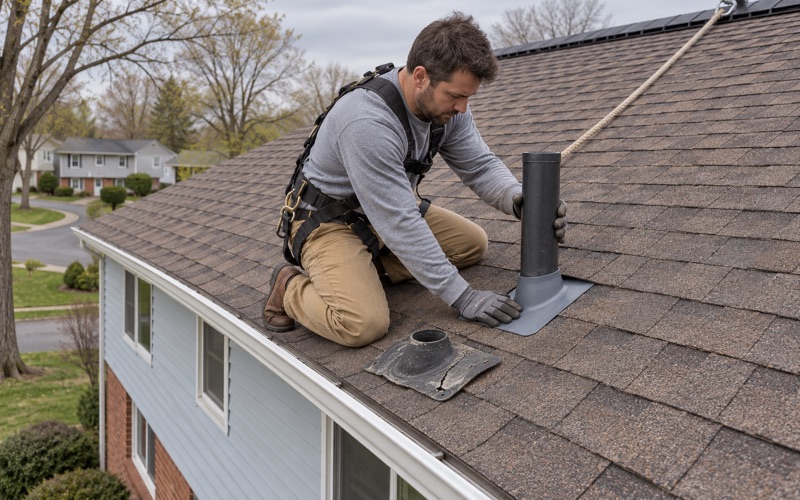
This is why we recommend dealing with a curled field of shingles, an open seam on a flat section or a cracked pipe boot before it turns into a ceiling stain two floors down. A worn roof is a maintenance item even while it still sheds most of the rain. We write it up that way, naming what is worn, where it is, and what repair or replacement would bring it back to condition.
Leaders and drainpipes under N.J.A.C. 5:10-7.5
The next section of the maintenance code reaches the drainage. Leaders and drainpipes “shall be securely fastened to the building and maintained in good condition, free of leaks,” kept clean and unobstructed, and must direct storm water into drainage systems and away from foundation walls. A loose leader strap or a downspout emptying against brick is a code point, not a cosmetic one.
That matters in a borough whose edges are formed by the Pompton River and the Passaic River, where a wet foundation is a familiar complaint. Water that leaves the roof correctly but pools at the base of the wall still finds the basement. Our written scopes carry gutters and leaders as their own line, so a board can see the drainage work priced separately from the roof covering and decide on it with full information.
Inspections, and Why a Multifamily Re-Roof Is Permit Work
The Bureau of Housing Inspection
The Department of Community Affairs’ Bureau of Housing Inspection enforces the Hotel and Multiple Dwelling Law and may issue citations. The Bureau describes the Act as requiring a five-year cyclical inspection of these properties. Under the State Local Cooperative Housing Inspection Program, local inspectors carry out cyclical and compliance inspections in participating municipalities, and the Bureau’s own State Inspection Section does that work everywhere else.
Registration records and inspection dates belong to each building, and the owner or managing agent is the one who holds them. We do not guess at a building’s status. What we can do is look at the roof, the flashing, the gutters and the leaders the way the maintenance rules describe them, then tell you in writing which conditions an inspector reading those rules would likely notice.
Why the re-roof needs a permit
New Jersey treats replacing the roof covering on a detached one- or two-family house as ordinary maintenance under N.J.A.C. 5:23-2.7. That exemption does not extend to a building of three or more units, so re-roofing an apartment or condominium building is permit work under the Uniform Construction Code, with inspections by the local enforcing agency before the job is closed out.
Here that agency is the Borough of Lincoln Park Building Department on Chapel Hill Road, which keeps a file on every property showing the permits taken. A permitted, inspected re-roof leaves a record in that file, useful later when a buyer, lender or board asks what was done. The borough also requires contractors doing building work to be registered with the state as home improvement contractors.
Layers, tear-off and the rehabilitation subcode
When an existing roof already carries two or more layers, or is slate, wood shake or tile, the state rehabilitation subcode calls for a tear-off rather than another layer on top. Many older multifamily roofs have been covered over at least once. We confirm the layer count at the edge and from the attic or roof hatch before pricing, so the permit application and the estimate describe the same job.
Planning a Building’s Roof Before the Inspector Finds It
Start with a written condition report
For a building that will change hands, refinance or face a board vote, a written roof condition report is the cleanest starting point. Sellers can hand ours to a buyer’s inspector, and boards can use the same document to see what is worn now, what can wait a few seasons and what belongs in the reserve budget. It reads against the maintenance rules rather than against a sales pitch.
Line-item scopes a board can compare
Associations and owners often collect several bids, and those bids rarely line up. Our scopes break out tear-off, decking, underlayment, flashing, ventilation and gutters as separate lines, so two estimates can be compared item by item. If the old roof comes off and damaged decking turns up, we photograph it and show it to the owner before replacing it, at a per-sheet price already fixed in the contract.
Contracts are written to New Jersey’s home improvement rules, including the three-business-day cancellation notice. For a board, that means the paperwork arrives in a form its managing agent or attorney can review before anyone signs. It also means the decking allowance, the drainage line and the flashing work are all visible before the first bundle is delivered.
Flashing, ventilation and the eaves
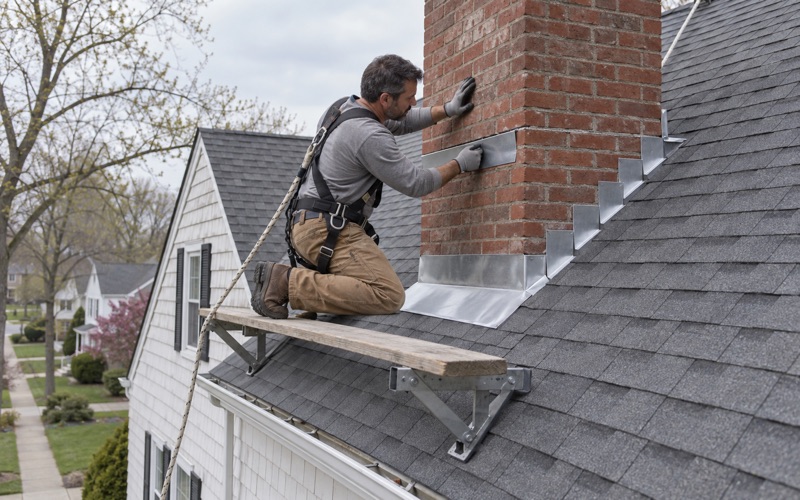
Large roofs fail first at the details. Step, counter and chimney flashing is replaced with the roof rather than reused under new material, and attic ventilation is checked on every replacement, because a roof that cannot breathe ages from underneath. On eaves that collect ice, we install an ASTM D1970 self-adhering ice and water barrier and look at soffit intake and ridge exhaust together.
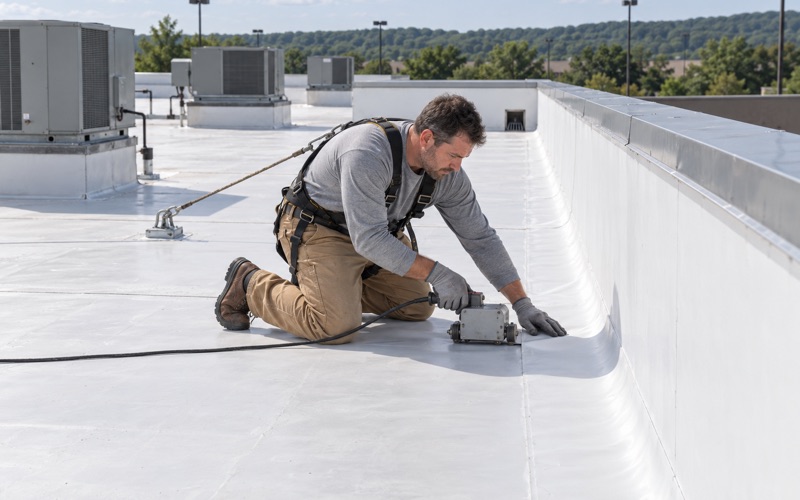
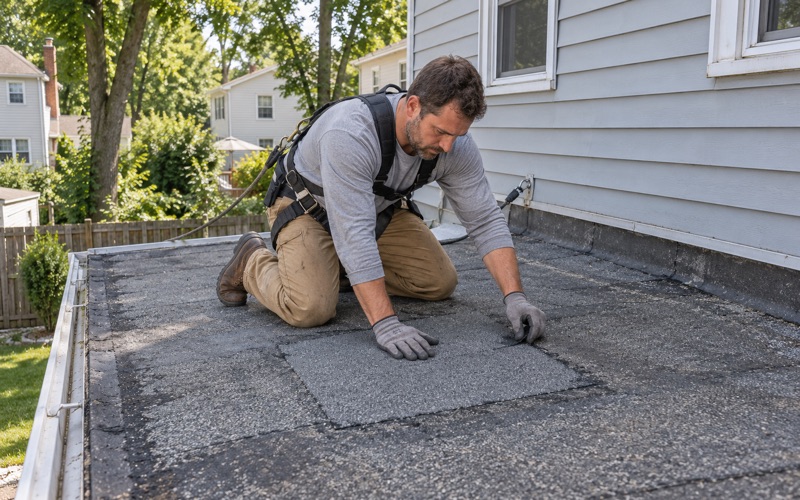
Flat sections over stair towers, entries and rear wings are where water tends to sit on apartment buildings. We choose between EPDM rubber, TPO and torch-down modified bitumen for those areas based on the substrate and the drainage path to the leaders. A membrane that ponds will fail however carefully it was seamed, so slope and outlet placement get planned before the material does.
After a wind storm
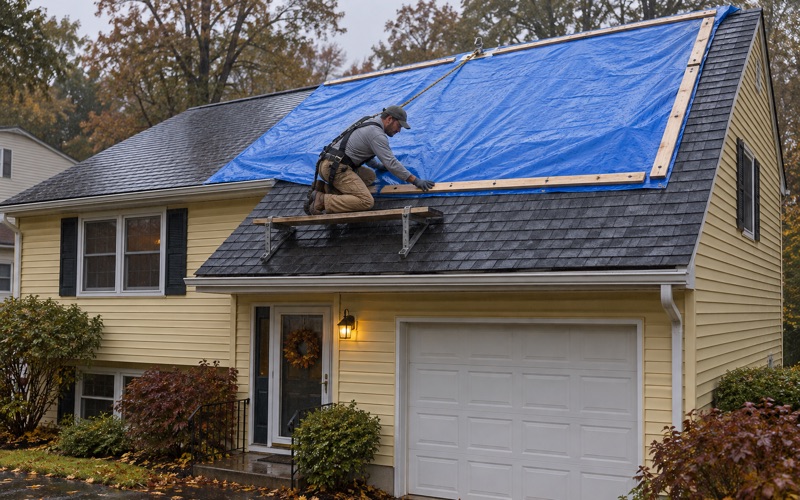
When wind lifts shingles or opens a seam, tarps and temporary repairs go on the same day, with photos taken before anything is moved. We document the damage and write it up for the owner’s own insurance claim, and the crew will meet the adjuster on site when asked. The claim itself stays with the owner, and we supply the roof facts it needs.
Whatever the building, the goal is the one the state’s maintenance rules already set: a roof that keeps water out and a drainage system that carries it away from the walls. Call us before the next storm rather than after it, and we will start with the attic, the roof and a straight answer about what your building actually needs.
- 20+ Years in Roofing
- Line-Item Written Estimates
- Same-Day Storm Tarping