Wayne Quality Roofing handles roofing in Little Ferry with more than 20 years in the trade behind every inspection, and the calls that matter most here tend to follow a storm that brings water from two directions at once. Our part on those calls is narrow and specific: find out what the wind did to the roof, keep rain from getting any further inside, and put the roof’s condition in writing on its own.
That last step sounds like paperwork, but it shapes what an owner can show later. A ceiling stain from a lifted shingle and a wet basement from rising water can appear in the same house on the same night, and they are not the same kind of loss. We keep them apart from the first photograph, so the roof record never blurs into the flood record.
Every visit starts with a straight answer on whether the roof can be repaired, and replacement only comes up when it truly cannot. When work is needed, the estimate breaks tear-off, decking, underlayment, flashing, ventilation and gutters into separate lines, so an owner holding two quotes can compare them item by item rather than total against total.
How the Tide Reached Little Ferry, and What It Left Alone
Up the Hackensack River on the tide
On the night of October 29, 2012, Sandy’s water did not arrive through anyone’s roof. Contemporaneous reporting from JEMS, published the next day, quoted officials saying the tidal surge up the Hackensack River resulted in water overflowing a natural berm. Officials described the water as going over that berm, not through a failed structure.
In Little Ferry itself, residents reported water suddenly gushing out of storm drains. That detail tells you the direction: the water came up from the ground and the drainage system, pushed by the tide, not down from the sky. Depth accounts across the area vary, and nothing in the record ties a roof loss to a particular Little Ferry address.
Floodwater from below, wind and rain from above
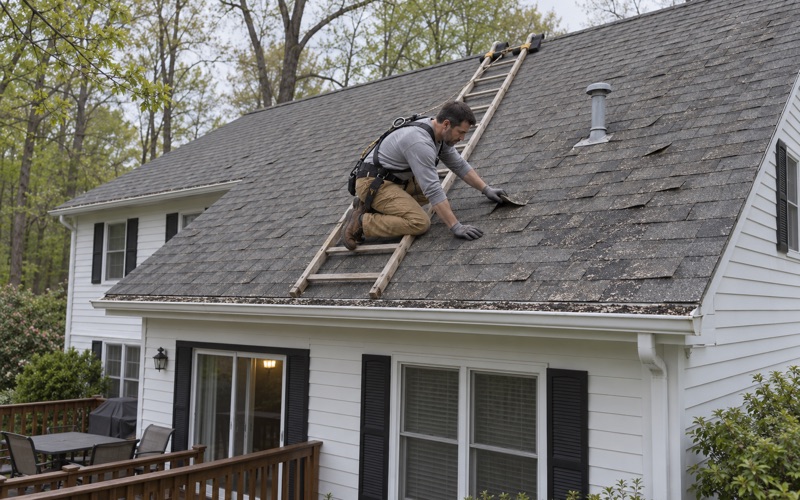
A tidal storm is still a windstorm. While the street fills from below, the same system can peel back shingles, lift ridge caps, loosen flashing at a chimney and drive rain sideways under a damaged edge. Water that enters that way shows up in the attic, on top-floor ceilings and down interior walls from above, which is a different path from water climbing in at the foundation.
Here is the practical test we use on site. If the water line starts at the floor and stops at a height, it came from outside and below. If a stain starts at the ceiling, follows a rafter or drips from a light fixture, it came through the roof. Many houses after a surge show both, and each one deserves its own description.
Why the borough’s flood story is tidal
Little Ferry sits in a low-lying stretch along the Hackensack River that a Rebuild by Design project, run through NJDEP with federal recovery funds, describes as covering Little Ferry, Teterboro, Moonachie, South Hackensack and Carlstadt. Its Little Ferry element is the Liberty Street Pump Station and Force Main. That is stormwater and flood infrastructure, not a roofing rule, and we have not seen its completion confirmed.
We bring it up only because it explains the pattern owners describe to us: water from drains and low ground first, then questions about the roof afterward. Pumps and force mains deal with water at street level. A roof deals with water from above, and that division runs through everything else on this page.
Looking for roofing closer to Airmont? See Roofing in Airmont.
What Each Policy Says About Water From the Roof
Flooding is not covered under standard homeowners policies
New Jersey’s Department of Banking and Insurance states it plainly: flooding is not covered under standard homeowners policies, and that includes flooding that accompanies a hurricane. Flood coverage is a separate policy. The same state page notes that most standard homeowners policies cover losses caused by windstorms or hail, along with fire, lightning and smoke.
Whether a particular policy responds is a question for the policy and the insurer, not for us. DOBI also notes that some policies carry a separate wind or hail deductible, or a hurricane deductible, so the owner’s own declarations page is the place to start. We point owners there and keep our attention on the roof.
The flood policy runs the other way
The federal Standard Flood Insurance Policy, Dwelling Form, defines flood as a general and temporary condition of inundation of normally dry land. Its exclusions list loss caused directly or indirectly by rain, snow, sleet, hail, or water spray, and separately by wind or windstorm. Put plainly, a lifted roof and the rain that came in through it are not a flood loss, even when the street outside is underwater.
The same form also addresses sewer and drain backup, excluding it unless there is a flood in the area and the flood is the proximate cause. That is a ground-level question, and it is exactly why we keep our notes about the roof and upper ceilings on their own pages rather than mixing them with what happened in the basement.
Timing matters before the season
DOBI says there is normally a 30-day waiting period before a new flood insurance policy becomes effective. Buying coverage the week a tidal storm is forecast does not help that storm. We mention it because owners often ask us about storms while we are up on their roof in calm weather, and that is the moment the calendar still works in their favor.
It also explains why we never promise anyone what a policy will pay for. Coverage depends on the policy in hand, its deductibles and how the insurer reads the facts. What we can control is a clean, honest record of the roof, made close to the storm, that the owner can share with whoever needs it.
Documenting the Roof Apart From the Flood Line
We start in the attic
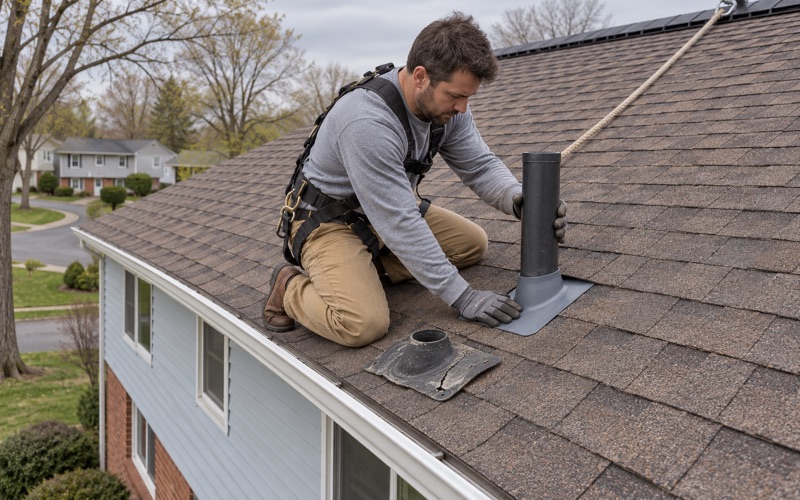
Every leak call includes a look in the attic as well as on the roof. After a surge storm that matters more than usual, because the attic shows where rain actually entered: wet sheathing under a missing shingle, a soaked insulation patch below a loose pipe boot, a drip line along a chimney with failed step or counter flashing. That trace is what separates roof water from everything else.
We record what we see from the top down, room by room, ending at the lowest ceiling stain and noting where it stops. Anything we find below that point that looks like it rose from the floor goes into the notes as observed but outside the roof’s path, so the two stories never share a sentence.
Photos before anything is moved
Storm damage gets photographed before a single tarp goes on, a shingle gets lifted or a branch gets dragged off. We shoot wide views of each slope, close views of creased tabs, torn edges and exposed nail lines, and the matching interior ceiling marks. DOBI’s own guidance tells owners to take pictures of the damage, and our set is meant to sit beside theirs.
We also label each image by slope and room, so an adjuster or the owner can match a shingle photo to the ceiling below it without guessing. Where water came through a light fixture or along a top-floor wall, we note the nearest roof feature above it, such as a vent, valley or chimney.
A written record for the owner, not a claim we run
What we hand over is a written description of the roof’s condition and the work it needs, made for the owner’s own use. When an owner asks, our crew will meet the insurance adjuster on site and walk the roof with them. How any loss is adjusted, and which policy answers for what, stays between the owner and the insurers.
We don’t negotiate, argue or settle anything on an owner’s behalf, because New Jersey reserves paid claim negotiation for a separate profession. Our role is the roof: what it looked like, what failed, and what it will take to make it right.
Tarping While the Street Is Still Wet
Cover the openings first
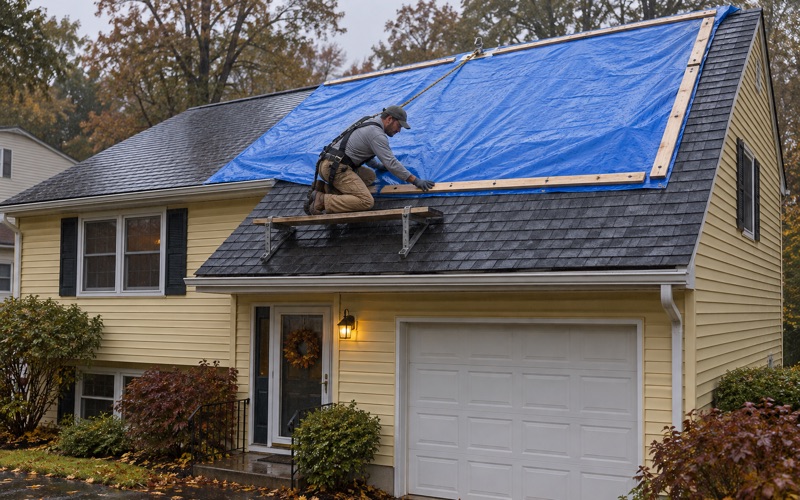
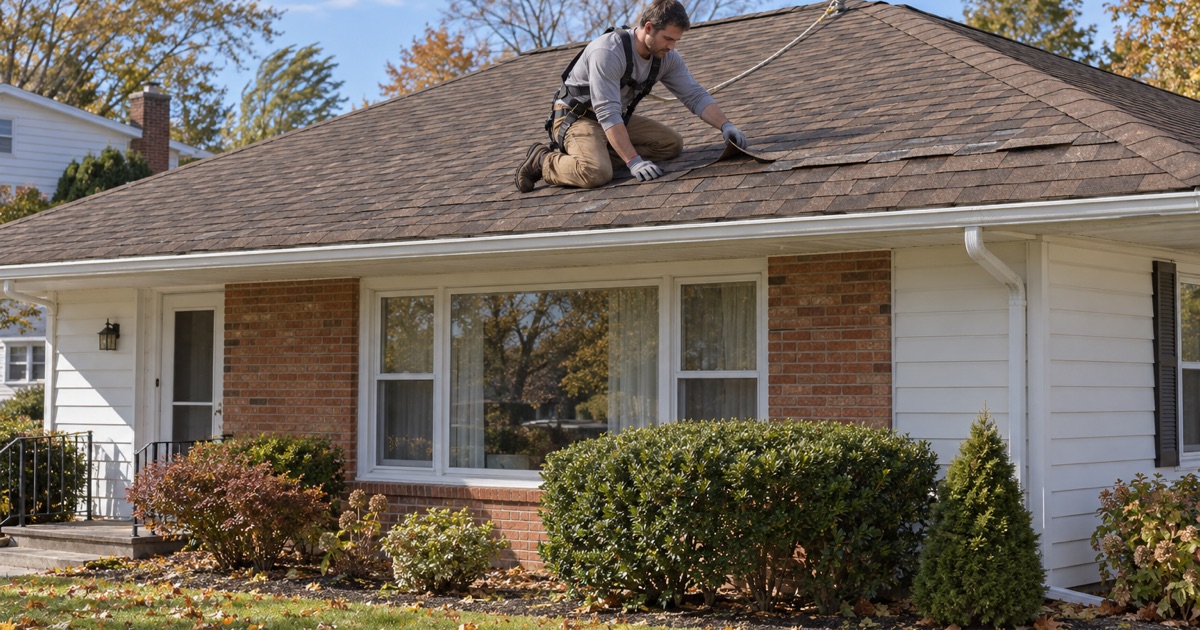
DOBI tells owners to make a reasonable attempt to protect their property from further loss and to cover openings in exterior walls, windows or roof with plywood, plastic, or other material. After a wind storm we put tarps and temporary repairs on the same day, fastened over the damaged area and run past the ridge where possible so rain cannot track under the top edge.
Getting to a Little Ferry roof right after a tidal storm can mean waiting for the water to leave the street, so we plan around access, not just weather. Receipts for temporary work go to the owner, which DOBI also advises keeping, and the temporary cover is documented in the same photo set as the damage it covers.
Who decides about the roof
Little Ferry is a renter-majority borough, so the person who calls about a ceiling drip is often not the person who decides about the roof. We confirm who that owner is before writing a scope. On buildings of three or more units, attached dwellings and commercial buildings, roof work goes through the Little Ferry Building Department, where Construction Official Keith Dalton’s office handles permits and inspections.
For a landlord with a two-family house, the same storm can mean a tenant’s ceiling stain upstairs and a flooded basement apartment below. We write the upstairs roof findings so the owner can hand them over without the basement mixed in. In a townhouse or condominium community, we check the association’s documents for who holds the roof before any estimate.
Repairing what the wind actually broke
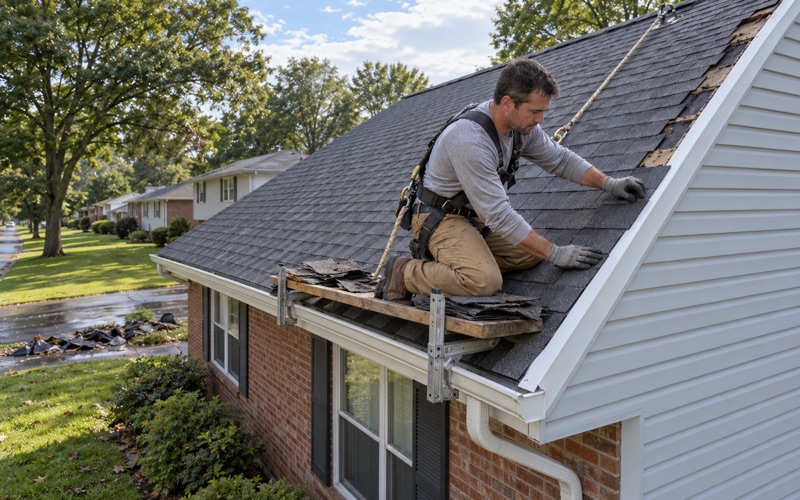
Once the roof is dry and safe, the repair conversation starts with what can be fixed. Many wind losses come down to a slope of torn shingles, a lifted drip edge or a cracked pipe boot, and those are repairs. When flashing is part of the damage, step, counter and chimney flashing is replaced rather than reused under new material.
If the roof does need replacing, any damaged decking found after tear-off is photographed and shown to the owner before it is replaced, at a per-sheet price written into the contract. Contracts follow New Jersey’s home improvement rules, including the three-day cancellation notice, and the yard and gutters get a magnet sweep for nails at the end of each day.
Checking the attic before the next storm
After the repair, we check attic ventilation, because a roof that cannot breathe ages from underneath and a damp attic after a storm needs airflow to dry. Soffit intake and ridge vent are compared, and any insulation that stayed wet is pointed out to the owner. A roof that goes into the next tidal storm sound gives the owner one less loss to sort out.
- 20+ Years in Roofing
- Line-Item Written Estimates
- Same-Day Storm Tarping