Wayne Quality Roofing provides roof inspection in Wayne, NJ for homeowners, sellers, buyers and building owners, serving surrounding cities including Totowa, Pequannock, Lincoln Park, Franklin Lakes and Woodland Park. With more than 20 years in roofing, we know where roofs in this part of New Jersey tend to fail, from the flashing on mid-century ranches to the seams on commercial flat roofs. Every inspection ends with a written report and photos you can keep.
An inspection that stays on the roof only sees half the picture. We go into the attic as well, where wet sheathing, rusted nail tips, mold and blocked ventilation reveal problems that the shingles above are hiding. Together, the two views tell you what condition the roof is really in and what, if anything, needs doing.
We are not there to sell you a new roof. If a roof is sound, the report says so, and if it needs a repair rather than a replacement, that is what we recommend. The aim is a clear, honest record of the roof that you can act on or hand to someone else.
Residential Roof Inspections
Shingles, Granules and Fasteners
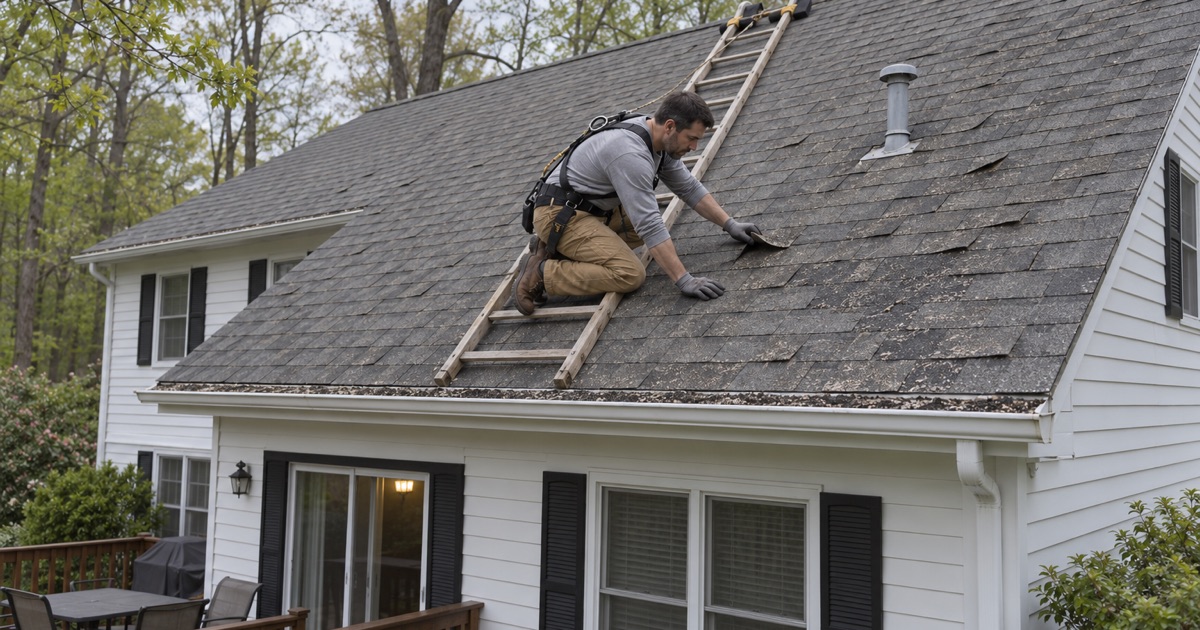
We check the field of the roof for missing, cracked, curled and lifted shingles, and for bare patches where granules have worn away. Granules protect the asphalt from sunlight, so a roof that has shed them is aging quickly. We also look at whether the shingles are sealed down and whether exposed nails or nail pops are working up through the surface.
The pattern matters as much as the individual defect. Damage concentrated on one slope can point to wind exposure or a ventilation problem in that part of the attic. Widespread brittleness across every slope usually means the roof as a whole is nearing the end of its life.
Flashing, Valleys and Penetrations
Most leaks start where something interrupts the roof surface. We inspect step and counter flashing at walls and chimneys, the apron and any cricket behind the chimney, valley metal or woven valleys, pipe boots, exhaust vents and skylight curbs. Each one is checked for gaps, rust, cracked sealant and missing pieces.
We note whether flashing was reused from an earlier roof, which is common and often the source of a leak on a roof that looks new. Missing kick-out flashing where a roof edge meets a wall is another frequent find. Both are recorded with photos and a recommended fix.
Attic, Decking and Ventilation
In the attic we look for daylight through the deck, water staining on rafters and sheathing, soft or delaminating boards, and frost or mold that signal trapped moisture. We also check whether the bath and kitchen fans actually vent outdoors or simply dump warm, wet air into the attic.
Ventilation gets its own measurement. We compare soffit intake with ridge or roof vent exhaust and look for insulation blocking the soffits. An attic that cannot breathe ages the roof from underneath and feeds ice dams in winter, so this part of the report often explains problems you can see from outside.
Gutters, Drip Edge and Eaves
Gutters and the eave edge are where water leaves the roof, and failures here show up as rotted fascia, stained soffits and wet basements. We check that drip edge is present and laps correctly into the gutter, that the gutters slope toward the leaders and that the leaders discharge away from the foundation.
At the eaves we look for signs of past ice dams, such as stained sheathing near the wall line and lifted shingles at the overhang. If an older cape, ranch or split-level has no ice and water barrier at the eaves, we note it for the next roof.
Inspections for Specific Situations
Before Selling a Home
A buyer’s inspector will look at the roof whether or not you do, and surprises found late in a sale tend to cost sellers money. We provide a written roof condition report that you can hand to the buyer’s inspector, covering the roof’s age, layers, flashing and any repairs made. Wayne’s Continued Certificate of Occupancy checklist names no roof or gutter item, so the roof will not be judged at the township’s resale inspection.
If the report finds a repair worth doing before listing, you can decide on your own timeline rather than under a buyer’s deadline. Either way, the report gives the buyer a documented answer instead of a guess.
Before Buying a Home
Buyers use a roofing inspection to understand what they are taking on and to negotiate with facts. We tell you how many layers are on the roof, whether the flashing and ventilation are sound, and roughly how much life the covering has left. That information can change an offer or a repair request.
We also note anything that will affect the next replacement, such as two existing layers that will force a full tear-off under New Jersey’s rehabilitation subcode, or slate that must come off before a new covering goes on.
For an Insurance Renewal
Some insurers ask for photos or a roof inspection before renewing a policy on an older house. Our report describes the roof’s condition, its approximate age and any defects, with photos of each slope, so the underwriter has something concrete to review.
Where the report finds wear rather than damage, we say so plainly. An honest record now is more useful than a report that has to be explained away later if a claim is ever filed.
After a Storm
High winds, heavy snow and falling limbs can damage a roof without leaving anything obvious from the ground. After a storm we check for creased and lifted shingles, impact marks, displaced flashing and punctures, and we photograph the damage before anything is moved.
The write-up is yours to use for your own claim, and we can meet the insurance adjuster on site when you ask. If the roof is open, we can tarp it the same day to keep further water out while the claim is processed.
Commercial and Flat Roof Inspections
Membranes, Seams and Surface Condition
On a commercial or low-slope roof we inspect the membrane itself for blisters, splits, open seams, shrinkage at the edges and areas worn by foot traffic. The method depends on the material: modified bitumen, EPDM, TPO and PVC each fail in their own ways. We record the membrane type and approximate condition across the whole roof.
We also probe for wet insulation in suspicious areas. A soft spot under the membrane often means water has been getting in for some time, and finding it early limits how much of the roof has to be replaced.
Drains, Parapets and Rooftop Equipment
Flat roofs depend on drains, scuppers and gutters to remove water, so we check that each one is clear and properly flashed and look for ponding that lasts beyond a day or two. Parapet walls, coping and edge metal are inspected for open joints and loose fasteners.
Rooftop units, exhaust fans and skylights sit on curbs that are frequent leak points. We check each curb and note any damage from service traffic, so the building owner can plan repairs alongside routine equipment maintenance.
The Written Inspection Report
What the Report Includes
Every inspection produces a written report with photos of each slope, each penetration and each defect we found. Items are grouped by urgency, from problems that need attention now to things worth watching. Where we recommend a repair, the report describes it in plain terms.
The report is yours. You can use it to plan repairs, to compare prices from other contractors, or to answer questions from a buyer, lender or insurer. If you later hire us for the work, the scope lists tear-off, decking, underlayment, flashing, ventilation and gutters as separate items, so it lines up with what the inspection found.
- 20+ Years in Roofing
- Line-Item Written Estimates
- Same-Day Storm Tarping