Wayne Quality Roofing handles storm damage roof repair in Wayne, NJ, serving surrounding cities including Totowa, Pequannock, Lincoln Park, Franklin Lakes and Woodland Park. Thunderstorm gusts, nor’easters, heavy snow and falling limbs all damage roofs in North Jersey, and the damage is often worse than it looks from the driveway. After more than 20 years in roofing, we know where storms hit a roof hardest and how to document it.
Our first step after a storm is protection. Tarps and temporary repairs go on the same day after a wind storm, but only after we have photographed the damage from the ground, the roof and the attic. That record is yours, written up for your own claim.
Once the house is secure and the claim is underway, we return to make the permanent repair. If the storm simply finished off a roof that was already worn out, we tell you that plainly too.
Types of Storm Damage
Wind Damage to Shingles
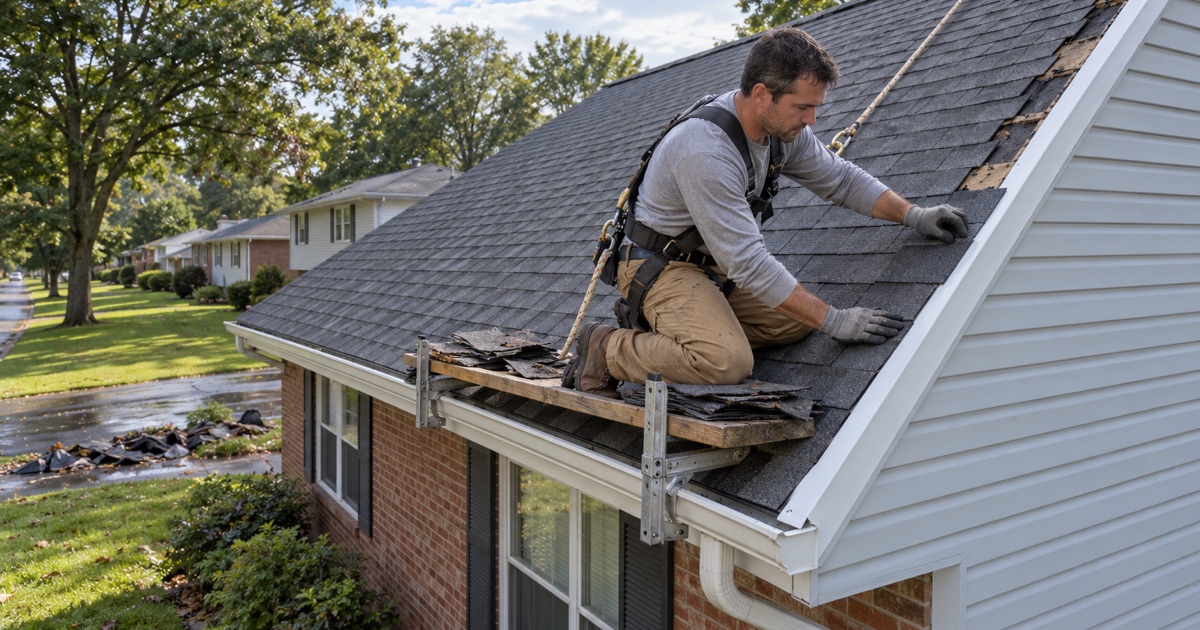
High winds lift shingle edges, break the sealant strip and either tear shingles away or crease them along the nail line. A creased shingle may lie flat again after the storm, but it has lost its seal and will often fail in the next wind.
We look for torn, missing and creased shingles across every slope, paying close attention to the edges, ridges and slopes facing the prevailing wind. Each damaged area is photographed and marked on the write-up.
Fallen Limbs and Trees
Houses on wooded lots face a particular risk: limbs and whole trees coming down on the roof in wind, snow or ice. Even a modest limb can crack decking or a rafter, and the shingles over the break may look almost intact.
We work with a tree crew to remove the weight safely, then check the framing and deck from above and below. Structural damage is documented, and the opening is covered until the permanent repair.
Snow and Ice Damage
Heavy, wet snow loads a roof, and ice dams at the eaves force meltwater under the shingles. Gutters bend or pull loose under ice, and sliding snow can strip vents and flashing from lower roofs.
After the snow clears, we repair the eaves with an ice and water barrier, fix gutters and replace damaged vents and flashing. We also check the attic, since ice dams are a sign of heat escaping from the house.
Hail and Impact Damage
Hail is less frequent here than wind, but when it falls it can bruise shingles, knock off granules and dent metal vents and gutters. Bruised shingles may look fine at first but break down faster where the mat has been damaged.
We check soft metals such as vents and gutters for dents, which help confirm a hail event, and examine shingles for impact marks. Impact-rated shingles with a UL 2218 Class 4 rating are an option for homeowners concerned about future storms.
Documenting Storm Damage
Photos Before Anything Moves
The best evidence of storm damage is what the roof looks like right after the storm. Once tarps go on and debris is cleared, much of that evidence is hidden or gone. We photograph every damaged area, the debris on the roof and any signs of water in the attic before we do anything else.
You receive those photos along with a written description of what we found. If you make a claim, that record is the foundation of it.
Storm Damage Versus Wear and Tear
Insurers generally treat sudden damage differently from gradual wear. Shingles torn off by wind or a limb through the deck are storm damage. Granule loss, curling and old flashing that finally failed are usually considered wear, even if a storm was the last straw.
Our write-up separates the two clearly. An honest description helps your claim more than an exaggerated one, because the adjuster will inspect the roof too.
Working With Your Insurance Claim
Meeting the Adjuster
When you ask, we meet the insurance adjuster on site and walk the roof with them, pointing out the damage we documented. That helps make sure nothing is missed in the inspection.
The claim itself remains yours. Under New Jersey’s Public Adjusters’ Licensing Act, N.J.S.A. 17:22B, only a licensed public adjuster may negotiate a claim for pay on your behalf, and a roofing contractor may not.
Deductibles and Storm Claim Guidance
New Jersey’s Department of Banking and Insurance publishes guidance for homeowners filing storm claims. Some policies also carry a separate hurricane deductible, and DOBI Bulletin 11-16 addresses when it is triggered.
We suggest reading your declarations page before the adjuster’s visit, so you know which deductible applies. That helps you decide whether a claim makes sense for the damage involved.
Permanent Storm Repairs
Matching Shingles and Materials
After the claim is settled or you decide to proceed, we make the permanent repair. Where only part of the roof is damaged, we try to match the existing shingles as closely as possible and tell you honestly how close the match will be.
Damaged decking is replaced after we show it to you, and flashing disturbed by the storm is replaced rather than bent back into place. The repair is written up so you have a record of what was done.
When a Storm Means a New Roof
Sometimes storm damage covers so much of the roof, or the roof was already so worn, that replacement is the sensible choice. In that case our estimate breaks the job into separate lines for tear-off, decking, underlayment, flashing, ventilation and gutters.
That breakdown makes it easier to compare with the adjuster’s figures and with other quotes. A replacement also lets us correct ventilation and eave protection that may have made the storm damage worse.
- 20+ Years in Roofing
- Line-Item Written Estimates
- Same-Day Storm Tarping