Wayne Quality Roofing has spent more than 20 years on roofing in Totowa and the towns around our Wayne base, and this borough asks more of a roofer than most. Its houses carry pitched shingle roofs, but its industrial parks sit under broad, single-story warehouse roofs with different materials, different paperwork and different warranty terms. We work on both, and we keep the two clearly apart.
On every call, the first job is finding where water actually gets in. We check the roof surface and then the space beneath it, whether that is a house attic or the underside of a warehouse deck, and only then talk about cost. If the roof can be repaired, we say so plainly before anyone brings up replacement.
When replacement is the honest answer, the estimate arrives as a written scope with tear-off, decking, underlayment or insulation board, flashing, ventilation and gutters on separate lines. An owner or property manager can set two bids side by side and see exactly where they differ. Damaged decking found once the old roof is off is photographed and shown before it is replaced, at a per-sheet price fixed in the contract.
Totowa’s Industrial Parks Along Union Boulevard and Riverview Drive
The Totowa Commerce Center
Trade-press sale reports describe more than 900,000 square feet of industrial floor area across just three Totowa properties. The largest is the Totowa Commerce Center, a 506,723-square-foot portfolio of 12 industrial buildings and one office building on Commerce Way, Center Court and 999 Riverview Drive. When it sold, Real Estate NJ reported about 50 tenants, clear heights of 21 to 23 feet and 92 loading positions.
That report also mentioned more than $2.8 million of recent renovations without saying whether any of it touched the roofs, and it gave no construction years. We do not guess at the roof systems on those buildings. What the figures do describe is a type of building: long, low, divisible industrial space where a single roof covers several separate businesses at once.
The Union Boulevard Buildings
Along Union Boulevard, the Totowa Logistics Center at 700 Union Boulevard is a single-story building of 382,596 square feet on 26 acres off Interstate 80 and Route 46. A 2018 sale reported by Real Estate NJ put it at $51 million, after the seller retrofitted a former life sciences plant and expanded it by more than 137,000 square feet.
Also on Union Boulevard, 611 Union Boulevard is a 26,630-square-foot industrial and flex building originally built in 1980, formerly a machine shop. ROI-NJ reported in February 2026 that its new owners plan to redevelop it for mixed industrial, flex and retail use. A change of use like that is a natural moment for an owner to ask what condition the roof is really in.
Why These Roofs Are Low-Slope
Single-story warehouse and flex buildings of this size are normally roofed with low-slope membranes rather than shingles. Shingles shed water by overlapping on a steep pitch, while a roof that runs hundreds of feet with only a gentle fall needs a continuous waterproof sheet. That is general practice for the building type, not a reading of any particular Totowa roof.
The common choices are TPO and PVC single-ply membranes, EPDM rubber, and torch-down SBS or APP modified bitumen. Each is seamed, flashed and terminated differently at walls, curbs and drains, and a repair has to match whatever is already there. Before quoting, we identify the membrane actually on the roof rather than assume it from the age or look of the building.
Looking for roofing closer to Pequannock? See Roofing Services in Pequannock.
What We Check on a Low-Slope Warehouse or Flex Roof
Drains, Seams and Ponding
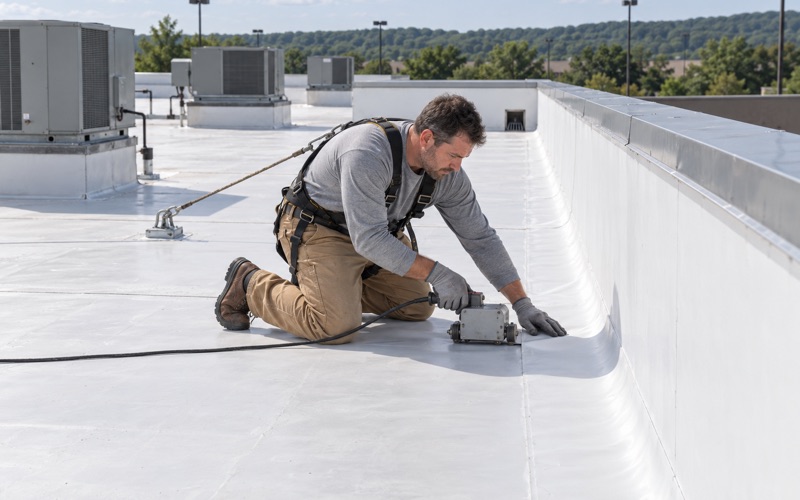
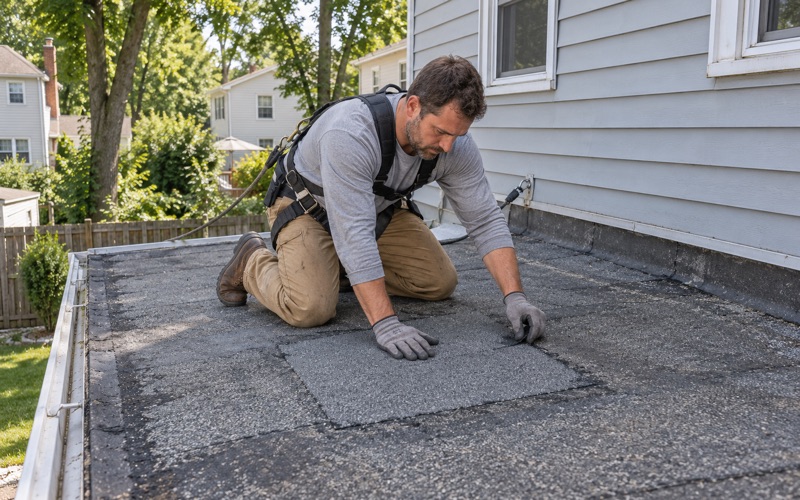
Water on a low-slope roof travels slowly toward drains, scuppers or gutters, and wherever it stalls, it works on seams and fasteners. We walk the field of the roof looking for ponding, open laps, shrunken flashing at the parapets and punctures from foot traffic. Each finding is marked on a roof plan so the owner can see exactly where it sits.
A leak inside a warehouse often shows up well away from its source, because water can run along the deck before it drips. We trace it from below as well, checking the underside of the deck and the insulation wherever it can be reached. Pricing a patch over the wrong spot only guarantees a second service call a few weeks later.
Rooftop Units and Penetrations
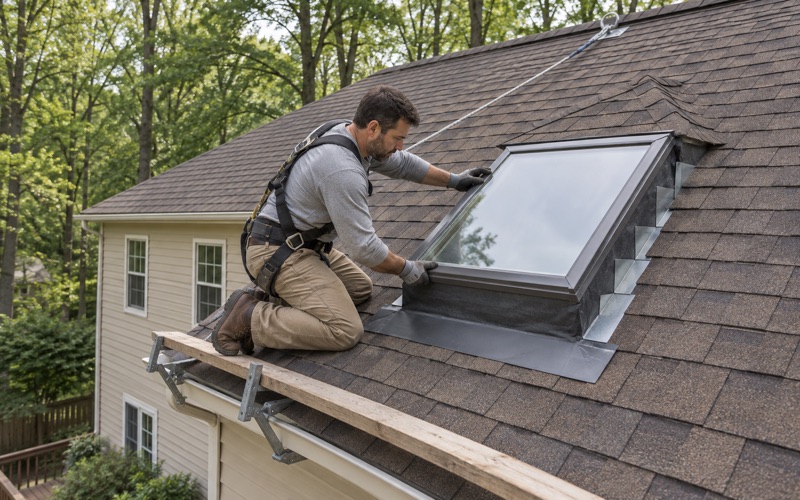
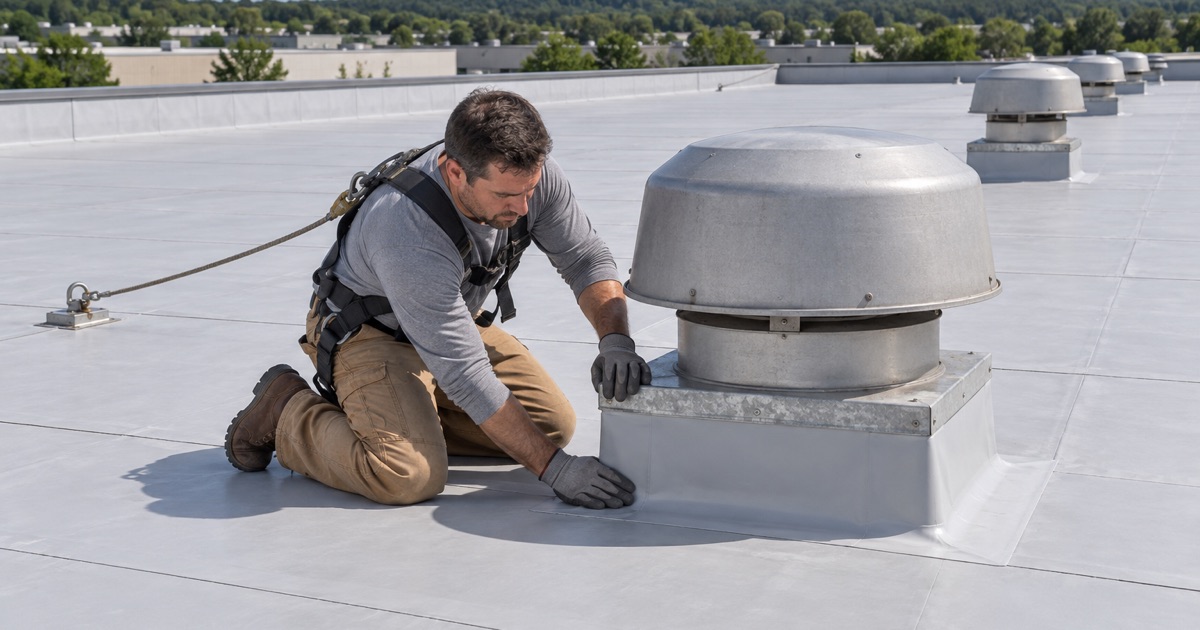
Industrial and flex roofs carry rooftop HVAC units, exhaust fans, skylights and conduit, and every one of them is a hole in the membrane. Curbs and pipe penetrations get their own flashing details, and those details tend to fail sooner than the open field around them. We inspect each curb and note which flashings are original and which have already been patched.
When mechanical equipment is being replaced at the same time as the roof, sequence matters. The mechanical contractor and our crew need an agreed order so new curbs are flashed into the new membrane rather than set on top of it afterward. We write that order into the scope so nobody discovers the conflict on the day the crane arrives.
Repair or Re-Roof
A membrane with dry insulation beneath it and a handful of isolated failures is usually a repair candidate, and we say so first. Wet insulation spread across large areas, widespread seam failure or a roof patched past the point of holding together points toward replacement. Our written scope separates membrane, insulation board, flashing and drain work so the cost of each is visible.
Where the existing membrane is sound but tired, a coating or a section-by-section replacement may buy years at a fraction of a full tear-off. Where it is not, we explain why in the written findings rather than in a sales pitch. Either way, the owner sees the photos and the roof plan before any price is discussed.
After a Wind Storm
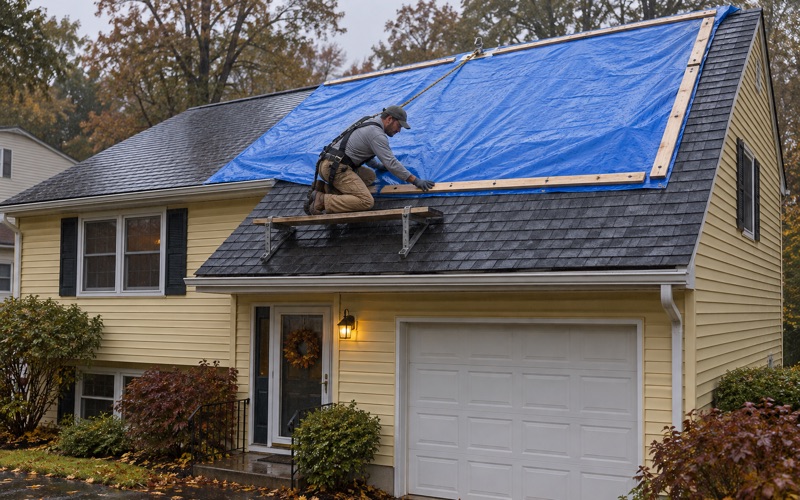
Wind lifts membrane edges and peels flashing at parapets first, and an open edge on a flat roof lets water travel under the sheet. After a storm we photograph the damage before anything is moved, then secure open edges and penetrations the same day. The photos and a written description go to the owner for their own claim, and we will meet the adjuster on site when asked.
Commercial Re-Roof Permits and Warranty Limits in Totowa
Why a Warehouse Re-Roof Is Permit Work
New Jersey’s Uniform Construction Code treats re-roofing a detached one- or two-family house as ordinary maintenance under N.J.A.C. 5:23-2.7(c)1.x. That provision is written for those houses only. A warehouse, office or flex building falls outside it, so a commercial re-roof in Totowa is permit work, handled through the borough’s construction office before any material goes on the roof deck.
The Borough of Totowa Building Department, at 537 Totowa Road, 2nd Floor, is the local enforcing agency and is open weekdays from 9:00 a.m. to 4:30 p.m. Allan Burghardt serves as Construction Code Official and Building Subcode Official. We build the permit timeline into the job schedule so material deliveries and crew dates never get ahead of the approvals.
Shingle Warranties Stop at the Membrane
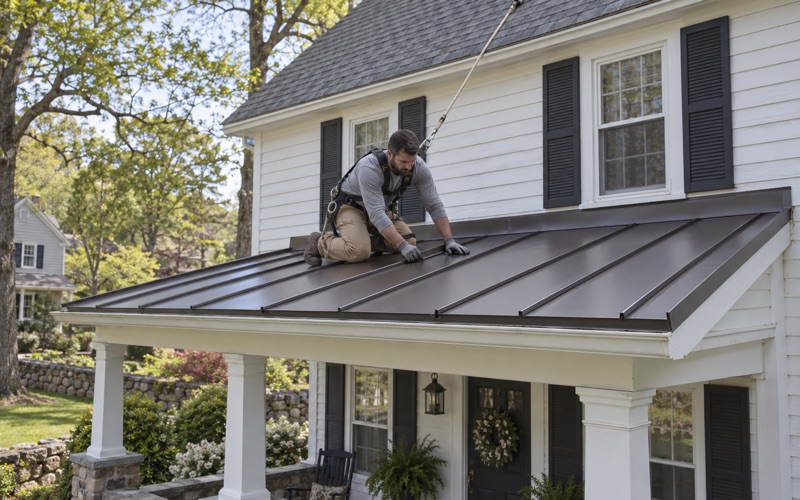
Owners sometimes assume a shingle manufacturer’s warranty reaches every roof on a property. GAF’s 2026 Shingle and Accessory Limited Warranty states plainly that it does not cover low-slope membranes. A flat section on a mixed building, or a whole warehouse roof, needs its own membrane manufacturer’s warranty or written workmanship terms from the contractor. We tell an owner which one is on offer before the contract is signed.
The same GAF document limits its Lifetime term to shingles on a single-family detached house owned by individuals. For buildings owned by a corporation, including office buildings and multi-use structures, the term is 40 years instead. When a Totowa office or mixed-use building has a steep-slope section in shingles, we put the warranty that actually applies into the scope, not a residential promise.
Paperwork That Stays With the Building
A commercial re-roof leaves a permit record at the construction office, and a membrane manufacturer’s warranty often requires its own inspection or registration. We keep the permit number, the warranty registration and the photos together and hand the set to the owner at the end. For a building that may change hands or tenants, that file answers most questions a buyer or new tenant will ask.
Planning Roof Work Around Occupied Industrial Bays
Working Over Tenants Who Stay Open
A multi-tenant park cannot close while a roof is replaced. In a property the size of the Totowa Commerce Center, with about 50 tenants across its buildings, the work has to move in sections over occupied bays. We phase the tear-off so no more roof is opened in a day than the crew can close and seal before leaving.
Loading positions, parking and fire lanes stay in use, so crane picks and material staging are scheduled around delivery traffic. Each tenant should know which days the crew will be above their space and what noise to expect. We settle that calendar with the property manager before the first section of old membrane comes up.
Who Holds the Roof Over Each Bay
In a leased industrial building, the roof may belong to the landlord, to a tenant under the lease, or be split between them. We do not assume either way. Before a scope is written, we ask the owner or manager who answers for the roof over the bay in question, so the estimate goes to the party who will actually approve it.
Lease terms vary from building to building, so we never answer that question from habit. What we can offer the decision-maker is a scope that separates routine repair from full replacement, a distinction leases commonly draw between tenant and landlord costs. Clear line items keep that conversation short and keep the work from stalling over who pays.
The Houses Off the Industrial Roads
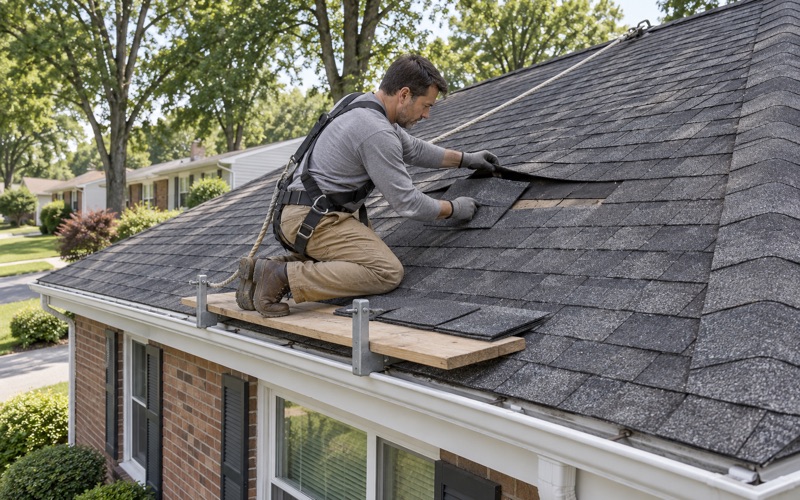
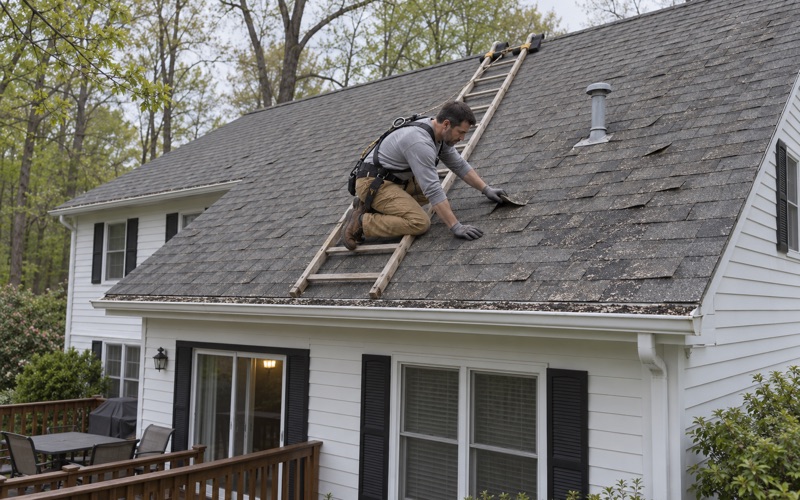
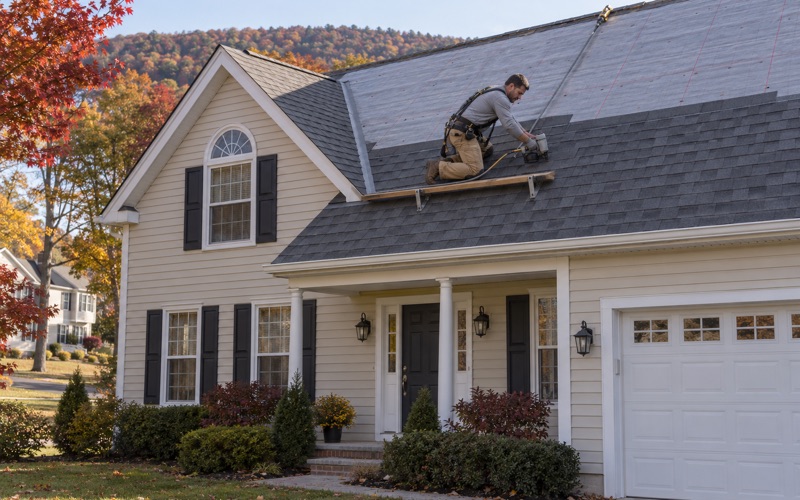
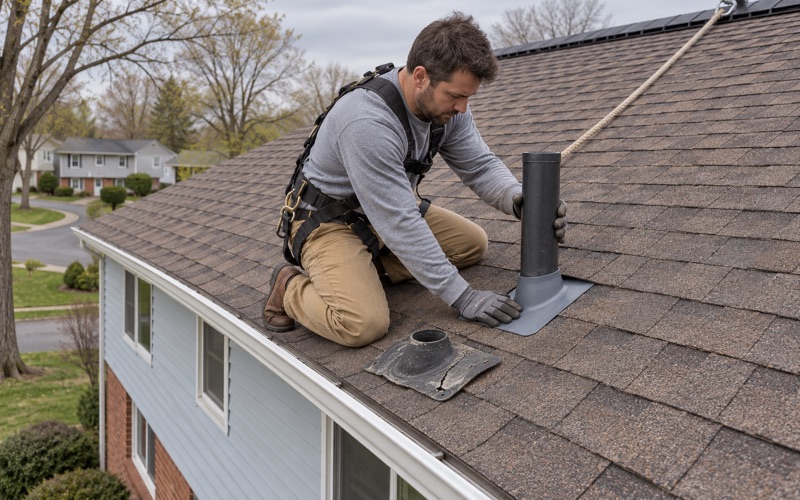
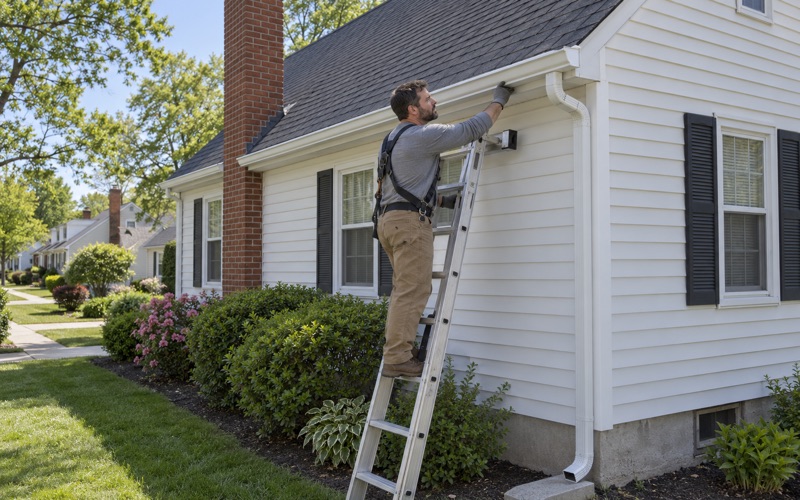
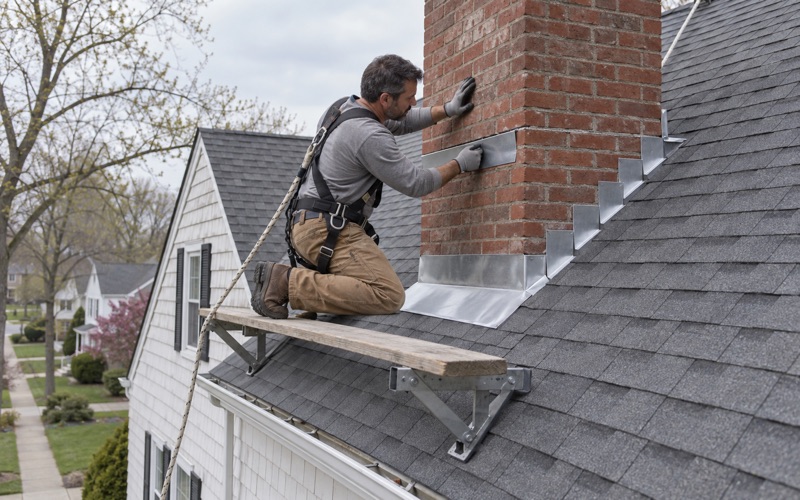
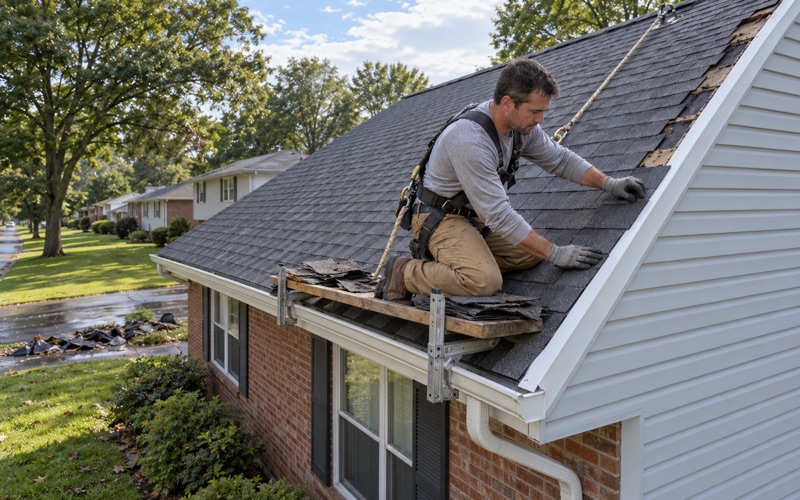
Most of Totowa’s housing is detached, and more than half of it was built before 1960, with the 1950s alone accounting for 1,114 units in Census survey data. Those houses mostly carry pitched shingle roofs, and a re-roof there follows the residential rules. We check attic ventilation on every replacement and replace step, counter and chimney flashing rather than reusing it.
Home contracts are written to New Jersey’s home improvement rules, including the three-day cancellation notice. Whatever the job, a cape on a residential street or a warehouse on an industrial road, the driveway, lot and gutters are cleaned at the end of each work day, including a magnet sweep for roofing nails. The first step stays the same: find the leak, then talk about the fix.
- 20+ Years in Roofing
- Line-Item Written Estimates
- Same-Day Storm Tarping