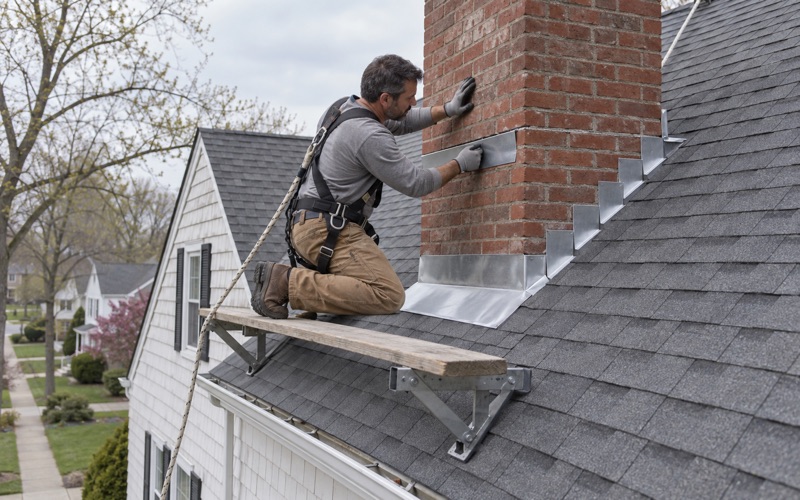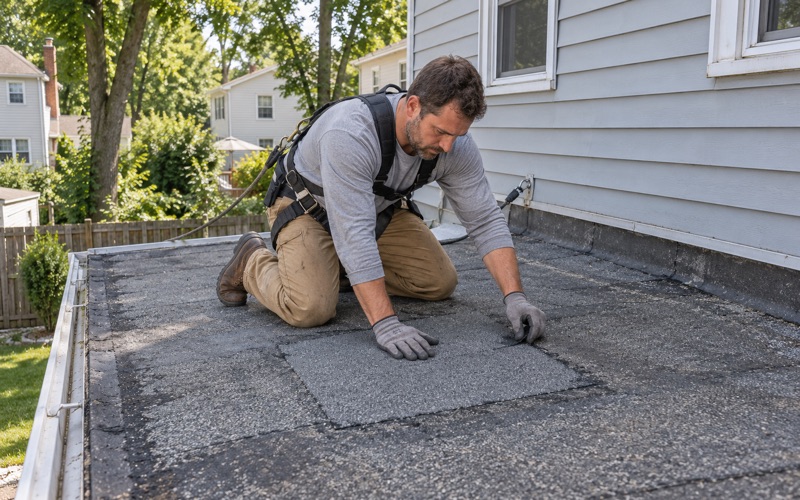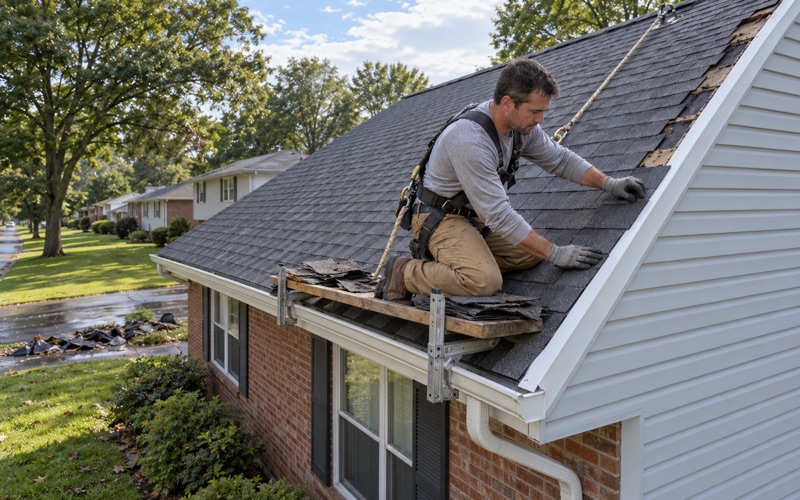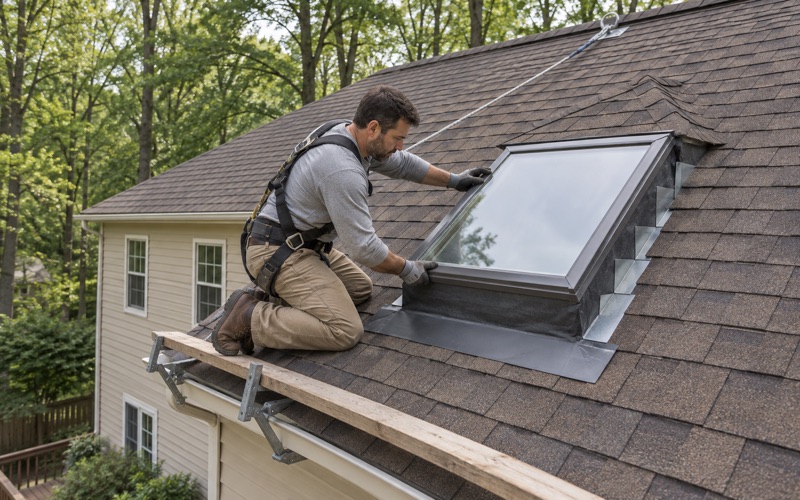
Wayne Quality Roofing has handled roofing in Wanaque for more than 20 years, and the work we remember best comes after a heavy, wet snow. A roof that looked sound in February can show a ceiling stain, a soft spot in the decking or a bowed rafter by the middle of March. We start those calls in the attic as well as on the roof, because that is where the damage tells its story.
This page is built around one storm with a measured record, because it shows what a real snow load does to a real roof. We walk through what was recorded, why wet snow is heavier than its depth suggests, how ice dams form at the eaves, and what to look at once the plows have gone by and the sky clears.
Most visits after a storm end with a repair, not a new roof. When a replacement does turn out to be the right call, our crews clean the driveway, yard and gutters at the end of each work day, magnet sweep included, so a winter job does not leave roofing nails buried in the slush waiting for a tire or a bare foot come spring.
March 7-8, 2018: What the Raymond Dam Station Recorded
Two Observations, 19.5 Inches
The NOAA cooperative weather station at the Raymond Dam, listed as WANAQUE RAYMOND DAM, keeps a daily record we can point to instead of a memory of a bad winter. Its observation dated March 7 logged 1.5 inches of snow holding 0.15 inch of water. The observation dated March 8 logged 18.0 inches of snow on 1.55 inches of water.
Added together, the nor’easter of March 7-8, 2018 left 19.5 inches of snow at the station carrying 1.70 inches of water. A trained spotter measured 21.0 inches at Wanaque by the evening of March 7, a figure the National Weather Service office at Upton published in its storm-total statement the following morning.
Snow That Stayed Put
The depth on the ground tells the rest of the story. The station measured 18 inches of snow cover on March 8 and still had 16 inches on March 9, when the high reached only 38 degrees. That load did not slide off overnight; it sat on Wanaque roofs for days, which is the condition that strains framing and builds ice at the eaves.
The borough sits in the National Weather Service forecast zone NJZ002 Western Passaic, and the station’s 1991-2020 normals count 120.8 days a year with a low at or below 32 degrees. Long freezing stretches like that are why a March storm can linger on a roof well after the streets are clear and the snowbanks start to shrink.
Looking for roofing closer to West Caldwell? See West Caldwell Roofing.
Why Wet Snow Weighs More Than the Inches Suggest
Reading the Snow-to-Water Ratio
Snow depth alone says little about weight. What matters is how much water the snow holds, and the Raymond Dam figures give a clean answer: 19.5 inches of snow on 1.70 inches of water works out to roughly 11 to 1. Light, powdery snow usually runs well above that ratio, so the same depth weighs far less on the rafters.
An 11 to 1 snow is the heavy, wet kind that packs down instead of blowing off. It clings to the roof, slides poorly on asphalt shingles and fills valleys and the low side of dormers. On a shallow pitch or a long run behind a chimney, that weight collects exactly where the framing has the least margin to spare.
Signs the Load Found a Weak Point
We do not quote a single snow-load number for the borough, because DCA Bulletin 19-1 makes the design ground snow load specific to each address. What we can say is that a storm holding that much water is a serious test, and the framing on any roof deserves a look once the snow is gone.
After heavy snow we look for a rafter with a fresh crack, a ridge that dips between the gable ends, nails backing out of a collar tie, or a ceiling crack that was not there in January. Any of those calls for a closer inspection before the next storm arrives, not a shingle patch over the spot where the water showed up.
Ice Dams and Older Wanaque Houses
How Meltwater Gets In at the Eaves
With snow sitting on a roof for days, heat from the attic melts the underside of the pack and water runs down toward the eaves. The overhang is colder than the roof over the living space, so the water refreezes at the edge and builds a ridge of ice. Every melt cycle after that backs more water up behind the ridge, under the shingles.
Ice dams show up indoors as a stain along an exterior wall, wet insulation above a soffit, or paint bubbling where the ceiling meets the wall. Right after that March storm, the station swung from a low of 17 degrees to a high of 38 on March 9, the kind of freeze and thaw that keeps an ice dam growing.
Eave Membrane and Ventilation
On older capes, ranches and split-levels with eaves that have dammed before, we install an eave membrane, typically an ASTM D1970 self-adhering ice and water barrier, and check the attic ventilation on the same visit. New shingles over a roof that still traps heat at the eaves will simply dam again the next heavy winter.
Ventilation is the half most often skipped. A ridge vent only works with enough soffit intake to feed it, so we check net free area, insulation that has slumped into the soffit bays, and bathroom fans venting into the attic instead of outdoors. Each of those warms the roof deck and feeds the ice building at the edge.
Haskell and the Pre-1940 Housing Stock
ACS 2024 estimates count 973 of the borough’s 4,450 housing units as built before 1940, or 21.9 percent, the largest single era on the list. Part of that history is Haskell, which the Congressional Record describes as a company town that housed DuPont employees and their families when the powder works employed over 7,500 people during World War I.
We never assume a particular house was a company house, but we treat any roof of that age with care. Older homes often carry plank sheathing, rafters cut to different sizes than modern lumber, and more than one layer of roofing. After a wet snow like the one recorded that March, those are the roofs where we want to see the framing from inside first.
When the Old Layers Come Off
New Jersey’s rehabilitation subcode calls for a tear-off when a roof already has two or more layers, or when the existing covering is slate, wood shake or tile. On an older house that has been re-covered over the decades, that rule often decides the job, and a tear-off exposes decking that a stained ceiling only hints at.
If we find damaged decking once the old roof is off, we photograph it and show it to you before anything is replaced, and the per-sheet price is already written into the contract. You see the board, the photo and the price, so there is no surprise line waiting for you on the final invoice.
What to Check on the Roof After a Big Snow
From the Yard and the Attic
Start with what you can see safely. From the yard, look for a sagging ridge line, gutters pulled away from the fascia, icicles hanging along one stretch of eave and not another, and snow melting off in stripes that trace the rafters. Inside, a flashlight in the attic will show frost on nail tips, damp insulation or daylight where none belongs.
Stay off the roof itself while snow and ice are on it. Pulling the first few feet of snow from the eaves with a long-handled roof rake, from the ground, eases the load and slows ice dams. Climbing a ladder onto a wet, frozen slope is how a roof problem turns into an injury.
Clearing Eaves and Valleys
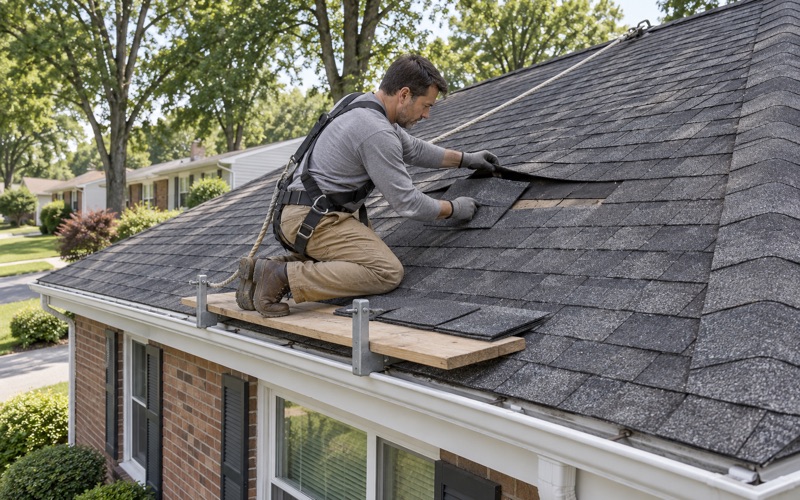
When we come out after a storm, eaves and valleys are the first stops. Valleys collect the deepest snow and the most meltwater, and a valley still packed with leaves from the fall drains even worse. We clear what is safe to clear, open the gutters and leaders so meltwater has somewhere to go, and note any shingles the ice lifted.
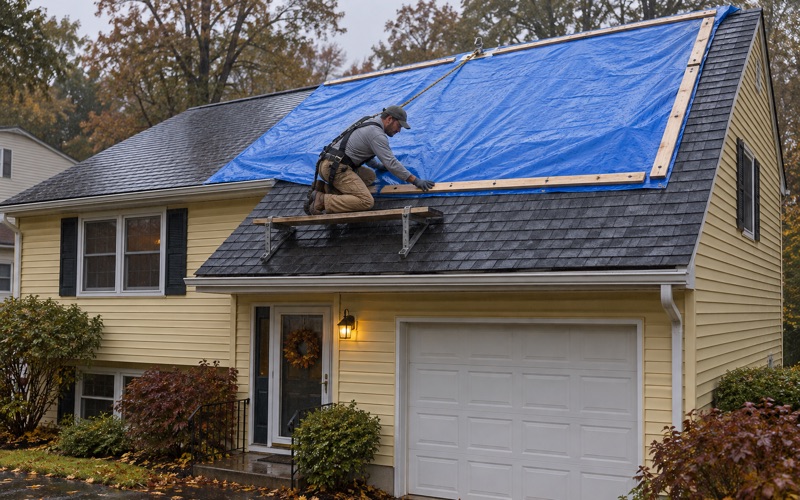
Where a section needs a temporary cover until the weather allows a proper repair, we photograph the damage before anything is moved or tarped. Those photos, along with a written description of what we found and where, are yours to use with your own insurance claim.
Tracing the Leak to Its Source
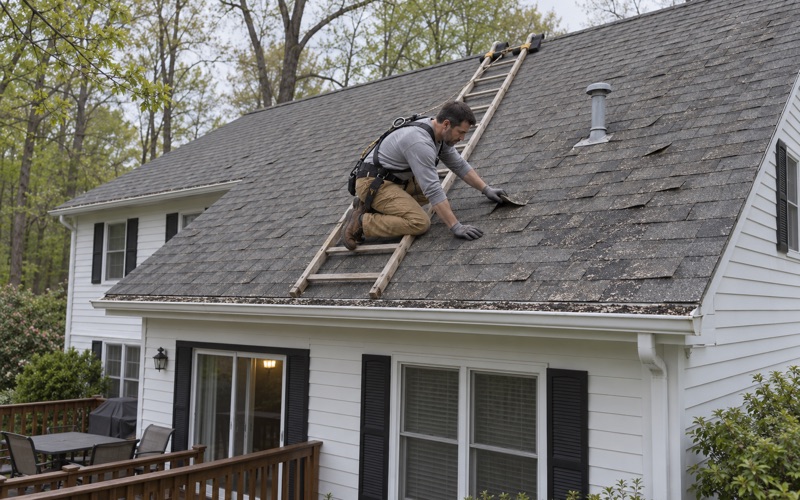
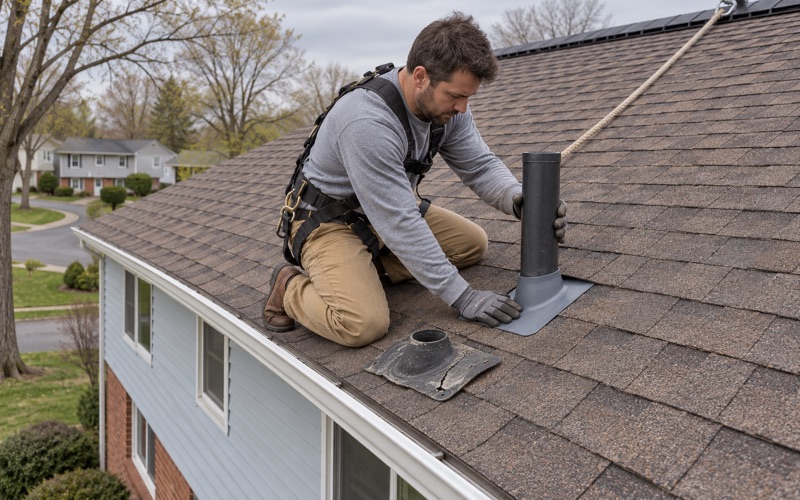
Meltwater rarely comes through where the stain appears. It can enter at a chimney, a pipe boot or behind a lifted shingle at the eave, then run along a rafter for several feet before it drips. That is why every leak call we take includes a trip into the attic as well as onto the roof, so the entry point is found before anything is priced.
Once we know where the water got in, you get a straight answer on whether the roof can be repaired. Many leaks after a storm come down to a failed boot, a short run of step flashing or one ice-damaged eave, and those are repairs. Replacement comes up only when the decking, the framing or the age of the roof makes repair a poor use of your money.
Insurance and the Paperwork
The New Jersey Department of Banking and Insurance says standard homeowners policies generally cover collapse from snow and ice and leakage from ice dams, though every policy is different and no outcome is guaranteed. We write up the damage with photos for your own claim and will meet the insurance adjuster on site if you ask.
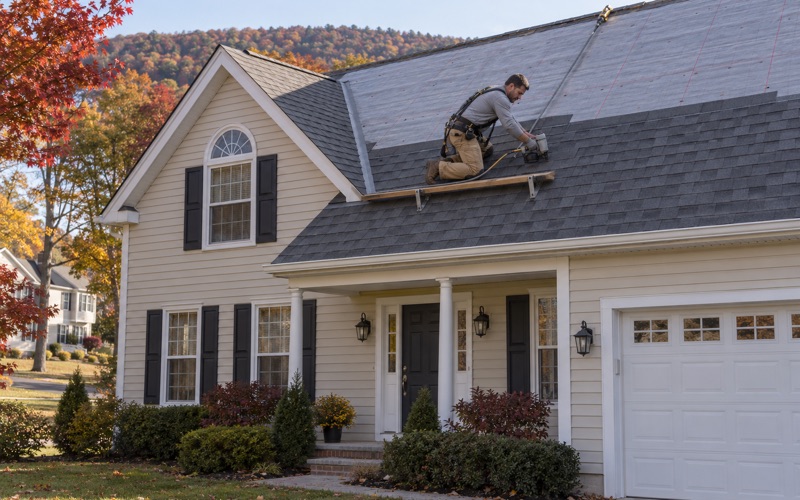
If the work becomes a replacement, the written scope lists tear-off, decking, underlayment, flashing, ventilation and gutters as separate lines, so it can be compared item by item with another estimate. Step, counter and chimney flashing are replaced with the roof instead of reused, and the contract follows New Jersey’s home improvement rules, including the three-day cancellation notice.
- 20+ Years in Roofing
- Line-Item Written Estimates
- Same-Day Storm Tarping