Wayne Quality Roofing has spent more than 20 years on roofing in West Caldwell and the towns around our Wayne base, and the question we hear before almost any other is how a homeowner is supposed to pay for the work. Before we talk money, we answer a simpler question honestly: can this roof be repaired, or has it truly reached the end? Replacement comes up only once repair has been ruled out.
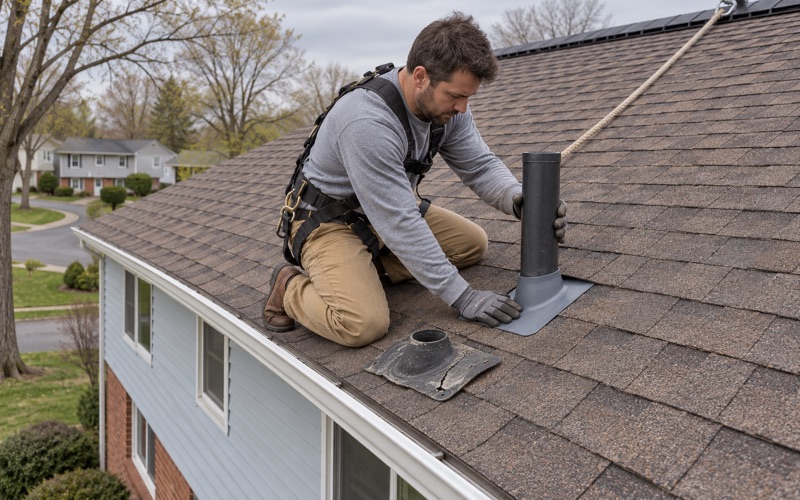
That repair-first answer starts in the attic. When a ceiling stains, we look at the underside of the decking as well as the shingles above it, so the water is followed back to where it actually enters before any number is written down. A cracked pipe boot or a lifted flashing seam is a very different bill from a worn-out roof, and the owner deserves to know which one they have.
When replacement is the right call, the price matters, and homeowners here have a local option worth knowing about: a township-sponsored repair program that lists roofs among its eligible work. This page walks through how that program is set up, where the county’s own program fits, and how a written roof scope can be prepared so it holds up to a program inspector’s review.
Paying for a New Roof in West Caldwell
What a Roof Costs Depends on What Is Under It
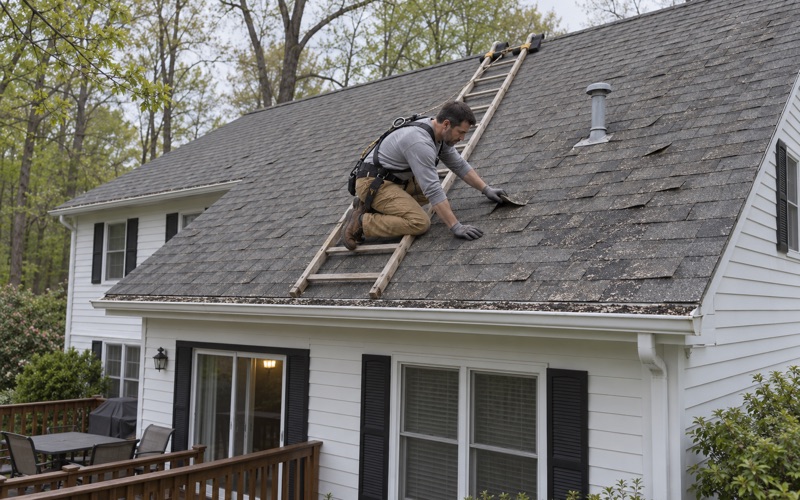
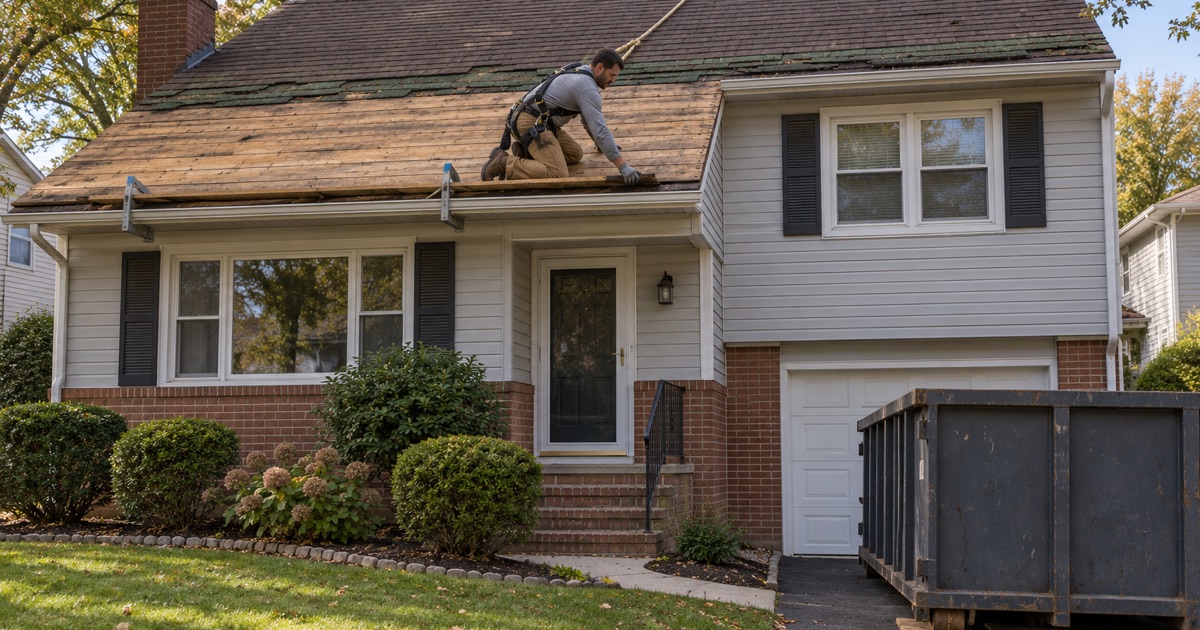
No honest price can be set for a roof until the layers are known. One layer of asphalt over sound plank or plywood decking is a different job from two layers over sheathing that has softened at the eaves. We open the attic, check the decking from below, and note how many layers sit on top before we write a number, so the estimate reflects the roof that is actually there.
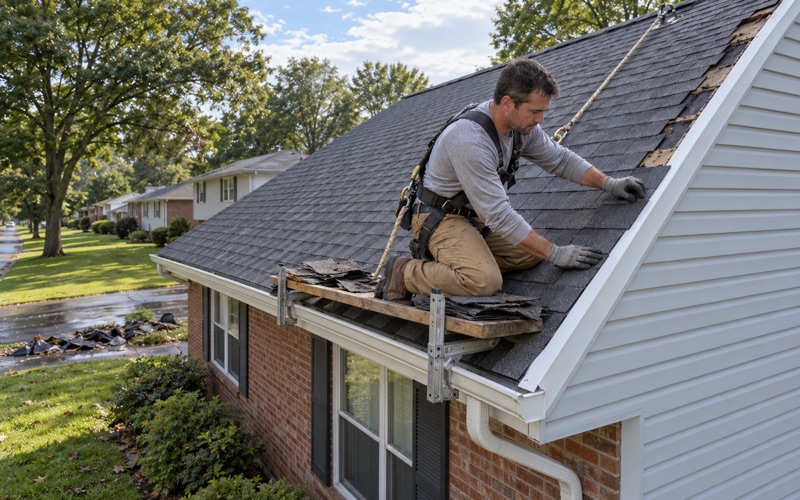
Once the old roof is off, surprises are handled in writing. Any damaged decking is photographed and shown to the owner before a sheet is replaced, and the per-sheet price is already set in the contract. That keeps the final invoice close to the estimate, which matters most when the money behind the job comes from a program with a fixed ceiling.
Repair Versus Replacement on Mid-Century Houses
Much of West Caldwell’s housing went up in a postwar burst. Census estimates count 3,335 of the township’s 4,121 housing units as single-family detached, and more than half of all units date from 1950 through 1969, with 1,313 from the 1960s alone. Ranches, capes and split-levels from those decades often carry their second or third roof today.
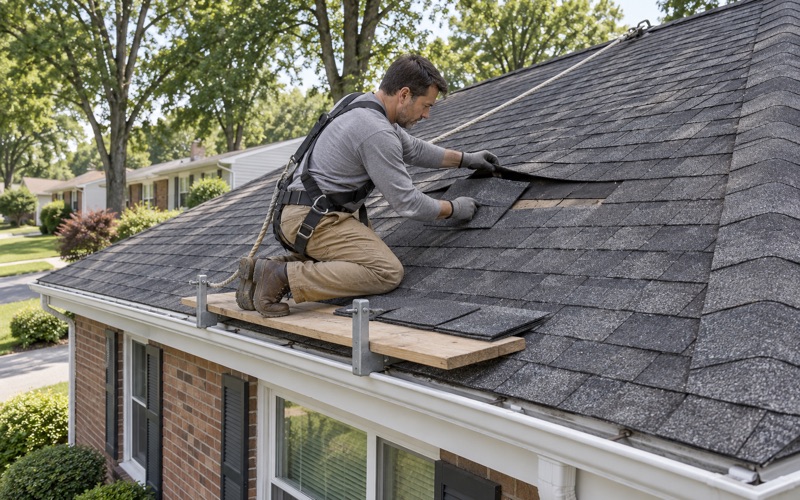
Age alone does not condemn a roof. A sixty-year-old house with a fifteen-year-old roof may need nothing more than new pipe boots and resealed flashing, while a roof with curled tabs and granule loss across every slope is past patching. We say which one we see before replacement enters the conversation, and we put that judgment in writing.
Ventilation and Eaves Belong in the Budget
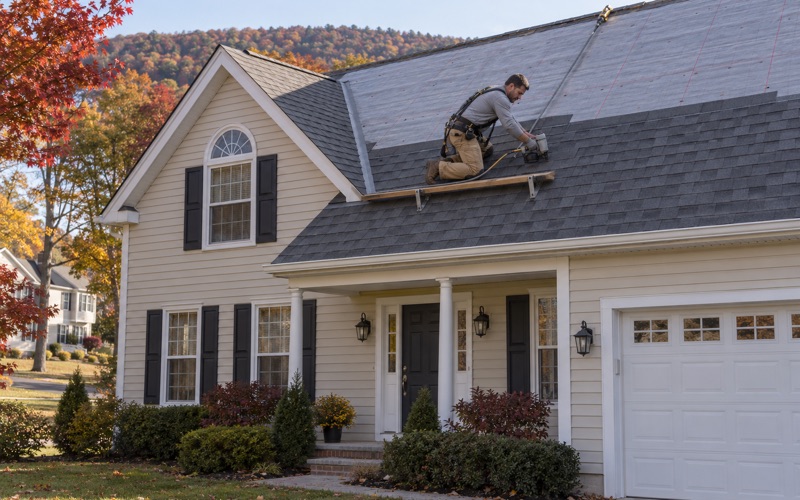
Low-slope eaves on older capes and ranches are where ice dams form, so our replacement scopes on those houses add a self-adhering ice and water membrane at the eaves and a check of attic ventilation. A ridge vent only works when soffit intake is open, and a roof that cannot breathe ages from underneath no matter how good the shingle is.
Mature trees add their own wear. Where limbs hang over the roof, valleys pack with leaves and shaded slopes grow moss, we call those conditions out in the estimate. The homeowner can then plan trimming and cleaning alongside the new roof rather than discovering the problem a few winters later, when the cost lands outside any program budget.
Looking for roofing closer to Kinnelon? See Roofing in Kinnelon.
The Township’s Home Improvement Program and Roof Repairs
How the Program Is Set Up
West Caldwell runs its own Home Improvement Program, sponsored by the township and funded by collected development fees. Income-eligible homeowners can receive repairs worth up to $20,000, and the program page lists roofs among the eligible uses, alongside heating and electrical systems, plumbing components and weatherization work such as windows and insulation.
Day-to-day administration sits with Community Grants, Planning & Housing, an outside administrator reachable at 609-664-2769, extension 9. The program states there is no cost to apply and that applying does not affect a credit score. Funding runs first come, first served, and the township’s June 2025 announcement described it as funded through developer’s fees, the same source the program page names.
Roofs Are on the Eligible List
A failing roof lets water into insulation, framing and ceilings, and the damage spreads into the other systems the program also covers. For a household on a modest income, the difference between patching a leak every spring and replacing the roof once can be the difference between a sound house and a slow decline that costs far more to reverse.
We are not part of the program, and we do not apply on anyone’s behalf or decide who is eligible. The administrator makes those decisions. What we can do is give a homeowner a clear, itemized scope and an honest repair-or-replace answer, so the conversation with the administrator starts from an accurate picture of the roof.
Rental Properties and Landlords
The program is not limited to owner-occupied houses. Its page says funding is also available for rental properties and asks landlords to call the administrator for terms. Those terms are not posted, so a landlord weighing a re-roof on a two-family house should ask the administrator directly before signing anything, and we can write the estimate so it is ready when that answer comes back.
Forgivable Loans, Ten Years of Occupancy and Income Limits
What a Ten-Year Forgivable Loan Means
The money is not a gift. It comes as a 0% interest, ten-year forgivable loan with no monthly payments, and it is forgiven only if the homeowner keeps title and occupancy for a ten-year period. A household planning to sell or move within the decade should understand that condition before work starts, and should ask the administrator how the loan is secured and what happens on an early sale.
That condition shapes the roofing decision too. A homeowner committing to another decade in the house wants a roof built to last well past that, not the cheapest shingle that clears an inspection. Architectural shingles such as GAF Timberline HDZ, Owens Corning Duration or CertainTeed Landmark, over a synthetic underlayment, are the usual fit for a mid-century roof here.
Reading the Posted Income Limits
The program posts gross annual income limits by household size: $77,200 for one person, $88,240 for two, $99,280 for three and $110,240 for four. Larger households run from $119,120 for five up to $145,520 for eight. The program notes that the limits are updated annually, and the page does not state which year these figures belong to.
They do move. A Patch article from December 2023 printed lower limits for the same program, $69,344 for one person through $130,763 for eight. A household that fell just over the line in an earlier year may sit under it now, so the current page and the administrator are the only reliable answer on whether a given income fits.
The Inspector’s Role
A professional inspector oversees the process, according to the program. That oversight is a good reason to have a scope that is easy to check. When tear-off, decking, underlayment, flashing, ventilation and gutters are each priced on their own line, an inspector can see what is being done and a homeowner can compare one contractor’s estimate against another without guessing.
We keep the photos of any replaced decking with the job file and hand them to the owner, so a record of what went under the shingles exists after they are on. If the house is later sold, we can also write a roof condition report the seller can hand to the buyer’s inspector, which answers the roof question before it slows a closing.
Essex County’s Program and a Program-Ready Roof Scope
A Second Door Through the County
West Caldwell also appears on the list of participating towns in the Essex County Home Improvement Program. A county flyer posted on the township site describes Community Development Block Grant deferred loans for low- and moderate-income homeowners who occupy one- to three-family homes, with roofing named among the eligible improvements. The county contact line on that flyer is 973-655-0200.
That flyer is several years old, and we have not confirmed the county program’s current terms or status. The township repeated the description in a December 2022 post, but anyone interested should call the county to learn what is offered today rather than relying on an older flyer, and should not assume the two programs can be combined on one roof.
Flashing and Chimneys Are Replaced, Not Reused
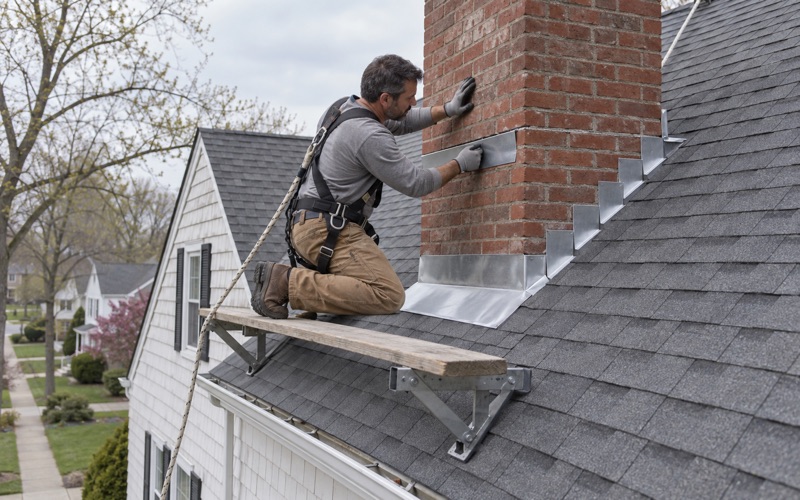
A scope built for review should leave no room for shortcuts that are invisible once the shingles are on. We replace step, counter and chimney flashing with the roof rather than bending old metal back into place, and we add a chimney cricket where a wide chimney sits across the slope. Drip edge goes on at the eaves and rakes, and pipe boots are renewed.
Those items are where a re-roof fails first. A new shingle laid against twenty-year-old step flashing will leak at the sidewall long before the shingle wears out, and the homeowner who signed a ten-year occupancy condition is the one who would live with it. Listing each piece separately also shows the inspector that the flashing work was priced and done.
Contracts, Cancellation and Cleanup
Our contracts are written to New Jersey’s home improvement rules, including the three-business-day cancellation notice. That window matters when the money depends on a program decision, because a homeowner who signs and then learns the timing or terms have changed still has a clean way out before any material is ordered.
On the job itself, the driveway, yard and gutters are cleaned at the end of each work day, with a magnet sweep for roofing nails. Program and township questions start at the municipal offices on Clinton Road and with the administrator; our part is the roof itself, built as the written scope describes and left clean enough that a neighbor would never guess a crew was there.
- 20+ Years in Roofing
- Line-Item Written Estimates
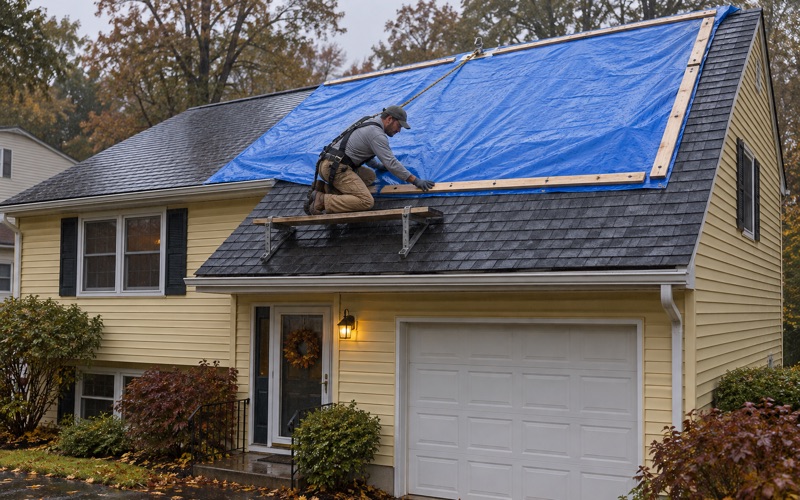
- Same-Day Storm Tarping