Wayne Quality Roofing has handled roofing in Westwood and across northern New Jersey for more than 20 years, and this borough gives a leak a second meaning. Westwood treats a roof that lets water through as a property maintenance problem written into its own code, well before anyone talks about a new roof. That changes how owners, and landlords most of all, should think about a drip.
Our leak calls start in the attic, not on the ladder. We follow the stain back along the rafters and sheathing to the place the water actually enters, then go up on the roof to confirm it. The price we give is for the real fault rather than the nearest shingle, and only after that do we tell you plainly whether a repair will hold.
That order matters more here than in most towns. A landlord with tenants upstairs, a homeowner fielding a complaint about a spilling gutter and a seller preparing for a buyer’s inspector all need the same thing. They need a written account of what is wrong, what fixes it and what each part costs, set out line by line.
Westwood’s Property Maintenance Code and the Roof
Chapter 260 adopts a model code
Chapter 260 of the Westwood borough code, titled Property Maintenance, does not write its own roofing rules from scratch. It adopts a model Property Maintenance Code by edition. When the borough codified its code under Ordinance No. 11-4, section 260-1 was amended to cite the 2009 edition rather than the 2003 one, and a standard penalty provision was added alongside it.
We have read that 2011 codification record, not any later amendment. We cannot tell you whether Westwood has moved to a newer edition since then, and we will not pretend to. What we can describe is the roof and drainage wording that this code family publishes, because that wording is what a property maintenance visit to a Westwood house is built around.
A leak is a maintenance matter first
Most owners think about the borough only when a building project comes up. Under Chapter 260, though, a roof that lets water into the house is a maintenance defect whether or not anyone plans to replace it. The code looks at the condition of the building as it stands today, which is why a slow leak left alone over a winter can turn into a conversation with the borough.
That is a good reason to fix small things while they are small. A cracked pipe boot, a lifted tab at the ridge or a gap where counter flashing has pulled out of its reglet costs little to repair. The same fault, ignored until the ceiling stains and the drywall softens, reads very differently to an inspector and to the people living underneath it.
Who enforces it
The borough’s Property Maintenance Official is Josef Zierer, Jr., and complaints reach that office through a Code Enforcement Complaint Form posted on the borough’s forms page. A roof problem does not have to start with the owner to end up on that desk. It can arrive from a tenant, from next door or from someone who simply noticed water running down a wall.
We mention the route so owners understand the stakes, not to alarm anyone. A roof that is checked, repaired and documented gives an owner something concrete to point to. A roof that has been leaking quietly for two seasons gives them nothing but a bigger bill, and usually a wet attic, rotted sheathing and insulation that has stopped doing its job.
Looking for roofing closer to New Milford? See New Milford Roofing.
Sound, Tight and Not Admitting Rain
The roofs-and-drainage standard
Section 304.7 of the model code, titled Roofs and drainage, is the passage that matters for roofing. As published in that code family, it requires the roof and flashing to be sound, tight and free of defects that admit rain. It also requires roof drainage adequate to prevent dampness or deterioration in the walls or interior of the building.
Read plainly, the test is not whether the shingles look old. It is whether water gets in, and whether the way water leaves the roof keeps the walls dry. A worn roof that still sheds water cleanly can meet that wording, while a newer one with a missing kick-out flashing that soaks the siding below a roof edge may not.
Flashing is where rain gets in
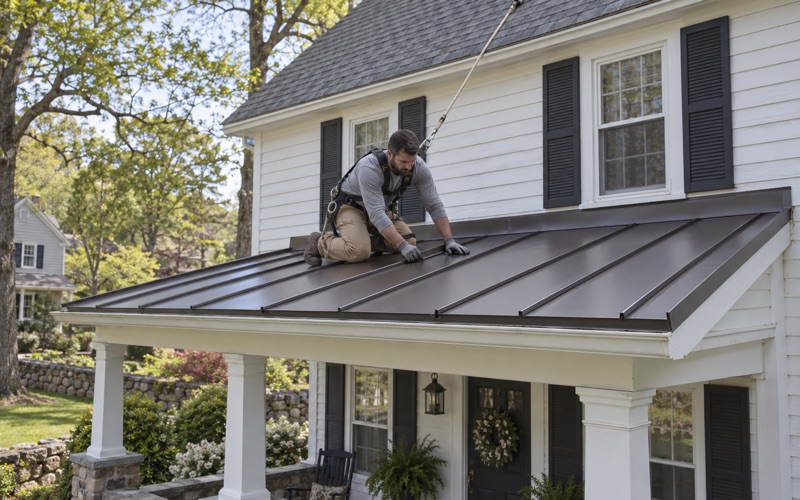
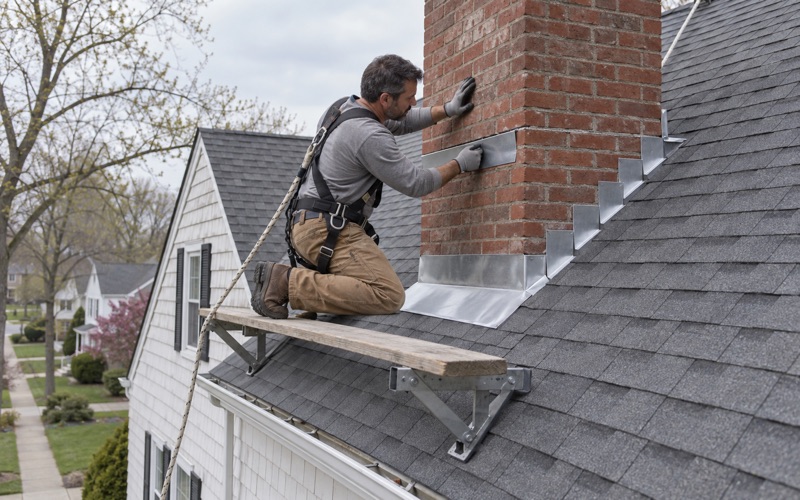
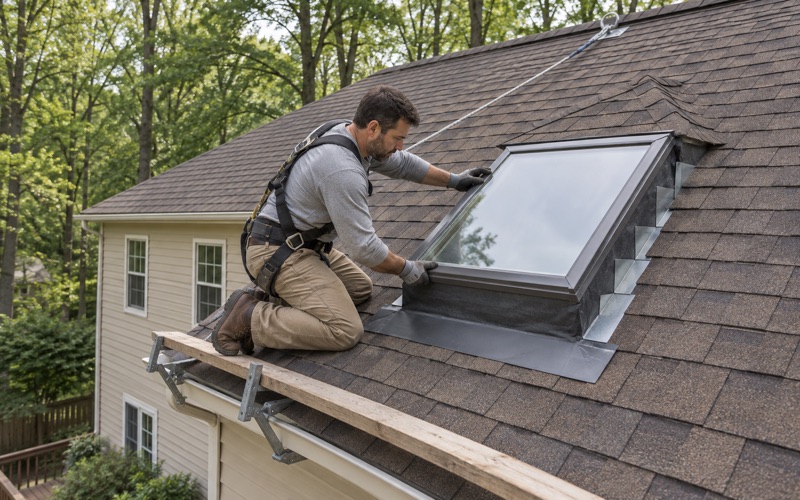
Most roof leaks start at the flashing rather than out in the open field of shingles. Step flashing along a sidewall, the counter flashing that covers it, the metal around a chimney and the apron below a dormer all work loose as a house moves through hot summers and cold winters. Those joints are where a roof first begins to admit rain.
When we replace a roof, we replace the step, counter and chimney flashing with it instead of bending the old metal back under new shingles. Reused flashing is a common reason a fresh roof still leaks. The maintenance standard draws no line between a new roof and an old one, so the details at every wall and chimney have to be right.
Older houses, older details
Westwood is a Bergen County borough of 11,282 people at the 2020 census, and much of its housing is old. Census estimates count 1,159 homes, about 27.6 percent, built in 1939 or earlier. Many roofs here sit on prewar framing with brick chimneys, dormers and decades of patchwork from earlier repairs.
On those houses we check the chimney crown and mortar joints, the cricket behind a wide chimney and the attic for old water staining before we price anything. Painted trim and fascia on pre-1978 homes are handled under the EPA lead-safe rule whenever we have to disturb them, and the scope says so rather than leaving it as a surprise on the day.
Gutters, Downspouts and Where Roof Water Goes
Gutters kept in repair and clear
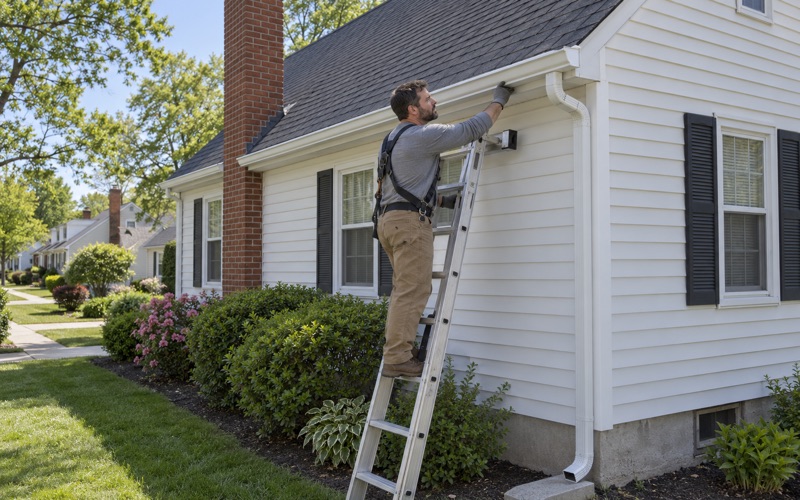
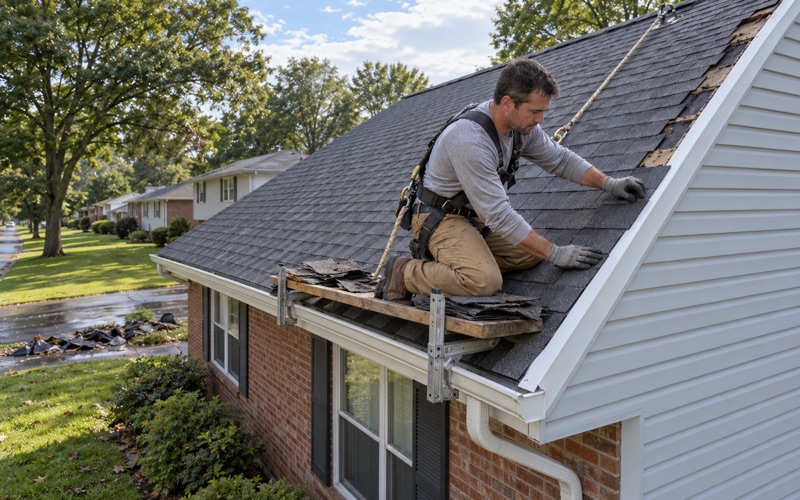
The same section of the model code reaches past the shingles. It requires roof drains, gutters and downspouts to be kept in good repair and free from obstructions. A gutter packed with leaves, a seam that has separated or a leader ending against the foundation counts as a maintenance defect of its own, not merely an annoyance.
We treat gutters as part of the roof for that reason. Our written scopes list gutters as their own line next to tear-off, decking, underlayment, flashing and ventilation. An owner can see exactly what is being cleaned, what is being repaired, what is being replaced with seamless aluminum gutters and leaders, and what is sound enough to leave alone.
Roof water and the neighbors
The model code also says roof water must not be discharged in a manner that creates a public nuisance. Where houses sit close together, a downspout that dumps onto a shared driveway or a neighbor’s side yard is the classic case. In winter that same water can freeze across a walk, which is exactly the kind of problem neighbors notice and report.
Fixing it is usually simple and inexpensive. We reroute leaders, add extensions or move a downspout to a corner where the water can drain away from both houses. The change goes onto the written scope with a photo of the finished work, so the owner has a dated record that the drainage was corrected rather than just talked about.
Wooded lots and clogged valleys
Leaves and overhanging limbs are what usually clog a gutter in the first place. When a property has mature trees over the roof, our estimate calls out the limbs, the leaf-packed valleys and any shaded, mossy slope. The owner then knows what will keep refilling the gutters after we leave, and can decide whether a tree service belongs in the plan.
At the end of every work day the crew cleans the driveway, yard and gutters and runs a magnet across the lawn for roofing nails. On a rental property with tenants, children and cars coming and going all day, that cleanup matters as much as the roof itself, and it keeps a repair from turning into a fresh complaint.
Landlord Registration and Fixing a Rental Roof Early
Chapter 272 registration
Westwood has a large rental stock for a borough its size. Census estimates put renters at 37.1 percent of occupied homes, living in 253 two-unit homes, 275 three-or-four-unit homes and 388 homes in buildings of fifty or more units. Chapter 272, Rental Dwellings, requires every owner of a building with a residential rental unit to file a landlord and tenant registration form.
The registration certificate is issued by the Zoning and Code Enforcement Officer. Section 272-9A(6) lists, among the grounds for action against a registration, violations by the registered owner or agent of codes governing the premises, including the International Property Maintenance Code. We have not read what action follows, but the point stands: a roof that admits rain is a registration matter as well as a repair.
Repairs before a complaint
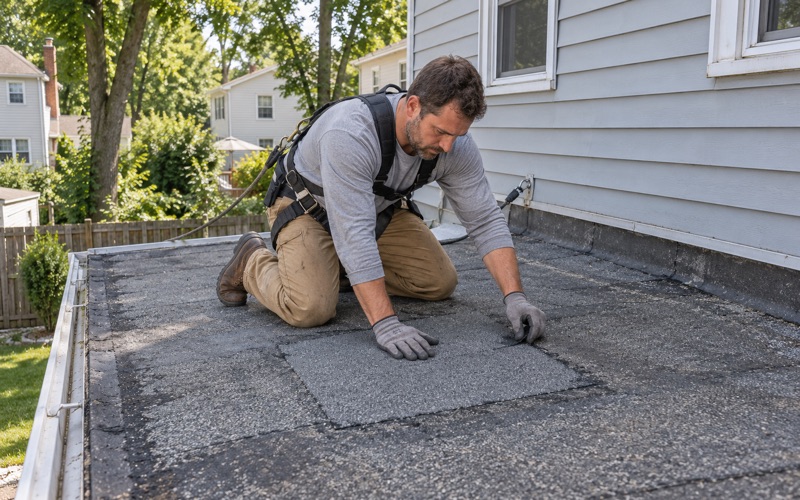
For a landlord, the cheapest roof repair is the one made before a tenant reports a stain. We look into every attic space we can reach, trace the water to its entry point and give a straight answer about whether the roof can be repaired or has reached the stage where replacement is the honest recommendation.
Everything goes into a written scope with photos, which gives the owner a dated record of what was found and what was done about it. If a property maintenance question ever comes up later, that record shows the problem was handled promptly. It also helps when budgeting, since each line can be compared against another contractor’s estimate item by item.
Two-family, multifamily and association roofs
In two-family houses, small apartment buildings and condominium communities, the first question is who actually holds the roof. Before we write an estimate on an attached or association property, we check the association’s documents, so the work and the bill go to the party responsible for that roof rather than to whoever happened to call first.
Our contracts follow New Jersey’s home improvement rules, including the three-day cancellation notice. Decking is priced as its own line, and if damaged boards turn up once the old roof is off, we photograph them and show the owner before replacing anything. Replacement sheets are charged at the per-sheet price already written into the contract.
Storms, sales and the paper trail
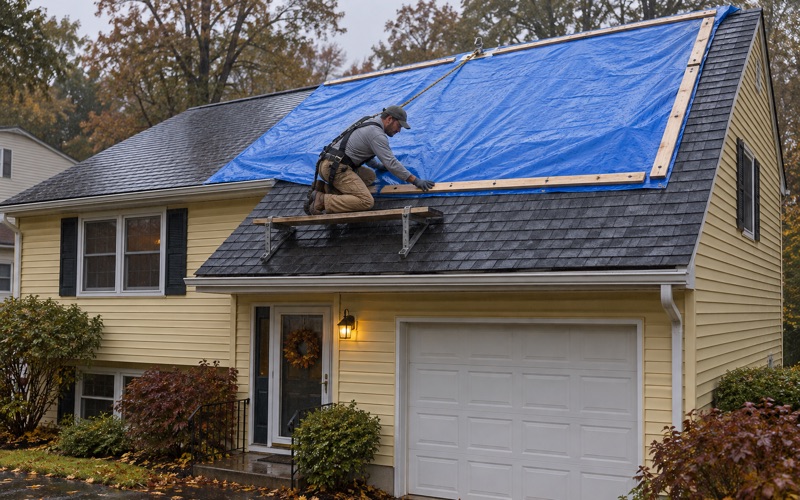
After a wind storm we tarp and make temporary repairs the same day, photographing the damage before anything is moved. We write the damage up for the owner’s own claim and will meet the insurance adjuster on site when asked. Quick protection keeps a storm-lifted section from becoming the kind of interior leak the code is written about.
Owners selling a Westwood house or a small rental building can ask us for a written roof condition report to hand to the buyer’s inspector. It covers the roof covering, flashing, gutters and attic ventilation. Those are the same roof and drainage items the property maintenance standard looks at, set down in plain language a buyer can follow.
- 20+ Years in Roofing
- Line-Item Written Estimates
- Same-Day Storm Tarping