Wayne Quality Roofing brings more than 20 years of experience to roofing in Wood-Ridge, and most of what we handle here is familiar work: a leak over a bedroom ceiling, shingles shedding granules into the gutters, flashing pulled loose where it meets a chimney. Every leak call includes a trip into the attic as well as onto the roof, so we find where the water actually gets inside before anything is priced.
Before replacement ever comes up, you get a straight answer on whether the roof can be repaired. When it cannot, our written scope breaks the job into separate lines for tear-off, decking, underlayment, flashing, ventilation and gutters. That way a second contractor’s estimate can be laid beside ours and compared item by item, instead of as one lump number that hides what each part of the work costs.
There is also one part of roofing here that few homeowners ever hear about, and it has nothing to do with shingles. The borough sits close enough to a busy runway that the ground on most lots already rises above a federal notice surface, which matters whenever a crane is part of the plan. The sections below explain where that rule applies to a re-roof and, just as important, where it never comes up at all.
Teterboro’s Notice Surface and the Wood-Ridge Ridge
Most residents know Teterboro Airport as a noise question. Wood-Ridge is a voting member town of the Teterboro Aircraft Noise Abatement Advisory Committee, which advises on aircraft noise and holds no construction authority. For roofing, the airport matters through a different channel entirely: a federal rule about how high an object may rise near a runway before the Federal Aviation Administration has to be told about it.
What the 100-to-1 Surface Is
Under 14 CFR 77.9(b)(1), the FAA must receive notice of any construction or alteration that exceeds an imaginary surface rising outward and upward from the nearest point of the nearest runway. The slope is 100-to-1, and it runs out to 20,000 feet. Put plainly, for every hundred feet you travel away from the runway, the surface climbs a single foot, so it stays remarkably low over a long distance.
The rule covers airports whose longest runway is more than 3,200 feet long, and Teterboro’s two runways measure 7,000 and 6,013 feet. By a straight-line reading of the published runway coordinates, the whole borough falls inside the 20,000-foot radius. The surface therefore passes over every street here, and the only thing that changes from block to block is how far below the ground it runs.
Why the Ground Already Sits Above the Line
The nearest runway point to Wood-Ridge is the end of Runway 6, which sits only 4.8 feet above sea level. The borough’s center lies roughly 4,800 feet from it by our straight-line computation, so the slope has climbed to only about 53 feet above sea level by the time it reaches town. The ground at that point, according to the USGS elevation service, stands at about 157 feet.
Down near Wesmont station the ground is lower, around 74 feet, but the runway is also closer, roughly 2,700 feet away. The surface there works out to about 32 feet. Both figures are approximate computations at two points rather than surveys, yet they point the same way: across most of the borough, the hill itself already stands well above the line the rule describes.
What That Means for Tall Equipment
The usual question, whether a piece of equipment is tall enough to matter, is mostly settled before anyone asks it. On most Wood-Ridge lots a crane boom is above the surface the moment it rises off the truck. That turns the real decision into something narrower and more specific, which is whether the boom is shielded, and if it is not, how much lead time the job needs.
Looking for roofing closer to East Hanover? See East Hanover Roofing.
When a Roofing Crane Is Shielded, and When It Is Not
The Exception Written Into the Rule
The rule carries an exception. Under 77.9(e)(1), no notice is required for an object shielded by existing structures of a permanent and substantial nature, or by natural terrain of equal or greater height. The object must also sit in the congested area of a city, town or settlement, where the shielded structure will not adversely affect safety in air navigation.
Wood-Ridge is densely built, so the congested-area condition is plausible across much of it. Whether a particular boom on a particular day is actually shielded is a separate question, though, and it belongs to the FAA rather than to a roofer reading a map. A neighboring building of equal height can change the answer, and so can a few extra feet of boom.
How We Handle the Shielding Question
We do not guess at shielding. When a re-roof plan includes a crane, we raise the Part 77 question at the first planning meeting and point the owner and the crane company to the FAA’s Notice Criteria Tool for the exact location and boom height. The answer then becomes one more scheduling fact, settled before a lift date is ever written down.
What we will not do is promise an outcome either way. The distances and surface heights on this page are approximate, computed at just two points, and no FAA determination for any address here has been read for this page. The agency’s own answer for the specific lift is the only one that counts, and our schedule waits for it.
Where Shielding Gets Hard to Rely On
A boom that swings a pallet of membrane or a rooftop unit onto a four- or five-story building has to rise above the very structure that might otherwise shield it. That is exactly the situation where the exception becomes difficult to count on. It is also when the federal filing deadline, rather than the weather or the crew calendar, starts to decide when the work can begin.
Form 7460-1 and the 45-Day Lead Time
What the Filing Requires
When notice is required, 14 CFR 77.7 says it goes in on FAA Form 7460-1, the Notice of Proposed Construction or Alteration. It is due at least 45 days before the start date of the work or the date an application for a construction permit is filed, whichever comes first. Either one of those dates can set the clock.
That last clause matters on a commercial re-roof. Because the 45 days count back from the permit application as well as from the start date, leaving the Part 77 question until the local paperwork is ready can push the whole job back by six weeks or more. Raising it at the estimate stage keeps the federal step and the local step running side by side.
Why Storm Damage Does Not Shorten the Wait
Section 77.7(e) waives the 45-day requirement when immediate work is needed because of an emergency involving essential public services, public health or public safety. A storm-damaged roof on a private apartment building does not plainly fit that wording, so nobody should assume a damaged roof moves a crane lift to the front of the line.
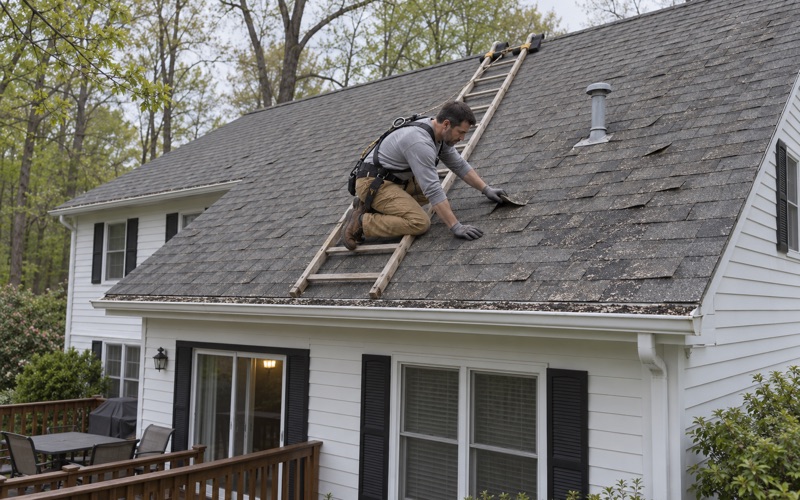
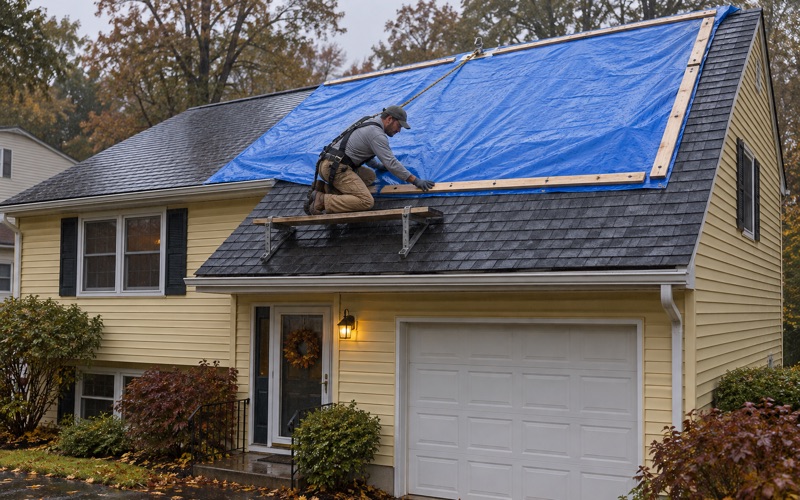
For a building that may need a crane, that is a strong reason to plan the re-roof while the old roof still holds, not after it fails. In the meantime, tarps and temporary repairs go on the same day after a wind storm, worked from ladders, with photos taken before anything is moved, so the owner has a record and the building stays dry.
Building the Lead Time Into the Schedule
Our written scope for a crane-set job shows the lift as its own line, with the date it depends on, so a property manager can see where the federal question sits next to tear-off, decking and flashing. Nothing about that line is hidden inside a lump price, and nothing about the crane date is promised before the filing question has an answer.
The Borough of Wood-Ridge Construction Department, on the second floor of the Municipal Building at 85 Humboldt Street, handles the local side of a project. It issues permits from 9:00 a.m. to 3:00 p.m. and suggests calling to find out whether specific work needs one. The federal question runs alongside that office, never through it.
House Roofs From Ladders, Apartment Roofs by Crane
Detached Houses Never Reach the Question
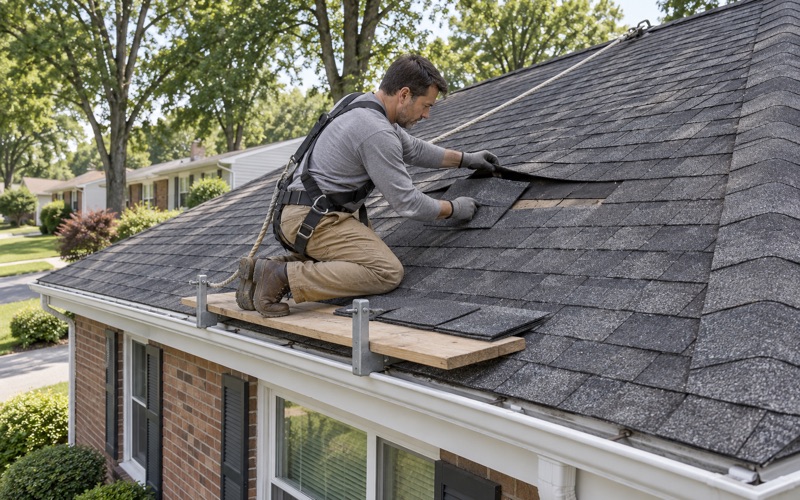
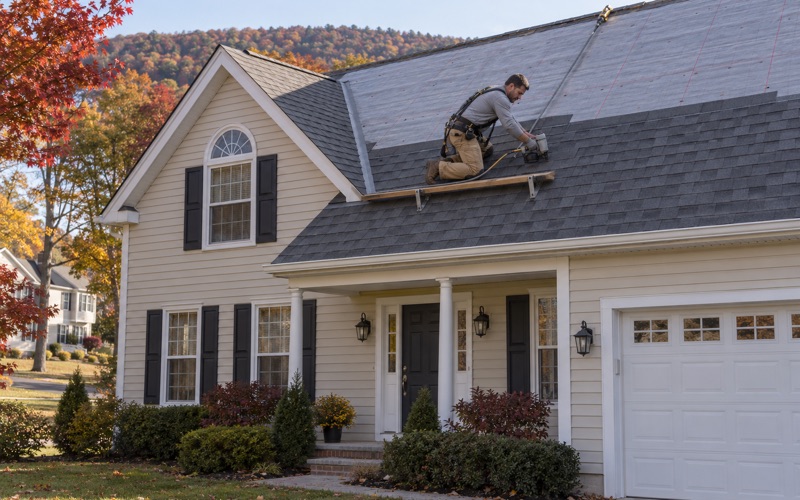
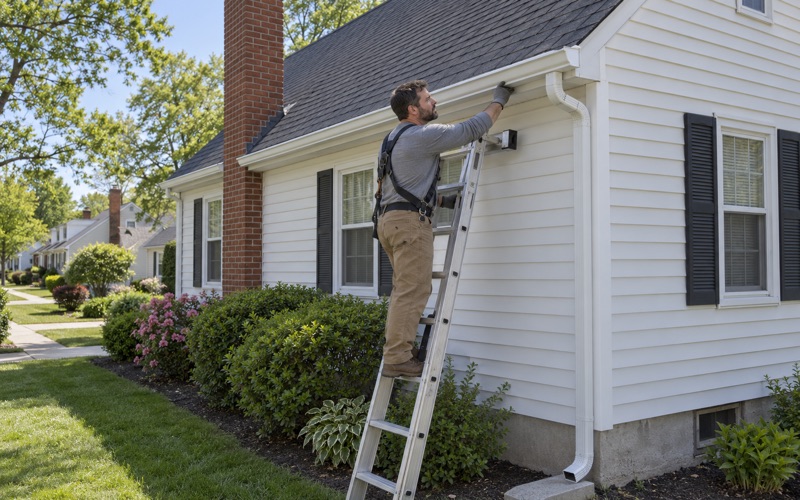
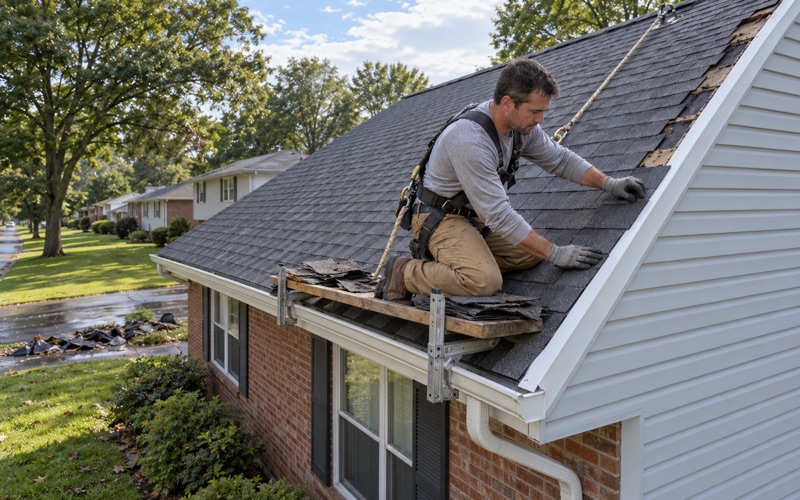
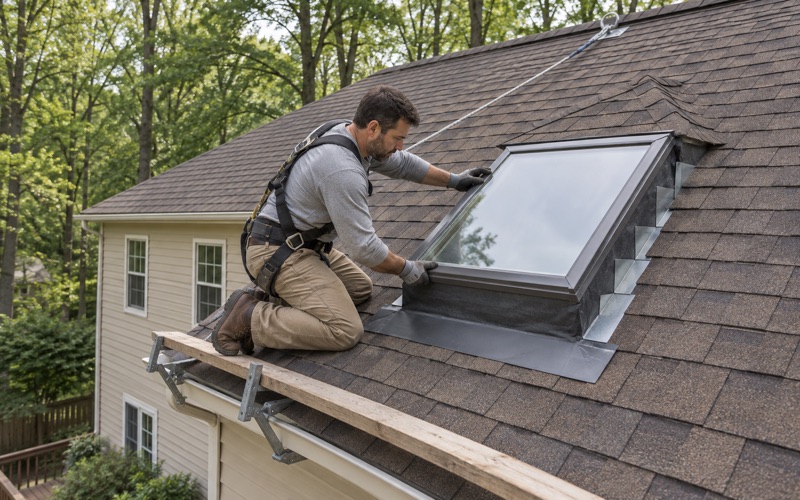
About half of the housing in Wood-Ridge is one-unit detached houses, and those roofs are done the ordinary way, from ladders and a hoist. Ladder and hoist work never rises into the territory this page has been describing, so a homeowner replacing shingles on a house here has no federal step to plan for at all.
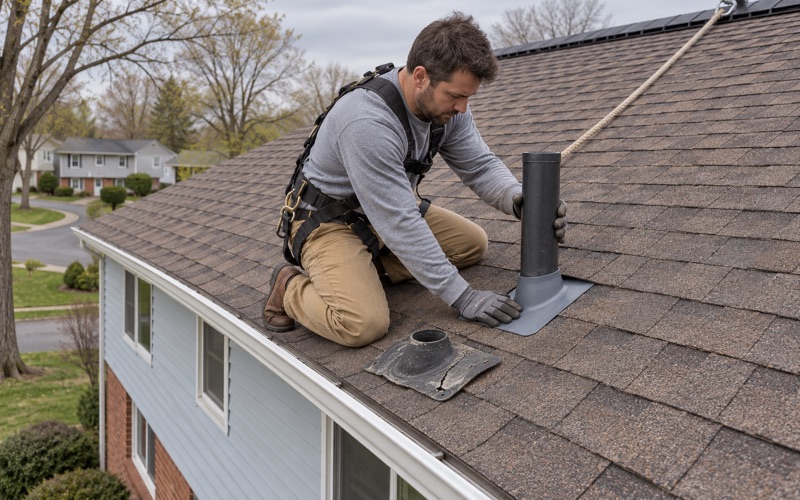
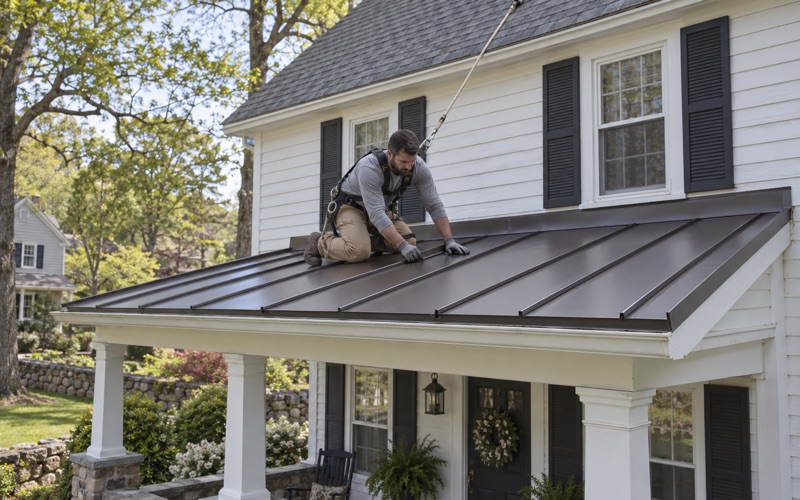
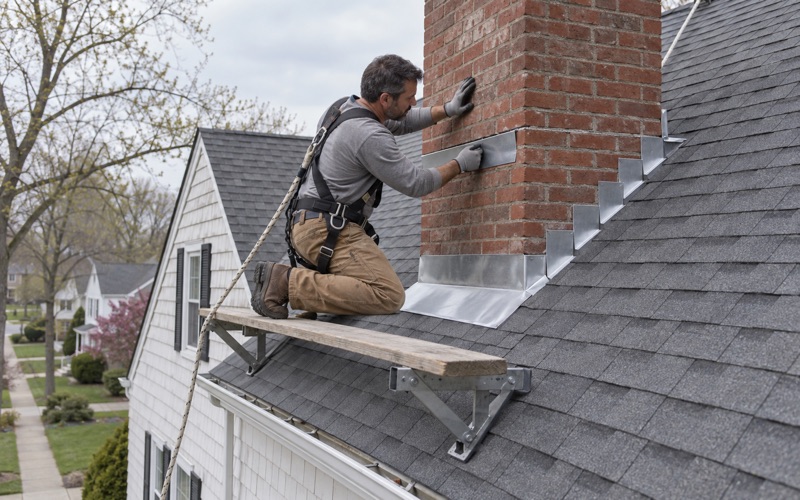
What those houses do need is the ordinary care we bring to every job. Step, counter and chimney flashing is replaced along with the roof instead of being reused under new shingles. Attic ventilation is checked on every replacement as well, because a roof that cannot breathe ages from underneath long before its shingles show any wear from above.
Where Cranes Plausibly Enter
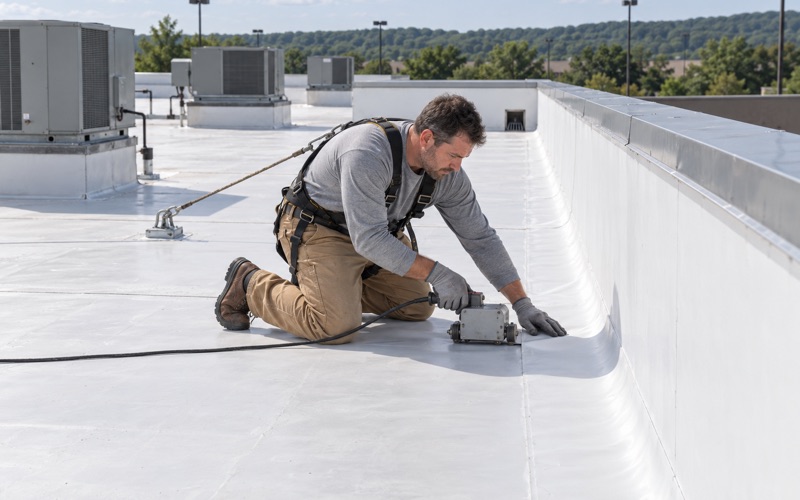
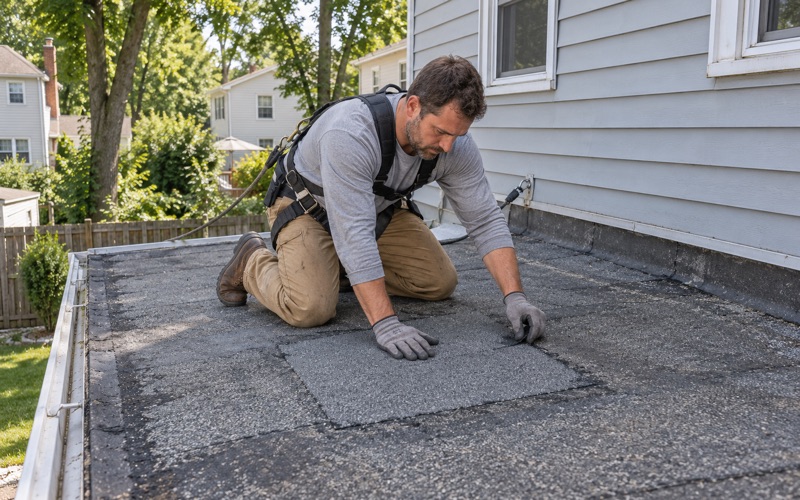
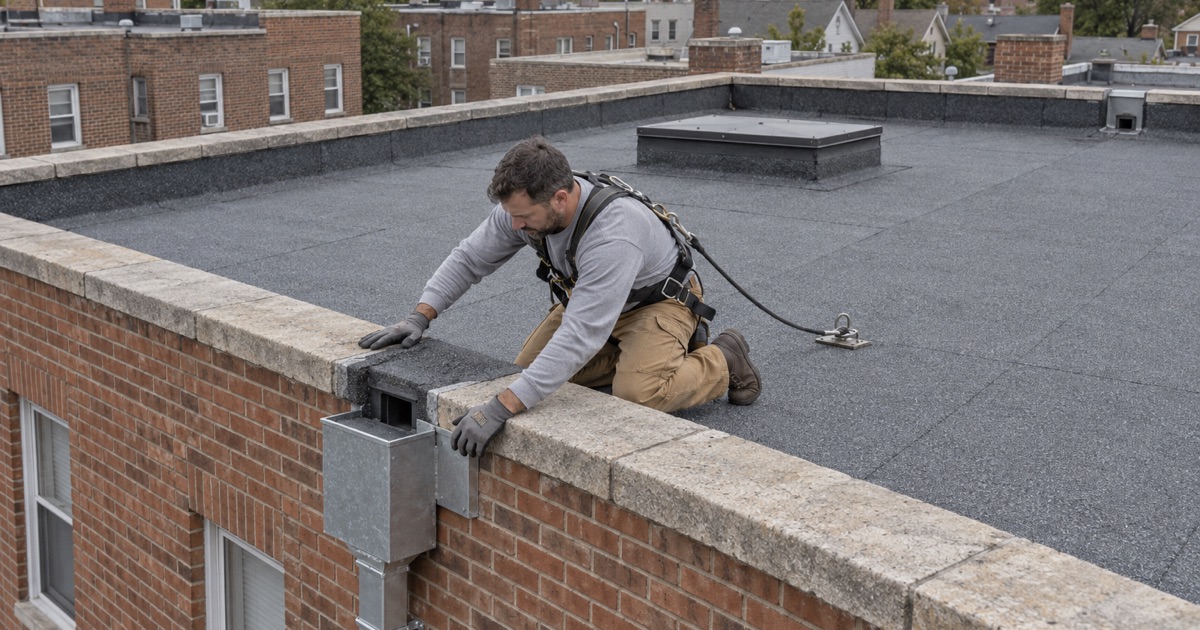
Cranes come into roofing here on the larger buildings. The borough counts 329 units in buildings of fifty or more, and Avalon at Wesmont Station alone holds 406 rentals. Low-slope roofs on buildings like these usually carry rooftop equipment, and lifting that equipment along with new roofing materials is commonly crane work during a re-roof.
Those are the jobs where shielding and the 45-day lead time belong on the first planning call. TPO, PVC and EPDM membranes, along with torch-down modified bitumen, arrive in rolls and pallets heavy enough that the lift has to be scheduled carefully rather than improvised on the morning of the tear-off.
Decking, Cleanup and the Written Record
Whatever the building, damaged decking found once the old roof is off is photographed and shown to the owner before it is replaced, at a per-sheet price already set in the contract. Our contracts follow New Jersey’s home improvement rules, including the three-day cancellation notice, so the terms are on paper before any material is ordered.
At the end of each work day the driveway, yard and gutters are cleaned, including a magnet sweep for roofing nails. On a detached house that sweep is the last thing we do before leaving. On a crane-set job the lift zone gets the same treatment before the crane packs up, so nothing from the roof is left behind on the ground.
- 20+ Years in Roofing
- Line-Item Written Estimates
- Same-Day Storm Tarping